100% Satisfaction
  24/7/365
  We Work With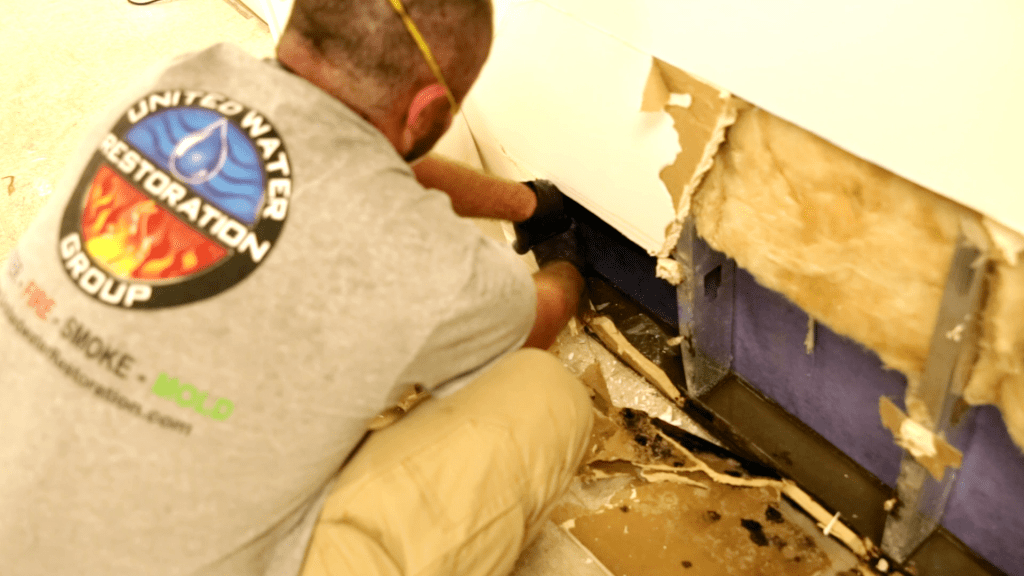
TL;DR: Understanding the mold damage restoration process can help property owners respond quickly and effectively when a mold problem appears. This guide explains how restoration companies remove mold damage in five steps—from testing and moisture control to cleanup, repairs, and long-term prevention.
- Professional mold testing identifies the type of mold and affected areas while helping stop mold spores from spreading.
- Eliminating the moisture problem and repairing water damage is essential to prevent mold growth from returning.
- Mold damage removal includes cleaning contaminated surfaces and removing porous materials like drywall or carpet when necessary.
- The mold remediation restoration process also includes rebuilding damaged materials and restoring indoor air quality.
- Most homes can recover from mold with proper mold damage repair and professional restoration services.
Property owners who do not have prior experience with mold problems may not be sure what to expect during mold remediation restoration. This five-point checklist starts with professional mold testing and sheds some light on each subsequent stage of the process to remove mold and restore a property.
The highest quality mold damage restoration should begin with sampling and lab analysis and proceed through careful cleanup and mold damage repair, along with restoration of primary water damage and secondary mold damage.
1. Mold Testing
There are many do-it-yourself mold tests available for sale, but none of these home kits are as accurate as lab testing. Even the most expensive kits may deliver false results because mold spores are present everywhere.
When a mold testing specialist visits a structure where mold is suspected to be growing, he or she will take the air, bulk, or surface samples from affected areas.
A lab will use these samples to identify the species and subspecies of mold present in a structure. This testing can also determine whether any mold is in an actively growing and evaluate its potential impact on air quality.
Stachybotrys chartarum or toxic black mold and other toxigenic species may necessitate the use of personal protective equipment such as face masks and respirators. Professionals may use containment barriers, plastic sheeting, and negative air pressure systems to stop mold spores from spreading to other areas of the building.
Removing protective equipment and disposing of cleaning equipment prior to entering clean areas helps prevent cross-contamination during mold damage removal.
2. Eliminate Moisture
It can take several days to receive the results of mold testing. In the meantime, it may be helpful to locate and correct the moisture problem that may be causing a mildewy odor or visible mold growth.
Mold spores cannot multiply without a consistent supply of moisture and organic material.
Restoration professionals may use thermal cameras or leak detection tools to locate hidden plumbing leaks, roof leaks, or previous water damage. These problems should be repaired as soon as possible to prevent future mold growth.
A dehumidifier is useful for maintaining low levels of relative indoor humidity in the 40% to 60% range, which will discourage mold from growing.
3. Mold Cleanup
Mold cleanup often involves the use of antifungal cleaning solutions and equipment designed to disturb colonies down to the root structure.
Attempting to clean or disinfect surfaces on which mold is growing may not be enough to eliminate the infestation. Simply wiping surfaces or using bleach rarely removes mold damage completely.
Professional mold damage removal often includes:
- Antimicrobial cleaning solutions
- HEPA vacuums to capture airborne spores
- Air filtration equipment to improve air quality
- Containment barriers to prevent mold spores from spreading
Technicians also inspect hidden areas such as wall cavities, subfloors, and ceilings to ensure the entire mold problem is addressed.
Some porous materials such as drywall, carpeting, and insulation cannot be fully cleaned once mold penetrates them. These materials are typically removed and replaced as part of the mold damage repair process.
4. Damage Remediation
After all signs of mold are gone, the restoration phase begins.
Depending on the regional climate, property owners may want to have any building materials that are at-risk for supporting mold growth switched out for materials that are designed to have antifungal properties. Mold is less likely to grow on treated or non-organic materials.
Repairs may include:
- Replacing drywall or insulation
- Repairing flooring or subflooring
- Restoring cabinets or trim
- Repainting walls or ceilings
These steps are part of mold damage restoration, which restores the property to its original condition after contamination.
In some cases, property owners may choose to install mold-resistant materials to reduce the risk of future mold growth.
5. Mold Prevention
Mold may return if the underlying conditions remain unchanged. Preventing future mold growth requires addressing the original moisture problem.
The most effective prevention strategies include:
- Repairing plumbing leaks or roof damage
- Improving ventilation in humid spaces
- Installing dehumidifiers in damp areas
- Quickly addressing future water damage
Preventative treatments and mold-resistant building materials may also be used during mold remediation restoration.
Frequently Asked Questions About Mold Damage
Can Mold Damage Be Repaired?
Yes. In many cases, mold damage repair is possible. Restoration professionals can remove contaminated materials, clean affected surfaces, and restore damaged areas. With proper mold damage restoration, homes and buildings can be returned to safe and livable conditions.
What Does Mold Remediation Typically Cost?
The cost of mold remediation restoration varies depending on the size of the infestation and the extent of mold damage.
Minor mold cleanup may cost a few hundred dollars, while larger projects involving structural repairs or multiple affected areas can cost several thousand dollars. A professional inspection helps determine the exact cost of mold restoration.
Do You Have to Throw Everything Away With Mold in the House?
Not necessarily. Many items can be cleaned and restored during mold damage removal.
However, certain porous materials like carpets, insulation, or heavily contaminated furniture may need to be discarded because mold can penetrate deep into these materials.
Can a House Recover From Mold?
Yes. Most homes can recover fully from mold with proper mold damage restoration.
Professional remediation removes the mold, repairs damaged materials, and fixes the underlying moisture problem. Once these issues are resolved, the home can be safely restored and protected from future mold growth.
There are several reasons why property owners should not attempt to clean up the mold. It is impossible to determine whether visible growth is the full extent of an infestation. Accurate identification is also only possible with results obtained through laboratory testing. United Water Restoration connects property owners with testing specialists and quality mold remediation professionals. Experts can guide property owners through these five stages of remediation and ensure that a mold problem is gone for good.
We provide services in Ormond Beach, Florida, Jacksonville, Florida, Daytona Beach, Florida, Orlando, Florida, Tampa, Florida, Melbourne, Florida, and many other locations around Florida!