




Not every water problem makes itself known with a puddle spreading across the floor. As a company offering expert water damage restoration services in Jacksonville, FL, our crew has seen some of the most damaging leaks develop slowly and quietly, tucked behind drywall for weeks or even months before anyone realizes something is off. When a homeowner finally spots an obvious warning sign, the moisture hiding behind that wall has usually been building for much longer than it seems.
Paying attention to certain smells and visual clues can help you catch a hidden leak before it turns into a far bigger repair, potentially saving a homeowner thousands of dollars along the way.
Discoloration and Staining on Walls or Ceilings
Water damage rarely announces itself with a bang. More often, it shows up quietly, as a yellowish or brownish patch on a wall or ceiling that seems to appear out of nowhere. These marks form when water works its way through drywall and leaves mineral residue behind, which means that by the time you notice a stain on the surface, moisture has likely been sitting there for a while already. This kind of early warning sign is exactly why leak detection matters so much before a small problem turns into a costly one.
Take note of whether the stain grows larger over time or stays roughly the same size. A stain that keeps spreading usually points to an active, ongoing leak, while one that stays put might be leftover evidence from a problem that’s already been repaired. Even so, a small or faint stain still deserves a closer look instead of a fresh coat of paint, since covering it up won’t stop the moisture underneath from continuing its slow spread.
Stains on ceilings call for particular caution, especially in homes with an attic above or a bathroom on the floor overhead. These marks often signal a slow-moving roof leak or a plumbing line hidden within the floor joists. A stain that appears after a heavy rainstorm and then seems to fade a bit afterward doesn’t necessarily mean the issue has resolved itself. That fading could just mean the moisture is drying out between storms rather than disappearing for good.
Bubbling, Peeling, or Warping Wall Surfaces
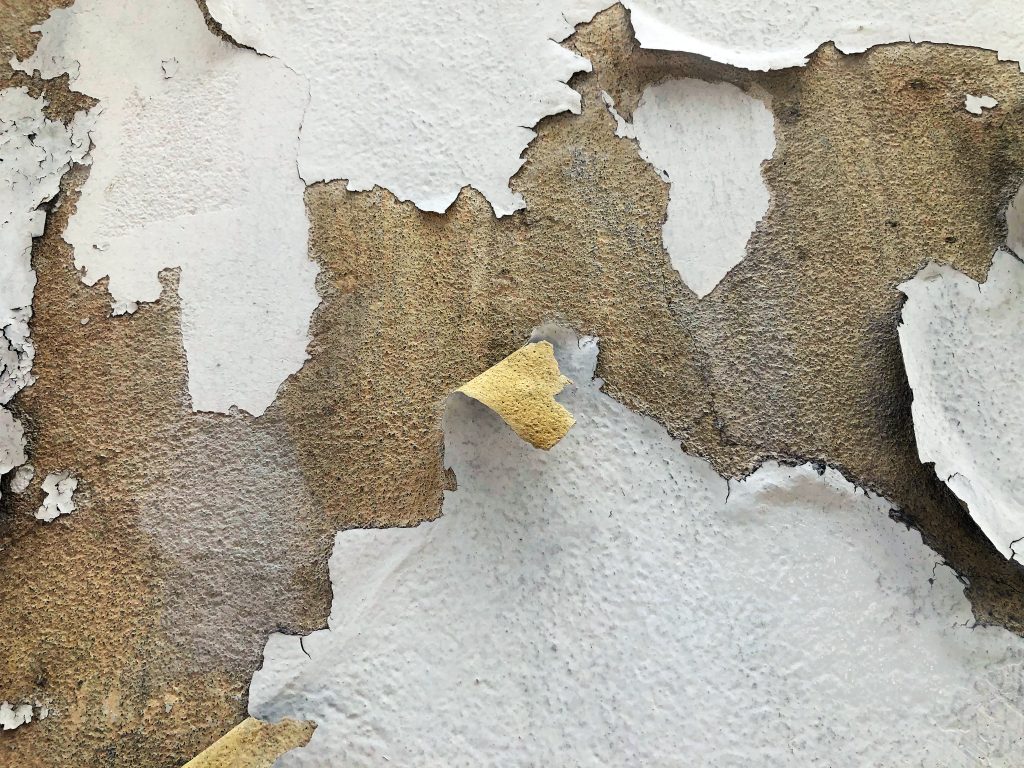
When drywall or paint absorbs moisture from behind, it often starts to bubble, bulge, or peel away from the surface, even in areas where there’s no visible water.
This happens because moisture breaks down the paper backing of drywall and the adhesive holding paint in place, creating a texture change that’s easy to notice once you know to look for it.
Baseboards and trim can show similar signs, warping or separating from the wall as the wood absorbs moisture over time. If a baseboard feels soft or looks slightly bowed compared to the rest of the room, there’s a good chance moisture has been sitting behind that section of wall for some time.
A Musty Smell That Won’t Go Away
Smell is often the earliest warning sign of hidden water damage, showing up well before any visible staining or texture change. A persistent musty odor in one particular room or corner of a house, especially one that doesn’t improve with cleaning or air fresheners, usually points to moisture and possibly mold growth somewhere out of sight.
This smell tends to be strongest near the source, so pay attention to which room or wall the odor seems to come from. If it’s noticeably stronger near a specific wall, closet, or corner, that’s usually the area where moisture has been building, even if nothing looks visibly wrong there yet.
Higher Than Normal Humidity or Condensation
A room that consistently feels more humid than the rest of the house, or windows that develop condensation more than other rooms, can be a sign that moisture is trapped somewhere nearby. This is easy to dismiss as normal Florida humidity, but a noticeable difference between one room and the rest of the house is worth paying attention to.
Condensation on interior walls, especially walls that back up to a bathroom, kitchen, or exterior wall, can also point to a slow leak inside the wall cavity itself. If this pattern shows up consistently in the same spot regardless of the weather outside, it’s a strong indicator that something is happening behind that particular wall.
An Unexplained Rise in Your Water Bill
A water bill that climbs noticeably without any change in household water use is one of the more reliable signs of a hidden leak, since it points directly to water going somewhere it shouldn’t. This is especially telling when there’s no obvious explanation, like a new appliance, more guests in the house, or seasonal irrigation changes.
Comparing a few months of water bills side by side can help confirm whether an increase is a pattern or a one time fluctuation. A steady upward trend, especially paired with any of the other signs mentioned here, is usually enough reason to have the situation checked out rather than waiting to see if it resolves on its own.
Some homeowners also notice the sound of running water when every fixture in the house is off, which is another strong clue that water is moving somewhere it shouldn’t be.
Why Professional Detection Matters
Hidden water damage is exactly the kind of problem that’s hard to fully assess without the right tools, since walls, insulation, and subflooring hide moisture from plain sight. Our technicians use thermal imaging and moisture detection equipment specifically to find water that has traveled somewhere you’d never think to check, mapping out the full extent of a problem rather than guessing based on visible clues alone.
Catching hidden water damage early, before it spreads further into structural materials or turns into a mold problem, almost always means a smaller, faster, and less expensive repair. If any of the signs above sound familiar in your own home, having it checked sooner rather than later is one of the best decisions you can make for your property.
Related Topics: