


Most people think about landscaping in terms of curb appeal, not water damage prevention. But the ground around a Jacksonville home does a lot of quiet work keeping water where it belongs.
Between heavy rain seasons and the flat, sandy terrain common across Northeast Florida, how a yard is graded, planted, and drained can either protect a foundation or slowly work against it. A few landscaping choices make a real difference over time, and they are worth understanding before the next heavy rain puts them to the test.
And if things do go wrong, Jacksonville homeowners should not overlook access to reliable water damage restoration services nearby.
Why Yard Grading Matters More Than People Think
The slope of the ground immediately around a home determines whether rainwater runs away from the foundation or pools right up against it.
In many older Jacksonville neighborhoods, decades of soil settling, mulch buildup, and landscaping changes have flattened what used to be a proper slope away from the house. Once that happens, every heavy rain sends water toward the foundation instead of away from it.
Over time, that pooling water can seep into a crawl space, work its way under a slab, or find a path through minor cracks in a foundation wall that would otherwise never see standing water.
Poor grading is actually one of the more common causes of residential damage across Jacksonville, and it is a slow process, which is part of why it goes unnoticed for so long. A homeowner might notice a damp smell near a baseboard for months before realizing the yard is sending water in the wrong direction.
The Role of Mulch and Soil Placement
Mulch beds look attractive, but piling mulch too high against a home's siding or foundation creates a moisture trap. Instead of shedding water away from the structure, thick mulch holds it against the exterior wall, which can lead to wood rot, siding damage, and eventually water finding its way inside through weakened materials.
Once that happens, it usually calls for professional water damage restoration in Jacksonville to fully dry out and repair the affected area.
The same goes for soil that has been built up against a foundation over the years, whether from landscaping projects or natural erosion from nearby beds. Keeping soil and mulch a few inches below the top of the foundation, rather than banked up against it, gives water somewhere to go besides straight into the wall.
Noticed water pooling against your foundation after the last heavy rain? Call us at (904) 312-7990, and we will take a look before it works its way inside.
Plant Selection and Root Systems Near the Foundation
Certain plants and trees, especially larger species with aggressive root systems, can affect drainage patterns near a home in ways that are not obvious until a problem shows up.
Roots can disrupt buried drainage lines, shift soil grading, or create channels that funnel water toward a foundation rather than away from it, sometimes pushing that water into gaps where it can turn into moisture behind walls before anyone notices.
This does not mean landscaping needs to stay bare near a home, but it does mean thinking about mature root spread before planting something large close to the foundation. Smaller, well-placed plantings tend to support good drainage rather than working against it, and they are easier to manage as they grow.
Gutters, Downspouts, and Where the Water Actually Goes
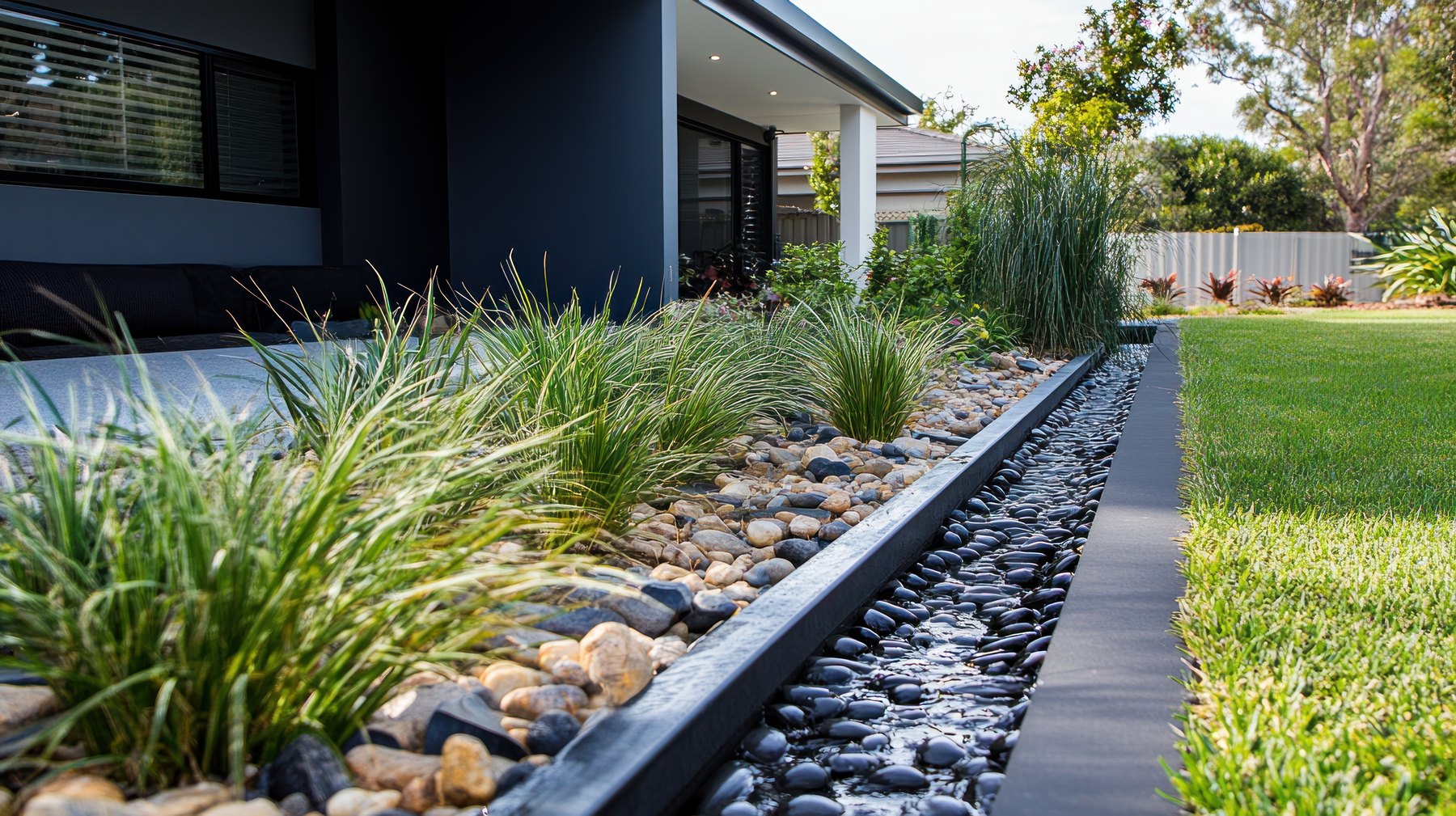
Landscaping and gutter systems work together more than most people realize. A downspout that dumps water two feet from the foundation is not much better than no gutter system at all if the yard beneath it is not graded to carry that water further away. Extensions, splash blocks, or simple regrading near downspout exit points can make a real difference in how much water ends up near a foundation during a hard rain.
This matters especially in Jacksonville during our wetter months, when a short but intense downpour can dump more water in an hour than a downspout and yard were ever designed to handle gracefully. Checking where that water actually ends up after a storm is a simple way to catch a drainage problem before it becomes a water damage problem.
When Landscaping Alone Is Not Enough
Even a well-graded, thoughtfully planted yard cannot fully protect a home from every water event, especially during the heavy storms and tropical systems that pass through Northeast Florida. Landscaping reduces risk, but it does not eliminate it, especially when heavy rainfall arrives faster than the ground can absorb or drain it.
This is where knowing the signs of water intrusion matters just as much as good yard maintenance. A musty smell, a soft spot in flooring near an exterior wall, or a damp baseboard after a storm are all signals that water has already found a way in, regardless of how well the landscaping was designed.
Simple Checks Homeowners Can Do
A homeowner does not need professional equipment to catch some of the early warning signs, and most of these checks can be done in an afternoon.
- Walk the perimeter of the home after a heavy rain and note where water pools.
- Check whether mulch or soil has crept up against the siding or foundation.
- Confirm downspouts are actually carrying water away from the foundation, not dumping it a foot or two away.
- Look for damp baseboards, musty smells, or soft spots in flooring near exterior walls.
Catching a drainage issue this way, before it becomes a moisture problem inside the home, is far less disruptive than dealing with water damage after the fact. It also gives a homeowner a clearer picture of what to mention if a professional assessment is ever needed.
Frequently Asked Questions
How fast should I call after discovering water damage?
As soon as possible. Water can cause structural damage and create conditions for mold growth within the first day or two if it is not removed and dried properly.
Does water damage always lead to mold?
Not always, but the risk increases the longer water sits untreated, which is why fast extraction and drying matter.
Will you find hidden moisture I cannot see?
Yes. Thermal imaging and moisture meters are used to detect water that has spread behind walls, under flooring, or into other hidden areas.
Do you offer free assessments for water damage?
Yes. The Jacksonville office offers a free assessment before restoration work begins.
United Water Restoration Group of Jacksonville offers free assessments for homeowners dealing with water intrusion in Jacksonville and the surrounding area. Call us at (904) 312-7990 or request a free assessment today to find out what's happening before committing to a repair.