




Treat a new stain, sag, blister, or musty smell overhead as a likely sign that water has already reached the ceiling. A slow roof leak, a dripping pipe joint, or a clogged condensate line can spread water across the top of the drywall. Insulation overhead may stay soaked for days or weeks before anything shows below. When a mark does appear, it is not always directly under the leak.
Catching the damage at the stain stage, before the ceiling starts to sag, keeps the repair smaller in most cases. Calling a local water damage restoration company in Jacksonville, FL at that point gives you the best shot at a simple patch instead of a full tear out.
Our water damage restoration services begin the same way on every ceiling call, with IICRC certified crew leaders tracing the water to where it enters before deciding what needs to come out. That keeps a ceiling from being closed up over an active leak and gives your insurance carrier a documented record of what happened.
Brown or Yellow Stains That Spread
As water moves through a ceiling, it picks up:
- Tannins from wood framing
- Dust from insulation
- Minerals along the way
The residue stays behind as the water dries, leaving a discolored patch with a darker ring at its edge. A stain that grows, darkens after rain, or looks wet points to an active leak.
The size of a stain says little about the size of the problem. Before soaking through, water can run along joists, pipes, and the top of the drywall for a surprising distance.
A stain in one corner can trace back several feet to a roof valley, a plumbing joint, or an air conditioning drain. Every stain is the start of a search, not a map of the damage, which is why leak detection & repair comes before any patching.
Bubbling Paint Can Show Up Before a Stain
Moisture trapped behind a painted ceiling pushes the paint away from the drywall, which shows up as bubbles, blisters, or peeling strips.
The color around a blister may still look normal, so a meter reading is the surest way to confirm the drywall behind it is wet.
Textured finishes can crack, soften, or flake in the same way. In homes built before the mid 1980s, that texture may contain asbestos, so have it tested before anyone scrapes or cuts into it.
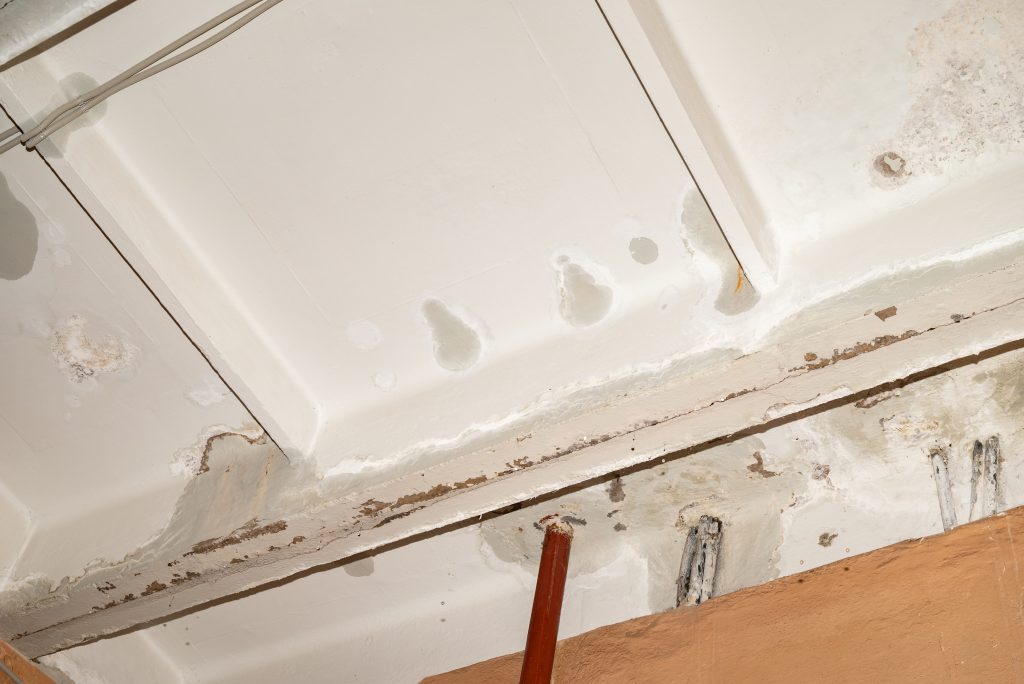
Where the blistering appears matters:
- Bathroom ceiling: Peeling can come from shower steam in a room without enough ventilation, with no leak involved.
- Bedroom, hallway, or living room: These rooms have no steam source, so the moisture likely comes from above.
Roof leaks, failed pipe joints, and clogged AC drain lines are the usual causes of home water damage overhead, and repainting addresses none of them.
Paint cannot dry the drywall or insulation behind it, so the blistering comes back while the leak continues. Lasting water damage repair means stopping the source, drying the materials, and replacing any drywall that has gone soft.
Noticed bubbling paint on a bedroom or hallway ceiling after a summer of Jacksonville storms and nonstop AC? Give us a call at (904) 312-7990, and we will find the leak before a fresh coat of paint hides it.
A Musty Smell With Nothing Visible Overhead
A damp, earthy odor that lingers in one room, or grows stronger after a hard rain, suggests moisture is trapped somewhere nearby.
Mold and bacteria give off that smell as they start growing on wet drywall and wood. Because nothing looks wrong, it is easy to blame on general humidity or an aging air conditioner, which gives the damage more time to spread.
EPA guidance calls for drying water damaged materials within 24 to 48 hours to keep mold from growing. Humid Florida air stretches water damage drying time once water reaches a ceiling cavity, so a smell that hangs around for days is worth a moisture check. Pay extra attention to rooms below an attic, where a slow roof leak can go unnoticed for weeks.
Why a Sagging Ceiling Needs Attention Right Away
Drywall is a gypsum core faced with paper, and once that core absorbs enough water it softens and loses its strength. From there the panel droops under its own weight and any water pooled on top. Saturated sections can give way with little warning, dropping wet insulation, debris, and trapped water into the room below.
Until a crew arrives, these steps limit the damage and help keep everyone safe:
- Keep people and pets out of the room, and do not push on the bulge or try to drain it yourself.
- Move rugs, furniture, and electronics out from under the damaged area, then set a bucket or tarp beneath any drip.
- Shut off the breaker for that part of the house if water is near a light fixture or ceiling fan. Use the electrical panel rather than the wall switch, and skip this step if reaching the panel means walking through water.
- Close the main water valve if a pipe could be the source. A roof or AC leak keeps feeding the ceiling with the water off, which helps narrow down the cause.
- Photograph the damage before anything is moved or cleaned, since clear pictures of the ceiling and wet belongings support the insurance file.
A stain or bubbling paint today can be a simple patch, but a sagging ceiling tomorrow means a bigger tear out. United Water Restoration will find the source, dry what’s wet and restore your ceiling before the damage spreads. Get us a call at (904) 312-7990, and find the source of the leak before anything is cut out or closed up.