



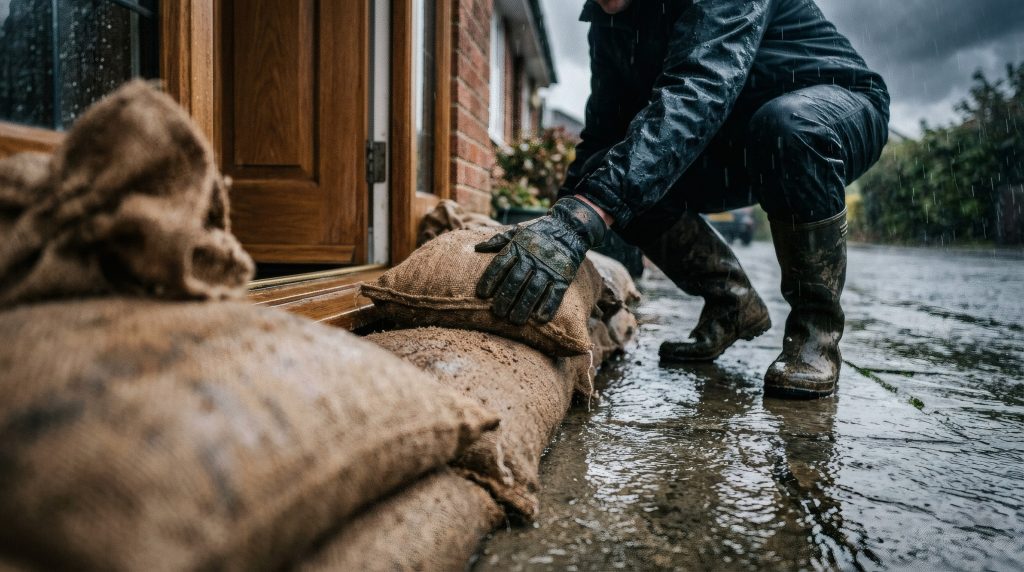
Hurricane season runs from June 1 through November 30, but much of the water damage it brings starts with small problems that were already there. One lifted shingle or cracked line of caulk can go unnoticed for months, then leak badly once wind drives rain against it. That is why preparation works best on a quiet spring weekend, long before a storm has a name.
Once water gets inside, it can soak attic insulation, run down wall cavities, and reach the subfloor before the storm has even passed. Mold can begin growing within 24 to 48 hours, and a quick fix may turn into a full remediation job. Stopping water at the outside of the house is usually far cheaper than the drying and rebuilding our crews handle after a storm, and experienced water damage repair from our team is ready the moment you need it.
Start With the Roof and Attic Vents
Roofs take the full force of a tropical storm, so they deserve the earliest look each year. These all give wind driven rain a way in:
- Lifted or missing shingles
- Cracked flashing at vents and chimneys
- Dried out sealant around pipe boots
From the ground, binoculars catch the obvious problems. Anything they miss, a professional roof inspection every year or two should catch.
Research by the Insurance Institute for Business and Home Safety (IBHS) found that soffit panels torn off by wind let in the most water. Rain soaking into attic insulation can eventually bring down a ceiling, which is one of the most common reasons homeowners here end up calling for storm damage restoration.
- Check that soffit panels are firmly attached.
- For gable end vents, IBHS recommends a permanent seal or a removable cover that goes on when a hurricane threatens.
Check Grading and Drainage Around the Foundation
Water needs somewhere to go once it hits the ground, and the grading around a home’s foundation determines whether that water moves away from the structure or pools right against it.
Ground that slopes toward a house rather than away from it is one of the more overlooked causes of foundation related water intrusion, and it is often the result of years of soil settling rather than anything the homeowner did wrong.
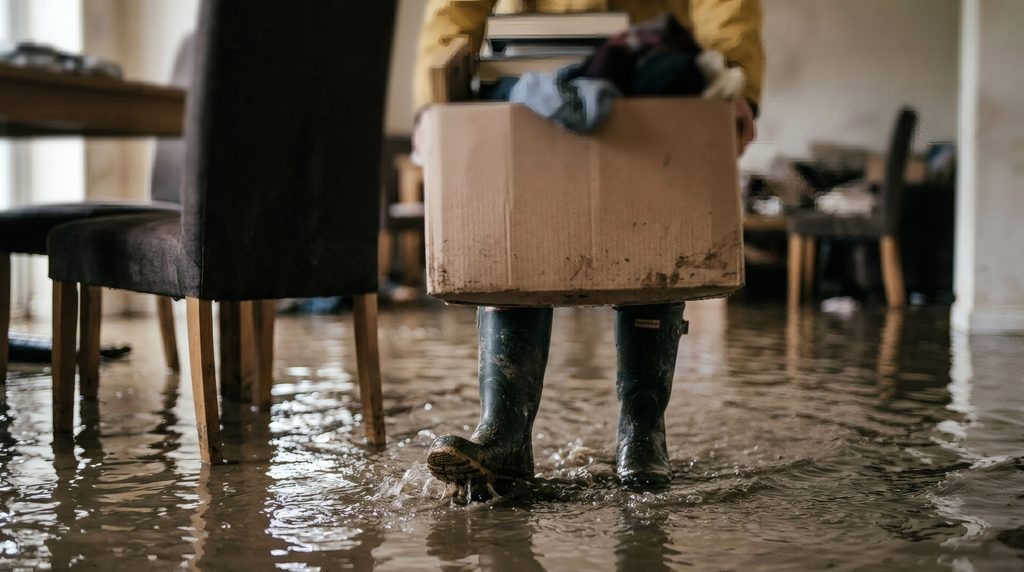
Simple fixes that make a meaningful difference before storm season arrives:
- Add soil to correct negative grading
- Extend downspouts further away from the foundation
- Install a French drain in problem areas
Homeowners with a crawl space should also check that vents are clear and that any existing vapor barrier is intact, since standing water under a home shows the importance of flood water removal better than almost anything else a storm leaves behind.
Found standing water in your crawl space after a heavy Jacksonville downpour? Give us a call at (904) 312-7990, and we will pump it out and dry the space before the next tropical storm rolls through.
Sealing Windows and Doors Against Wind Driven Rain
Wind driven rain does not behave like ordinary rainfall. Strong gusts push it sideways and even upward, forcing water into gaps that normal rain never reaches.
Worn weatherstripping and shrunken caulk can look fine on a calm day and still leak when a storm presses rain against the frame. Water that gets into a wall cavity that way also stretches water damage drying time, since the moisture sits where airflow cannot reach it.
Before the season, cut out cracked or separated caulk around window frames and apply a fresh exterior grade bead. Renew flattened weatherstripping, and check that door sweeps and thresholds seal tight.
Sliding glass doors need a closer look, because clogged weep holes in the track can let water back up onto the floor. Near the ocean, from Atlantic Beach south to Ponte Vedra Beach, homes tend to face the highest winds and benefit most from a yearly check.
The Day or Two Before a Storm Arrives
Once a storm is forecast to reach Northeast Florida, the work shifts from repairs to quick protective steps. Do the outdoor jobs early, since ladder work gets risky once the squalls move in. Each step below can be finished before the wind picks up:
- Clear gutters and yard drains of anything that has collected since the last cleaning, so heavy bands of rain have somewhere to go.
- Bring in or tie down loose items such as patio furniture, grills, and planters, which high wind can hurl into windows and doors.
- Cover gable end vents if the house has them, using covers prepared in advance.
- Test the sump pump, if there is one, and make sure its discharge line is clear and pointed away from the house.
- Photograph the house inside and out for a dated record of its condition.
Where rooms have flooded in the past, lift rugs, electronics, and paperwork off the floor ahead of the rain. If water does come in during the storm, keep clear of any standing water near outlets and cords. Wait until the weather clears completely before checking the attic for leaks.
A little preparation before storm season and a fast response when water gets in can save your home from costly repairs. United Water Restoration is ready to help Jacksonville homeowners remove water, dry the structure and stop the damage from spreading. Give us a call at (904) 312-7990, to walk you through what to check and what to do next.