



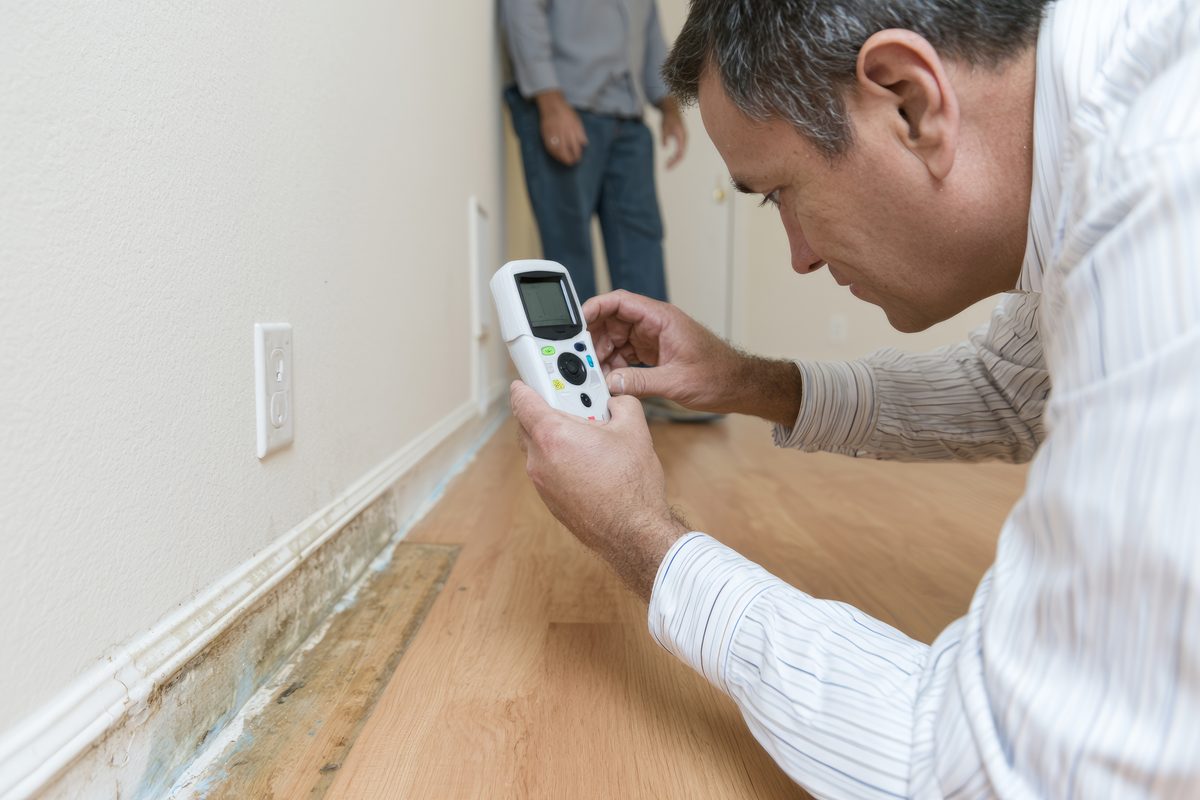
Water damage has a way of hiding in places a homeowner would never think to check. Someone might see a small stain or a damp patch of carpet and assume that is the extent of it when the moisture has already traveled somewhere else entirely. It spreads, you know. Quietly.
That gap between what is visible and what is actually happening inside a home is why professional detection matters. Our team, offering trusted water damage restoration services in Jacksonville, FL, deals with it on nearly every water call, and getting this step right shapes everything else that happens during a restoration job.
Why Visible Damage Rarely Tells the Whole Story
Water moves along the path of least resistance, which often means it travels behind walls, under flooring, or into insulation long before it shows up somewhere obvious. A stain on a ceiling might represent only a fraction of the actual wet area above it.
Guessing at the size of a water problem based on what you can see leads to incomplete repairs. If drying only covers the visible area, moisture left behind in hidden spots can keep causing damage or turn into mold weeks later.
This is exactly why proper detection comes before any repair work. We have seen homeowners pay for cosmetic repairs, only to have the same stain reappear because the actual source of moisture was never fully dried out.
Thermal Imaging and How It Works
Thermal imaging cameras read surface temperature differences, and wet materials tend to show up differently than dry ones because water changes how a surface holds and releases heat. This lets a technician scan a wall or ceiling and see patterns that are not visible to the eye.
We use thermal imaging inspection early in almost every job because it points us toward areas that need a closer look with other equipment. Without it, a technician would be guessing at where water has spread, which slows the process and risks missing damage. A thermal scan can also cover a large wall or ceiling in minutes, far faster than checking every square foot by hand.
This matters just as much in Jacksonville’s humid climate as anywhere else, since materials here can hold onto moisture longer than they would in a drier region. A ceiling that looks dry to the touch can still read wet on a thermal scan, often the first sign that more investigation is needed before drying equipment goes in.
Seeing a stain that keeps coming back no matter how many times you dry it? Call (904) 312-7990 and we will check for moisture you cannot see on your own.
Moisture Meters and Direct Readings
While thermal imaging shows temperature patterns, moisture meters give an actual reading of how much water is present in a material. These tools work on wood, drywall, and other building materials to confirm exactly how saturated something is.
Combining thermal imaging with moisture meter readings gives a clearer picture than either tool alone. One shows where to look, and the other confirms what is happening once we get there, which helps us plan drying equipment placement more accurately.
Taking readings at multiple points across a room also helps map how far moisture has traveled, rather than treating the whole space as one uniform problem.
| Tool | What It Shows | Best Used For |
|---|---|---|
| Thermal imaging | Temperature differences that reveal patterns invisible to the eye | Quickly scanning a large wall or ceiling to find where to look closer |
| Moisture meter | An actual reading of how saturated a material is | Confirming exact moisture levels once a problem area is located |
Checking the Areas Most Homeowners Miss
These areas get little airflow, which means water sitting there can linger far longer than water in an open room. Common places moisture hides after a leak or flood include:
- Crawl spaces
- The backs of cabinets
- Areas behind baseboards
- Spots underneath flooring
We have walked into homes where the visible damage looked minor, only to find far more moisture once we checked these hidden spots. That is a big part of why a full inspection matters more than a quick glance at the obviously wet area. In older homes especially, gaps around baseboards and subflooring seams give water an easy path to travel that stays invisible until someone checks for it.
What Happens After Moisture Is Found
Once we know where moisture has spread, we set up drying equipment specifically for those areas instead of guessing at placement. That might mean air movers and dehumidifiers positioned in a crawl space or inside a wall cavity opened up for access.
We also recheck moisture levels throughout drying rather than assuming a set number of days will be enough. Every situation dries at a different rate depending on the materials involved and how much water is present, so we base decisions on readings, not guesswork.
Frequently Asked Questions
Will you find hidden moisture I cannot see?
Yes. Thermal imaging and moisture meters are used to detect water that has spread behind walls, under flooring, or into other hidden areas, rather than relying on what is visible on the surface.
What equipment is used during water extraction and inspection?
Technicians use moisture detection tools and thermal imaging to locate hidden water, along with extraction and drying equipment to remove water and dry affected areas.
Does water damage always lead to mold?
Not always, but the risk increases the longer water sits untreated, which is why finding hidden moisture quickly and drying it out matters.
Detecting moisture accurately is the foundation of restoration work done correctly. Skipping this step, or relying only on what is visible, leads to problems that come back later as mold or continued structural damage. If you suspect hidden moisture in your Jacksonville home or business, call (904) 312-7990 for a free assessment.