


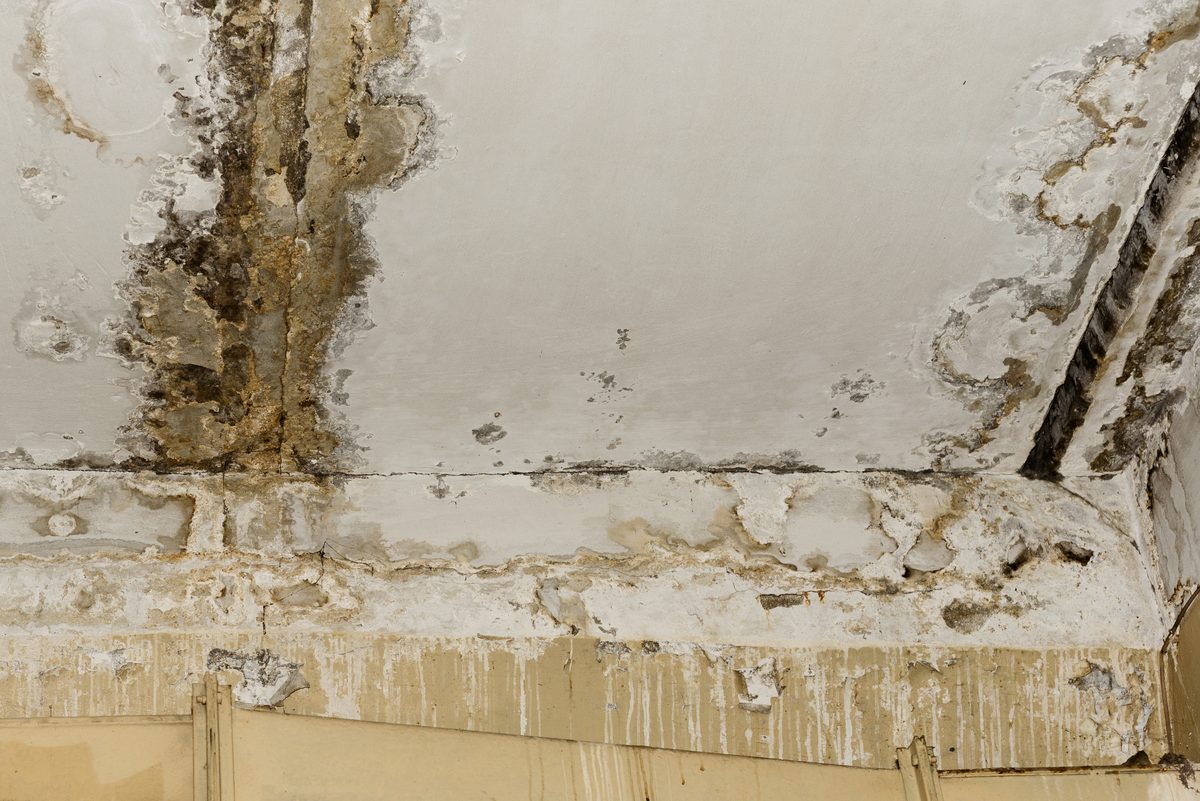
Trusted Mold Removal Company in Orlando, FL
United Water Restoration Group of Orlando provides mold remediation in Orlando, FL from our base on Stapoint Court in Winter Park, minutes from Downtown Orlando. Orlando’s year-round humidity means mold returns anywhere moisture stays. Our IICRC-certified crews contain the area, remove the growth, fix the water source, and rebuild what comes out.
We answer around the clock, bill your insurance carrier directly, and handle the repair ourselves. One company carries the job from the first moisture reading to the final coat of paint.
Where Mold Starts in Orlando Homes
Orlando averages about 51 inches of rain a year, and more than half of it falls from June through September. Mold in local homes usually traces back to one of these moisture sources.
- Air handler closets and condensate lines. Condensate lines back up through ceilings all summer, and mold can grow on the wet drywall around the air handler before anyone notices.
- Slab edges and block walls. A high water table and sandy soil put most local homes on concrete slabs. Moisture at the slab edge can wick into baseboards and the bottom of the drywall.
- Crawlspaces under historic bungalows. Some of College Park’s 1920s to 1940s bungalows sit on wood frames over a crawlspace, where damp air reaches the subfloor and joists from below.
- Slow leaks under older slabs. In older Downtown Orlando homes, cast iron drains can leak under the slab for months and feed growth in the walls above.
- Supply lines and water heaters. Aging supply lines and water heaters fail in laundry rooms and utility closets, and the water soaks into drywall and cabinet bases.
- Stormwater at windows and flashing. Summer storms push water past flashing and window seals and into closed wall cavities.
When mold follows a fresh leak, drying comes before removal. Our water damage restoration crews in Orlando extract water and dry the structure, so mold work starts on dry materials.
Signs of Hidden Mold Growth in Your Home
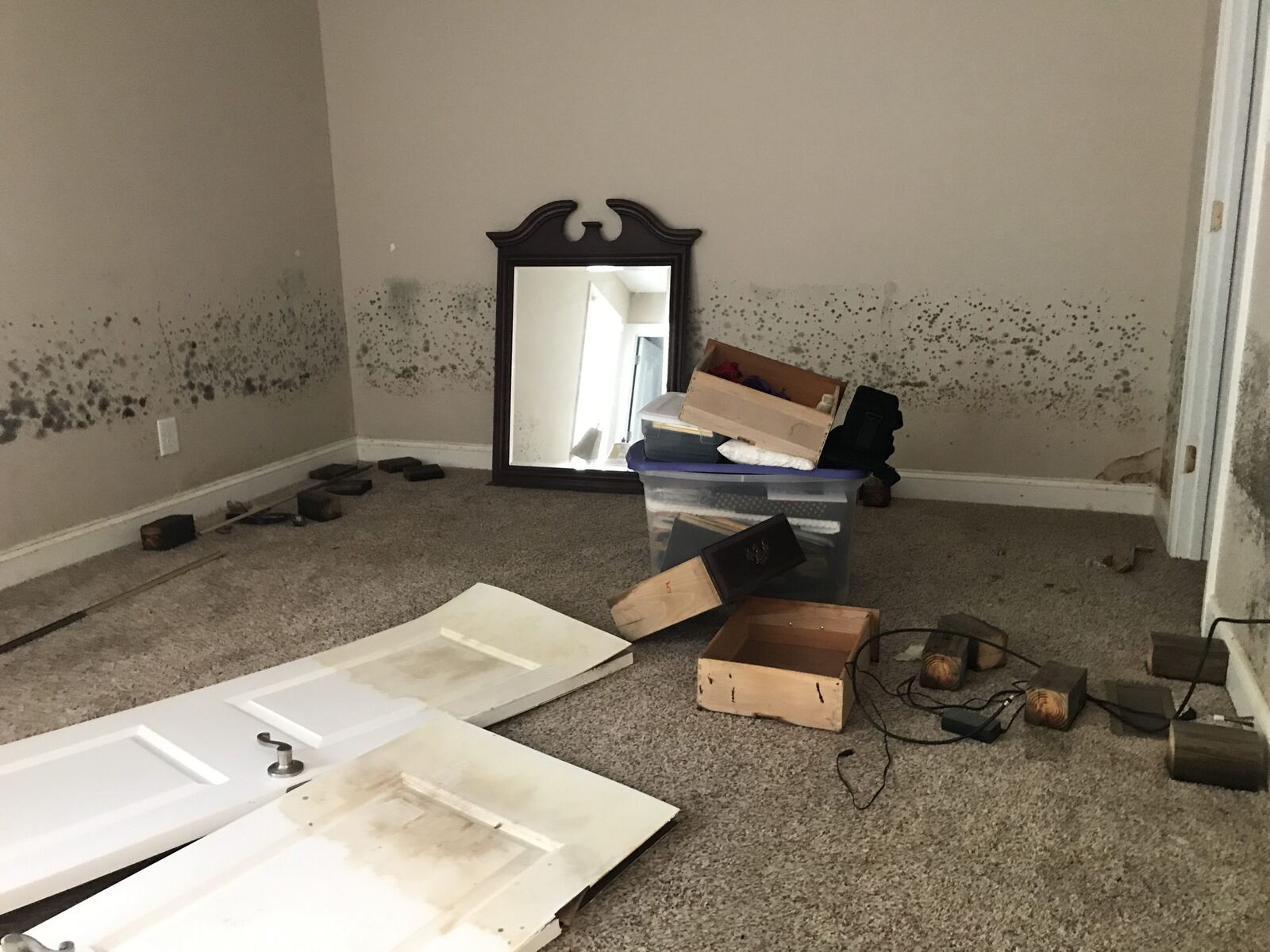
Most mold grows out of sight, inside wall cavities, under flooring, or in the air handler closet. These signs tell you to look closer.
- A musty, earthy smell that gets stronger when the AC starts or a closet door opens.
- Gray, green, or black spotting on drywall, grout, ceiling texture, or the back of baseboards.
- Bubbling or peeling paint low on a wall, often near a slab edge or an exterior block wall.
- Warped baseboards, soft drywall, or swollen cabinet bases under sinks.
- Staining around ceiling supply registers or the air handler closet door.
- Spots that return within weeks after cleaning, which usually means the moisture source is still active.
Why Orlando’s Humidity Changes How We Remove Mold
Relative humidity in Orlando stays high all year and reaches about 90 percent at night. The EPA advises drying wet building materials within 24 to 48 hours to prevent mold growth, and humid air slows that drying unless dehumidifiers pull the moisture out.
Wiping visible growth does little while the wall cavity, subfloor, or duct stays damp, because the spores settle and grow again. Our crew traces where the water comes from before we set the plan, then runs dehumidifiers and air movers until materials are dry through, not dry to the touch.
In a slab-on-grade block home, painting over a stain at the base of a wall hides the problem without drying it.
Mold Remediation in Orlando, FL: Our Step-by-Step Process
Here is how a typical mold job runs, from a single bathroom wall in Baldwin Park to a flooded ground floor near Lake Eola.
1. Moisture Mapping and Mold Inspection
Moisture meters and infrared imaging locate wet materials behind walls, under flooring, and around the air handler, where hidden growth tends to start. The resulting moisture map sets the size of the job before anything comes out.
2. A Remediation Plan Based on the Industry Standard
IICRC S520, the industry standard for professional mold remediation, sorts indoor areas into three conditions. Condition 1 reflects normal background mold, Condition 2 carries settled spores from a nearby growth area, and Condition 3 has actual growth. Remediation aims to return affected areas to Condition 1, and the moisture map shows where containment and removal need to go.
3. Containment and Negative Air Pressure
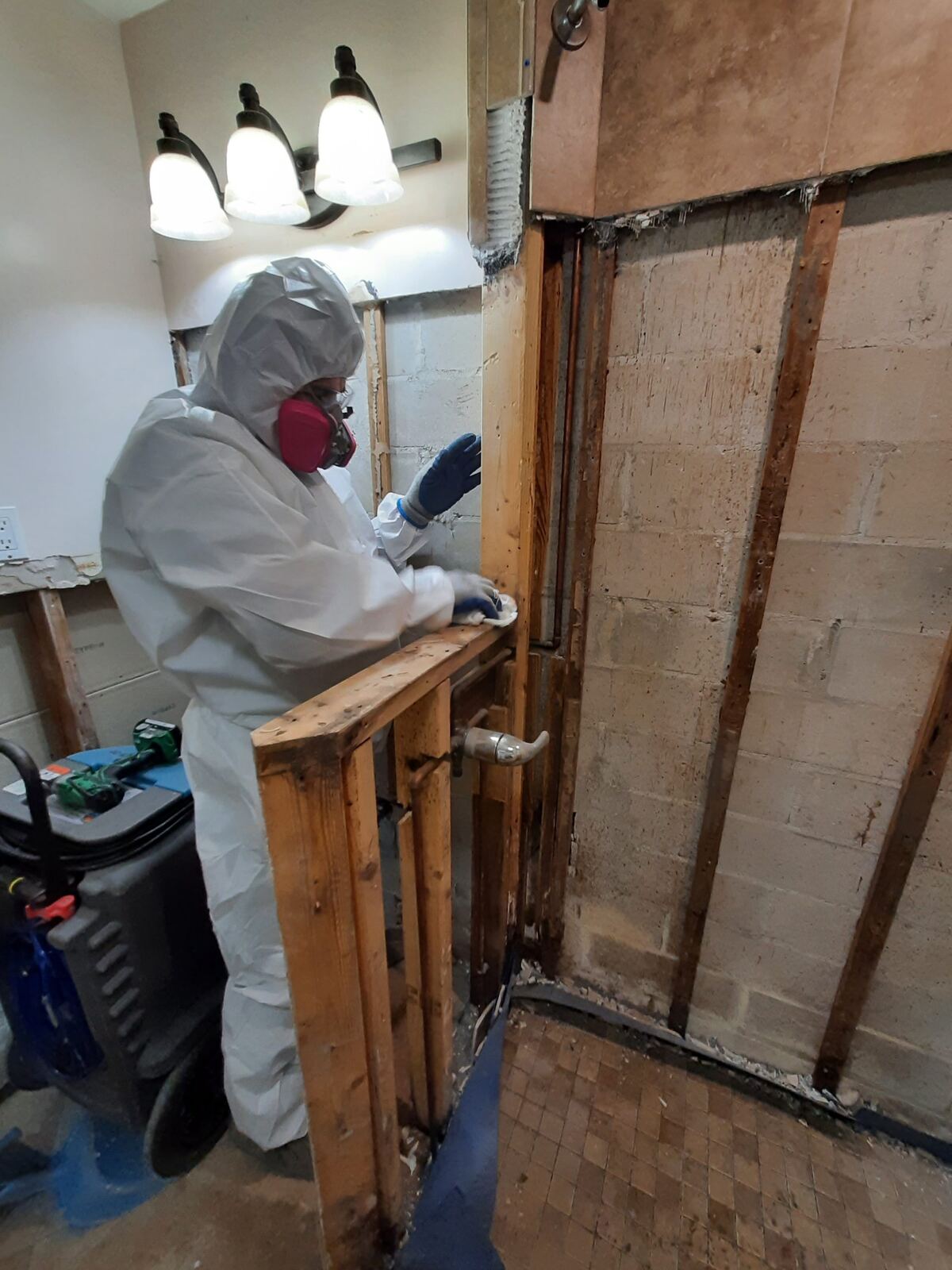
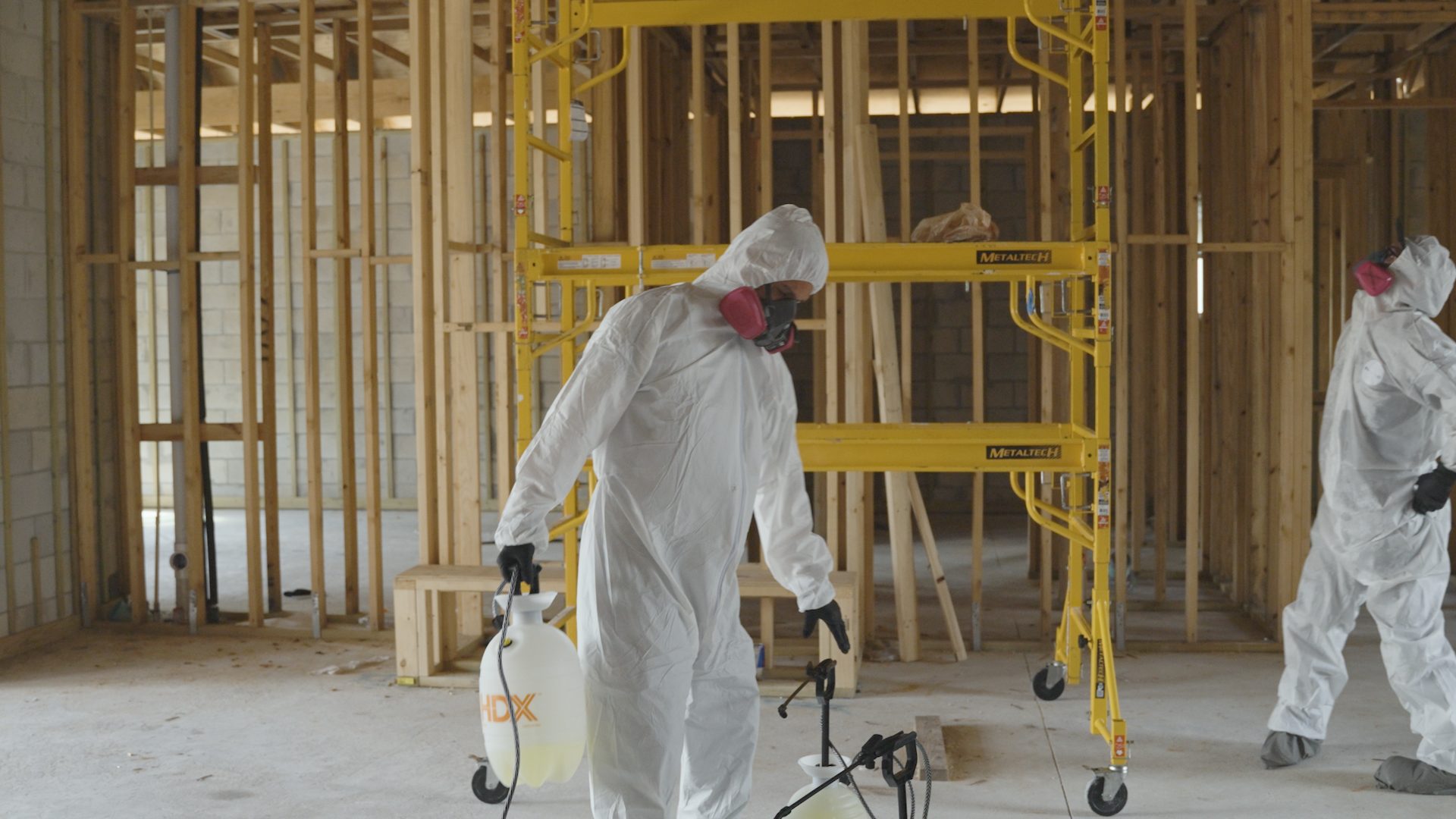
We seal the work zone with containment barriers and maintain negative air pressure with HEPA filtration. Our crew wears personal protective equipment, and the barriers keep spores out of unaffected rooms.
4. Removal of Mold-Damaged Materials
We remove the drywall, insulation, and other porous materials that mold has grown into.
5. Surface Cleaning and Antimicrobial Treatment
We deep-clean the remaining surfaces and apply antimicrobial treatment to prevent regrowth.
6. Drying, Air Scrubbing, and Odor Removal
Dehumidifiers and air movers bring the structure back to dry readings. Air scrubbers with HEPA filters and deodorization remove airborne spores and musty odors.
7. Independent Clearance Testing
Florida keeps mold assessment and mold remediation separate. When your insurer, landlord, or buyer needs air sampling or a clearance report, a licensed mold assessor independent of our crew provides that work.
8. Repair and Rebuild
Our reconstruction services crews replace the drywall, flooring, paint, and cabinetry removed during the job, so the property ends the way it started.
Found mold after a leak? Call our 24/7 line, and a certified technician will start with a moisture map of the affected area.
What We Remove, Clean, or Save
Porosity decides whether a material stays or goes. Mold grows into soft, absorbent materials and stays on the surface of hard ones. Sewage backups add a second hazard, so we handle those materials through our biohazard cleanup procedures.
Material Type | Common Examples | Typical Approach |
|---|---|---|
Porous | Drywall, insulation, carpet and pad, ceiling tiles | Removed and replaced once mold grows into it |
Semi-porous | Wood framing, subfloor, cabinet bases | Cleaned and treated when sound; replaced when soft or rotted |
Non-porous | Tile, concrete, metal, glass | Cleaned in place |
Sewage-contaminated | Any material soaked by a backup | Removed under biohazard procedures |
Black Mold, Mildew, and Other Common Indoor Molds
“Black mold” usually means Stachybotrys chartarum, a greenish-black mold that grows on high-cellulose materials such as gypsum board and paper when they stay wet. Cladosporium, Penicillium, and Aspergillus are other common indoor molds, and several of them also look dark.
The CDC says you don’t need to identify the type of mold in your home because all indoor mold requires the same removal. Mildew is a surface mold on grout, shower caulk, and window sills. It wipes off non-porous surfaces, while growth inside drywall or insulation needs remediation.
Mold in AC Systems, Attics, and Crawlspaces
Three parts of a house hide mold where owners rarely look: the AC system, the attic, and the crawlspace.
Air Handlers, Drain Pans, and Ductwork
The evaporator coil collects condensation when the AC cools, and a clogged drain pan or condensate line can keep the closet wet. A running system can then carry spores through the supply registers. When mold reaches the air handler cabinet or duct liner, plan an HVAC scope alongside the remediation.
Attics and Roof Leaks
Stormwater that slips past flashing can wet roof decking and attic insulation before a ceiling stain appears. Attic heat adds to the problem, so a new ceiling stain after a summer storm calls for an attic check.
Crawlspaces Under Historic Homes
Raised wood floors in older College Park homes sit over crawlspace air that stays damp. The joists and subfloor need inspection from below, and the moisture source under the house needs fixing, or the growth will return.
Permits and Licensing for Orlando Mold Jobs
Florida requires companies that remediate more than 10 square feet of mold for the public to hold a state license. The rebuild permit depends on where the property sits, because the City of Orlando and unincorporated Orange County run separate building departments.
Authority | Applies To | What It Means for Your Job |
|---|---|---|
State of Florida (DBPR) | Mold work over 10 square feet performed for hire | Remediation requires a licensed mold remediator, and assessment requires a separately licensed mold assessor. Residential property owners working on their own property are exempt. |
City of Orlando Permitting Services Division | Addresses inside Orlando city limits | Confirm with the division whether your drywall and rebuild scope needs a permit. |
Orange County Division of Building Safety | Unincorporated Orange County addresses | The county asks owners to check with its Building Division before replacing drywall. |
Mold After Flooding: What Hurricane Ian Left Behind
In September 2022, Hurricane Ian dropped up to 14 inches of rain on Orlando, and the city reported historic flooding.
Lake Eola overflowed, and flooding reached neighborhoods from Delaney Park and Lake Davis to College Park, Carver Shores, and Richmond Heights. Lake Adair spilled over and flooded part of Edgewater Drive. West of downtown, Orange County measured 13.2 inches in 24 hours in Orlo Vista, a low-lying area off Kirkman Road that also flooded during Irma in 2017.
A house that dried only on the surface can hold moisture inside block walls, under flooring, and in crawlspaces long after the water recedes. If your home took water in 2022 and now has a musty smell or baseboard staining, have the wall cavity checked. For a fresh storm loss, our storm damage restoration team handles board-up, extraction, and drying before the mold work begins.
What Mold Remediation Costs Depend On
The scope of each job sets the price. These factors move it most.
- Affected area. The square footage of growth, which often runs larger than the visible patch.
- Materials removed. Drywall, insulation, flooring, and cabinetry that we cannot clean in place.
- Containment size. One closet needs a small enclosure, while a whole floor needs several zones.
- Access. Attics, crawlspaces, and air handler closets take more time than an open bedroom wall.
- Moisture source repair. A failed supply line, roof leak, or slab leak has to stop before the mold work holds.
- Rebuild scope. Drywall, paint, flooring, and trim that go back after removal.
If insurance does not cover the loss, ask about our payment options, including financing and payment plans.
One Claim, One Crew: Insurance Billing and Rebuild
Many mold jobs start as a water loss, so the claim and the cleanup move together.
We document the loss, bill your carrier directly, and stay in the file until it closes. Our insurance claim assistance keeps the paperwork moving while you focus on your home. Removal and reconstruction sit under one roof, so you don’t have to coordinate a mold company, a drywall crew, and a painter through the same claim.
Ready to start your claim? We work with all major insurance carriers.
What to Do Before Our Crew Arrives
A few steps protect your health and your claim while you wait.
- Leave visible growth alone. Scrubbing or dry brushing releases spores into the air.
- Skip the bleach. Routine bleach use is not recommended for mold, and it works poorly on porous materials like drywall and wood.
- Turn off the AC if growth sits in the air handler closet or around the supply registers.
- Keep fans from blowing across the affected area.
- Shut off the water if a leak is still active, then photograph the growth and the source for your insurer.
- Keep children, pets, and anyone with asthma or a weakened immune system out of the affected rooms.
Why Orlando Property Owners Choose Our Mold Remediation Team
Our Winter Park branch is open 24 hours a day, seven days a week.
- IICRC- and IRI-certified technicians. Our technicians train on current damage restoration methods.
- 4.9 stars across more than 500 Google reviews. Homeowners and property managers rate this branch on speed and clear communication.
- Family-owned with a 100% satisfaction guarantee. Learn more about our Orlando team, part of a restoration network founded in 2008.
Mold Removal Across Orlando and Orange County
Our crews leave from Stapoint Court in Winter Park, which keeps us close to most of Orlando’s inner neighborhoods. Our Central Florida service areas reach into Orange, Seminole, Osceola, Lake, and Volusia counties.
We handle mold removal for single-family homes, condominiums, and rentals in Downtown Orlando, Thornton Park, College Park, Baldwin Park, and Lake Nona, along with Winter Park, Apopka, Ocoee, and the rest of Orange County. For offices, restaurants, warehouses, and property management portfolios, our commercial mold remediation in Orlando team follows the same process and schedules the work around tenants and opening hours.
Orlando Mold Remediation FAQ
These answers cover permits, testing, timing, occupancy, and insurance for local properties.
Do I need a permit to replace moldy drywall in Orlando?
It depends on who has jurisdiction over the property and how much drywall comes out. If it’s inside city limits, check with the City of Orlando Permitting Services Division. In unincorporated Orange County, the county asks owners to check with its Building Division before replacing drywall. An Orlando mailing address doesn’t always mean the property is inside city limits.
Is mold remediation the same as mold removal?
People use the terms interchangeably, but they describe different scopes. Mold removal means taking out the growth. Mold remediation covers the whole job: containment, removal, cleaning, drying, and fixing the moisture source. Mold spores exist naturally indoors and outdoors, so remediation aims for normal background levels, not a spore-free home.
Can the company that removes my mold also test it in Florida?
Not on the same structure within 12 months. Florida law bars a remediator from assessing a property its company remediated in that window, and bars an assessor from remediating one it assessed. If you need air sampling, a written protocol, or a clearance report, a licensed mold assessor provides it independently, which gives your insurer or buyer a neutral record.
How long does mold remediation take?
A single closet or bathroom wall moves faster than a flooded ground floor. Containment, removal, and cleaning come first, and drying time depends on how wet the structure is. The rebuild starts once readings come back dry. You get a written schedule once we set the plan.
Can I stay in my home during mold remediation?
Often, yes. Containment and negative air pressure keep spores inside the work zone, so you can usually keep using the rooms outside it. A large job, growth in the air handler, or a household member with asthma or a weakened immune system can change that, so ask about occupancy before work starts.
Does homeowners insurance cover mold remediation?
Coverage depends on the cause and your policy terms. Mold that follows a sudden loss, such as a burst pipe, an appliance leak, or stormwater, has the strongest case. Growth from long-term humidity or a slow leak is harder to claim. Check your policy for mold limits or exclusions before the work begins.
Schedule Mold Remediation in Orlando Today
Stop the mold at its source. Call any hour, day or night, or request a quote online, and we will start with the moisture behind the growth.
United Water Restoration Group of Orlando
6959 Stapoint Ct Suite K, Winter Park, FL 32792
Phone: (407) 278-7715
Hours: 24/7 Emergency Service