


Family-Owned Mold Remediation Company in Lakeland, FL
United Water Restoration Group of Lakeland provides mold remediation in Lakeland, FL from our office on Anchuca Drive. Our IICRC- and IRI-certified technicians trace the moisture feeding the growth, seal off the work area, remove what they can’t save, and dry the structure before anything goes back. We answer the phone 24 hours a day and work with every insurance carrier.
Why Mold Takes Hold in Lakeland Homes
Mold grows wherever moisture stays on a food source such as drywall, paper, or wood. Hidden water often feeds it, which is why mold work and water damage restoration in Lakeland so often run on the same job.
Summer Humidity and Afternoon Storms
Central Florida’s summer rainy season brings frequent afternoon thunderstorms and muggy air. The EPA recommends keeping indoor relative humidity below 60% because high humidity encourages mold growth. It also advises drying wet materials within 24 to 48 hours. Wall cavities get little airflow, so a wet one can stay damp long after the leak stops.

AC Condensate Lines and Air Handler Closets
Your air conditioner pulls moisture out of indoor air and sends it down a condensate drain line. When algae or debris clogs that line, water backs onto the closet floor and into the drywall behind the air handler. Mold can cover the back of that wall long before a stain shows on the front, and the system can then carry spores and musty odor through the ductwork.
Crawlspace Bungalows, Slab Homes, and Block Walls
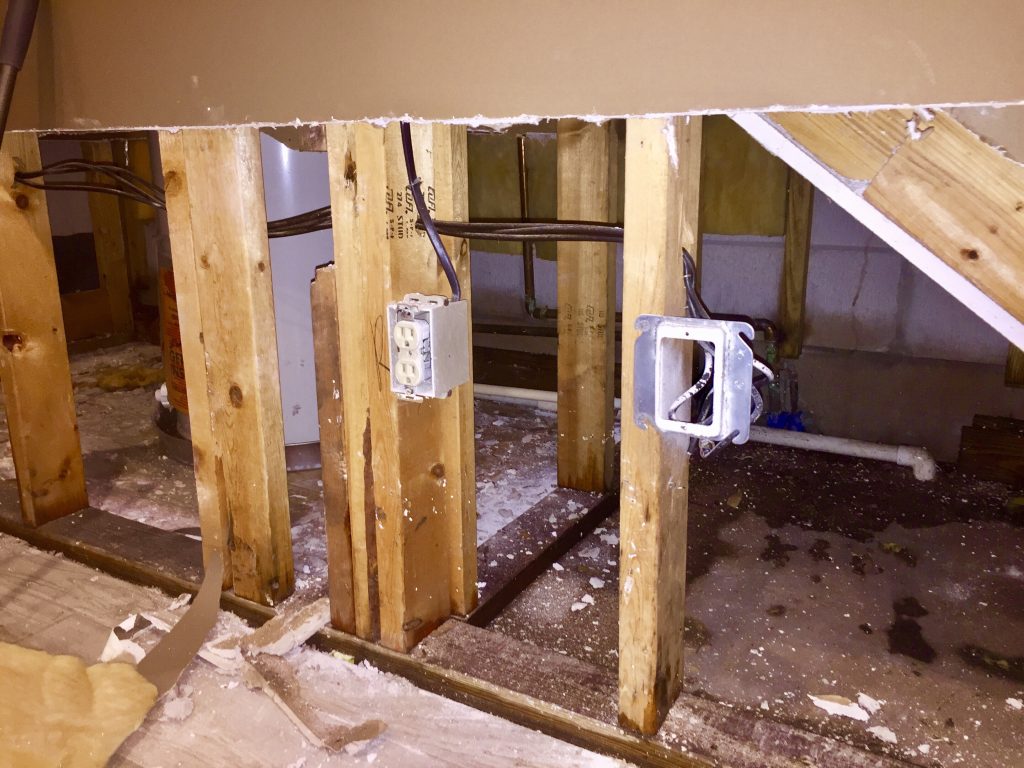
Housing stock changes where moisture hides. Some of the early 20th-century bungalows in historic districts such as Dixieland and South Lake Morton sit over crawlspaces, where damp air under the floor can feed growth on joists and subflooring. In slab-on-grade homes, water from a leak spreads across the floor and wicks into baseboards and the bottom few inches of drywall. Concrete block walls can hold water behind paint and furring strips after a roof or window leak.
Leftover Water From Hurricane Milton
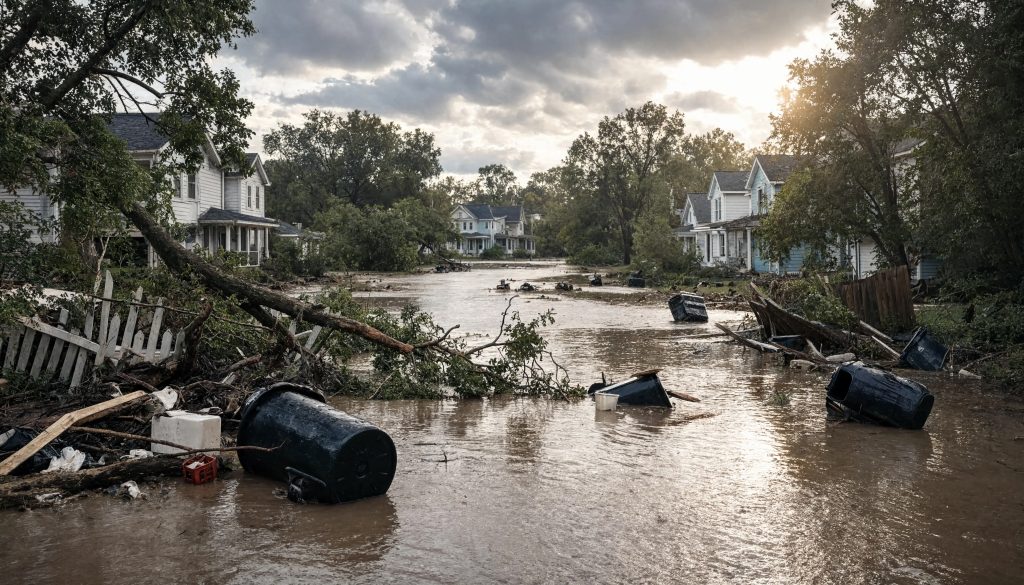
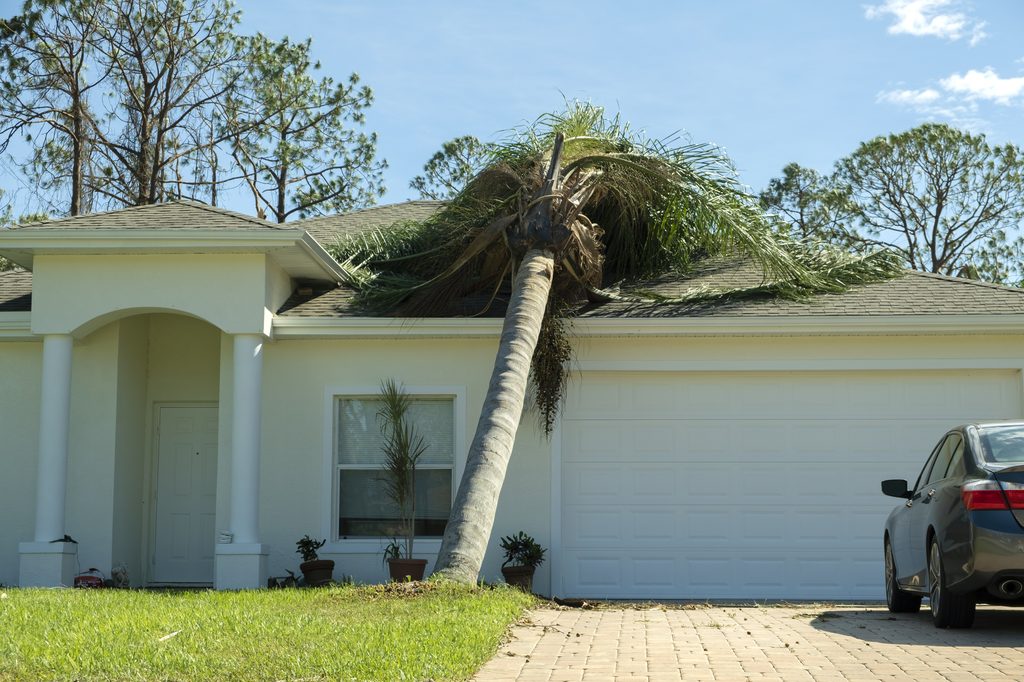
Hurricane Milton dropped more than 12 inches of rain on the Lakeland area in 24 hours in October 2024, and homes around Lake Bonny and along English Creek took water inside. If drywall or insulation from that storm dried only at the surface before someone closed the walls, mold may still hide behind fresh paint.
Signs You Need Professional Mold Remediation
Mold rarely shows up as a large, visible patch. Watch for these warning signs, especially after any leak, storm, or AC problem:
- A musty, earthy odor. Growing mold releases microbial volatile organic compounds (MVOCs), and the smell returns after cleaning if the growth remains.
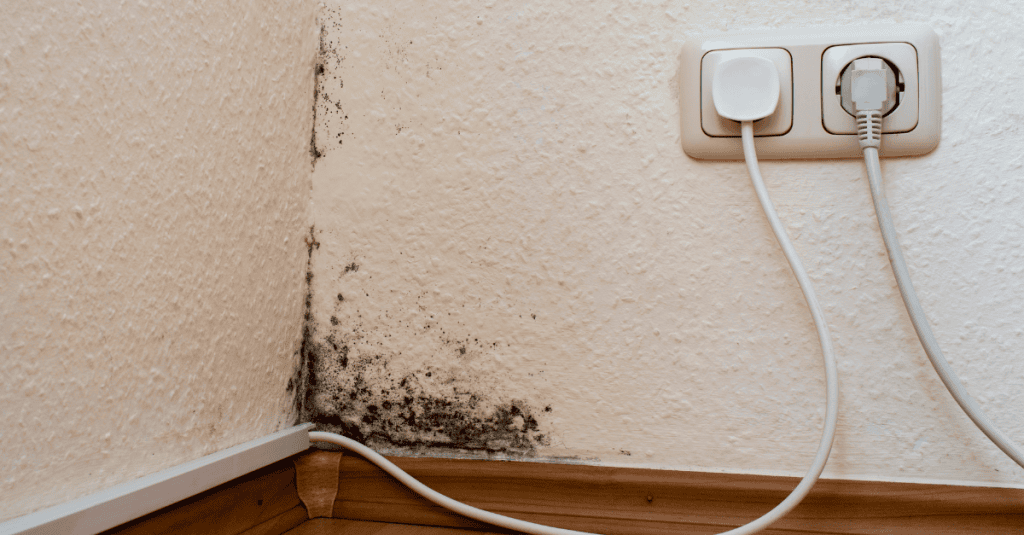
- Discoloration and staining. Black, green, or white spots on ceilings, baseboards, grout, window sills, and cabinet backs.
- Bubbling paint or soft drywall. Moisture behind the surface lifts paint and breaks down the gypsum core.
- Condensation that won’t quit. Sweating windows, sliding doors, or AC vents point to indoor humidity that feeds growth.
- Symptoms that ease when you leave. Stuffy nose, itchy eyes, coughing, or wheezing indoors, especially for people with asthma or allergies. Talk to your doctor about any health concerns.
- Any past water event. A roof leak, burst supply line, sewage backup, or flood that someone dried without moisture readings.
Florida’s 10-Square-Foot Rule and Who Handles Each Step
Florida licenses mold work, and its rules decide who handles each part of your job. Chapter 468, Part XVI of the Florida Statutes generally requires a state-licensed mold remediator to perform or directly supervise remediation larger than 10 square feet. The Florida Department of Business and Professional Regulation (DBPR) licenses individual remediators, not companies, so ask for the license holder’s name and look it up before you sign.
The same law keeps testing and removal apart. A company that provides a mold assessment on your home cannot remediate it within the next 12 months, and a remediator cannot assess a home it remediated in that window. For air sampling, surface sampling, or clearance testing, hire an independent licensed mold assessor.
| Part of the job | Who handles it | What governs it |
|---|---|---|
| Mold sampling and clearance testing | An independent licensed mold assessor | Fla. Stat. 468.8419 (one company can’t assess and remediate the same structure within 12 months) |
| Remediation larger than 10 square feet | A licensed mold remediator or crews under direct supervision | Fla. Stat. Chapter 468, Part XVI |
| Rebuilding inside city limits | Reconstruction crews working under a permit | City of Lakeland Building Inspection Division, Florida Building Code |
| Rebuilding in Lakeland Highlands, Medulla, and other unincorporated areas | Reconstruction crews working under a permit | Polk County, Florida Building Code |
The City of Lakeland Building Inspection Division asks owners to call before any project starts to confirm what needs a permit.
Not sure how big the problem is? A real person in our office answers day or night and can talk you through the next step.
Mold Remediation in Lakeland, FL: How Each Job Runs
The order matters, because removing mold before fixing the water only buys you a few months. Here is how a typical job runs from first visit to finished walls.
1. Find the Moisture Source and Set the Scope
Infrared cameras and moisture meters show where the water is and how far it has traveled inside walls, cabinets, subfloor, and ceiling cavities. The scope then names the affected area, the materials that must come out, and the leak that needs repair before the rebuild.
2. Build Containment and Filter the Air
Containment barriers isolate the work area from the rest of the building, and HEPA air filtration captures spores that removal knocks loose, so they don’t drift into still-clean rooms.
3. Remove Contaminated Materials
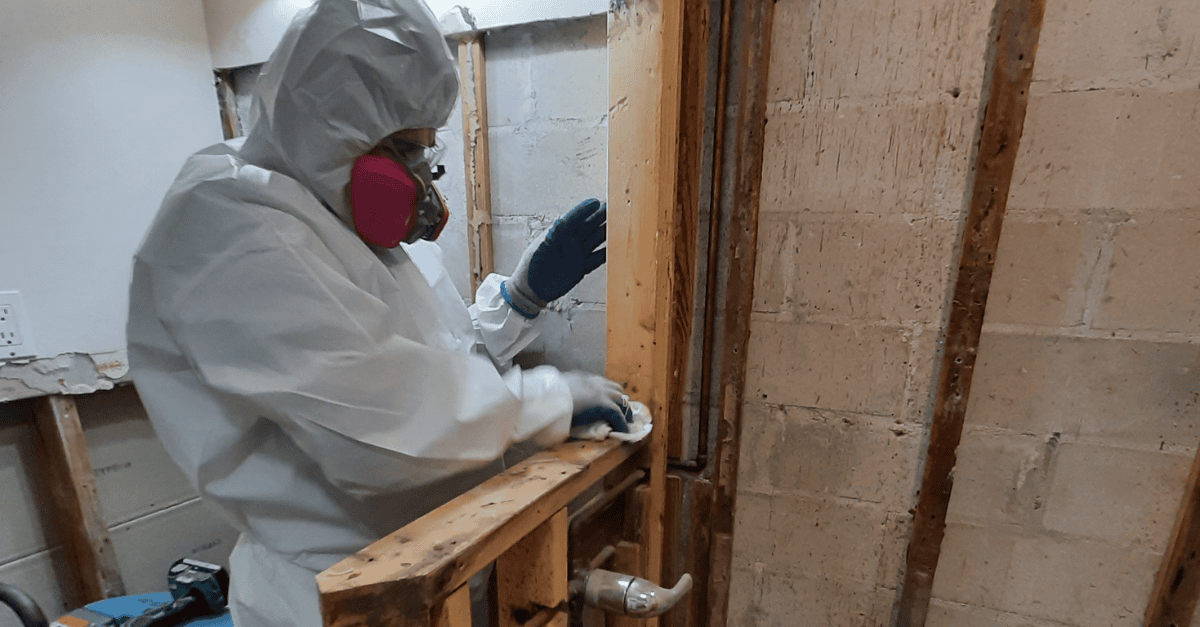
Drywall, insulation, and other porous materials hold growth inside their structure, so crews remove contaminated sections, along with damaged wood, rather than painting over them.
4. Clean Surfaces and Apply Antimicrobial Treatment
Crews clean the framing, subfloor, and other surfaces that stay, then apply antimicrobial treatments with EPA-registered products.
5. Dry the Structure and Control Humidity
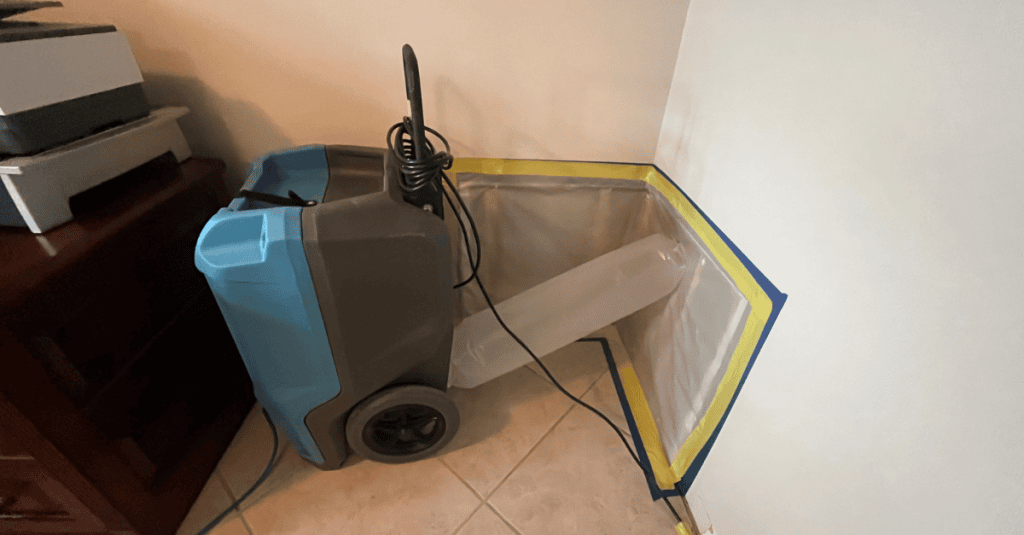
Dehumidification and dryout return the framing and subfloor to normal moisture content before crews close anything up. Closing a wall around wet studs restarts the cycle.
6. Remove Odor and Run a Final Check
Lingering MVOCs can leave a smell after the growth is gone, so mold odor removal follows cleaning. A final inspection checks for any remaining visible growth or moisture. If you or your insurer want clearance testing, an independent assessor can run it at this stage.
7. Rebuild the Damaged Areas
Our reconstruction services replace drywall, flooring, trim, and paint, so one team carries the job from containment to finish.
Porous vs. Non-Porous Materials: What Usually Stays or Goes
Not every material that touched mold has to go. The decision depends on how deeply mold can grow into the material and what the inspection finds:
| Material type | Examples | Typical industry approach |
|---|---|---|
| Porous | Drywall, insulation, carpet pad, ceiling tile, upholstered items | Usually removed and replaced |
| Semi-porous | Wood studs, subfloor, cabinet boxes, trim | Cleaned, treated, and dried when the wood is sound |
| Non-porous | Tile, glass, metal, sealed concrete | Cleaned and dried |
| HVAC components | Air handler cabinet, supply registers, ductwork | Cleaned or replaced, depending on the extent of growth |
Mold Remediation Costs and Insurance Claims in Lakeland
Mold remediation cost depends on the size of the affected area, how much material comes out, access to crawlspaces or attics, HVAC involvement, and whether you add the rebuild.
Insurance usually follows the cause. Mold from a sudden event, like a burst supply line, has a better chance of coverage than mold from a slow leak that ran for months. Standard homeowners policies often exclude rising floodwater, which usually needs a separate flood policy. Some policies also cap mold coverage, so check your policy wording. Our insurance claim assistance helps you document the loss for your adjuster, and we bill many carriers directly so you don’t pay the full cost up front.
Homes with Stachybotrys chartarum or heavy dark growth can go straight to our black mold remediation process.

How to Keep Mold From Coming Back
Remediation removes the growth, and moisture control keeps it from returning. Mold spores are always present indoors, so the goal is to keep surfaces dry.
The EPA recommends indoor relative humidity between 30% and 50%, so run the AC or a dehumidifier rather than opening windows on muggy days. Keep the AC drain pan clean and the condensate line flowing, and check the air handler closet for standing water. Run bath fans during and after showers, keep gutters clear, and inspect the roof after major storms. If a storm opens the roof or a window, our storm damage restoration team can dry out and repair the structure.
Our Anchuca Drive Office and Commercial Mold Service
We dispatch from Anchuca Drive in ZIP code 33811, the same office that serves as corporate headquarters for United Water Restoration Group, a restoration network founded in 2008. Our local team is family-owned and operated.
Offices, retail stores, restaurants, and apartment complexes get the same process through our commercial mold remediation service, which focuses on limiting downtime.
Mold Remediation FAQs for Lakeland Property Owners
Answers to common questions from property owners across the city and nearby Polk County communities.
My house took on water during Hurricane Milton. Could mold still be inside the walls?
It’s possible if wet drywall, insulation, or subfloor dried only at the surface and someone closed or painted over it. Signs include a musty odor, stains that return, or bubbling paint on flooded walls. Moisture readings and a visual check of the cavity show whether crews need to open a wall.
Can I clean small mold spots myself?
Often, yes. The EPA says you can handle areas smaller than about 10 square feet yourself in most cases, and Florida’s licensing rule applies to larger areas. Scrub hard surfaces with detergent and water, then dry them completely. If the stain comes back, moisture is still reaching it, and you need to repair the source.
My bungalow sits on a crawlspace. Does that change the job?
It can. Mold under the floor may not show inside the house, so the inspection must include the crawlspace. Drying that space, and keeping it dry, often matters as much as removing the growth.
How long does mold remediation take?
It depends on how far the growth has spread. Minor cases can take a few hours, while extensive removal, drying, and structural repairs can take several days or longer. After the inspection, you get a restoration timeline for your property.
Can my family stay home during remediation?
Often, yes. Containment barriers and HEPA air filtration help keep spores inside the work area, which can let you use the rest of the house. If the growth is extensive, involves the HVAC system, or anyone at home has asthma or a weakened immune system, a short stay elsewhere is the safer choice.
Stop the mold at its source. Call our Lakeland office any hour, or request a quote online for your home or business.
United Water Restoration Group of Lakeland
- 3928 Anchuca Dr. #6, Lakeland, FL 33811
- (863) 333-9865
- 24/7 Emergency Service