


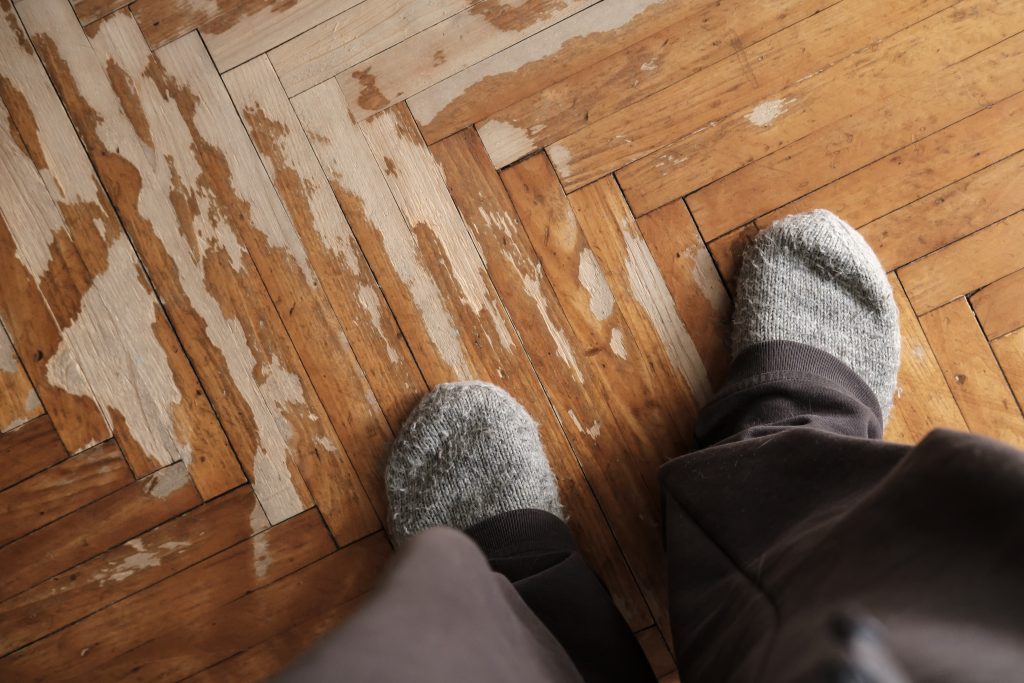
A hardwood floor takes most of its water damage from below, not from the puddle sitting on top. The boards swell across their width, press against each other and lift at the edges, and the drying that follows decides whether the floor can be kept.
Hardwood is one of the slowest surfaces in a house to dry and one of the costliest to replace, so mistakes made in those early days get expensive. Floors that could have been saved regularly end up torn out because they were handled as if they were tile. Tile is a surface, and a wood floor is not.
It is a stack of materials with air, adhesive and fasteners between the layers, sitting on a subfloor or concrete slab that absorbs water and holds onto it far longer than the wood above. Booking local water damage repair while the boards are still wet gives your floor its best chance of staying right where it is.
What Water Actually Does to a Wood Floor
Wood swells far more across the grain than along it, so a wet plank grows in width while its length barely changes.
Individual boards press against their neighbors, and because the flooring is fastened down, that pressure has nowhere to go but up. Everything you see happening to the floor is that pressure resolving itself.
Water reaches the wood from below more often than from above. The finish on the top surface sheds water reasonably well for a short time, while the underside, which is normally unfinished, sits directly on whatever is beneath it and keeps soaking up moisture.
A floor can look dry, feel dry underfoot and still be sitting on a subfloor too wet for any sanding or refinishing to start.
In Central Florida, where many homes are built on concrete slabs, the source is frequently out of sight. A slab leak or a failed supply line under the floor can feed water into the boards for weeks before the surface shows anything.
The concrete then gives that water back slowly, long after the leak itself has been fixed, and a floor left that long often needs mold remediation alongside the drying.
Cupping, Crowning and Buckling, and What Each One Means
Cupping is the earliest change in the floor’s shape, and it tends to appear within a couple of days. The edges of each board rise above the center because the underside has taken on more moisture than the top, and a flashlight held low across the floor shows the ridges clearly. Appliance leaks, roof leaks and slab leaks are the common causes of water damage behind most cupped floors we see, and at this stage the floor is still a candidate for drying.
Crowning is the opposite profile, with the center of each board higher than its edges, and it is usually a repair mistake rather than a water one. The most common cause is sanding cupped boards flat while they are still wet, so the raised edges get cut down and end up lower than the center when the wood dries.
Buckling is the end state, where a section of floor lifts clear of the subfloor because the swelling has pushed harder than the fasteners or adhesive can hold. Once a floor has buckled, replacing that area is the realistic answer in most cases.
| What you see | What it means | Realistic outcome |
|---|---|---|
| Edges raised, washboard feel | Underside wetter than the top, recent exposure | Often dried and refinished |
| Center of boards higher than the edges | Sanded before it dried, or water sat on top | Re sand once dry, or replace |
| Dark stains along the seams | Water has soaked past the finish into the wood | Sand out if shallow, replace if deep |
| Section lifted off the subfloor | Fasteners or adhesive have let go | Replace the affected area |
| Layers separating on engineered plank | Glue line has failed | Replace, since drying cannot reverse it |
A hardwood floor that has cupped is on a clock, not a shelf. Moisture readings taken early tell you whether you are looking at a drying job or a replacement job, and that answer is worth having before anyone starts pulling boards.
Noticed the edges of your boards lifting after a leak in your Orlando home? Give us a call at (407) 278-7715, and we will read the wood and the slab underneath while the floor can still be dried in place.
Solid Hardwood Versus Engineered Plank
Solid hardwood is one piece of wood through its whole thickness, which means it can absorb, swell, dry and be sanded flat again.
Provided the subfloor gets back to a normal reading under controlled drying, a cupped solid floor frequently returns to service with a refinish. Thickness gives it tolerance.
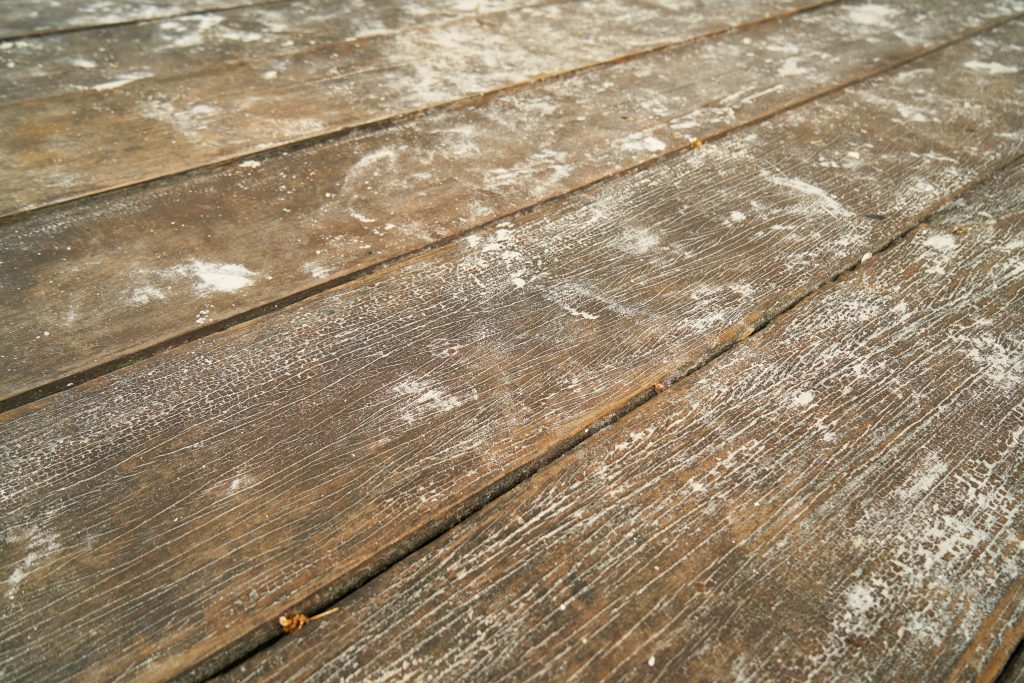
Engineered planks are built differently, with a thin wear layer bonded over a core, and water goes after the adhesive between those layers.
A failed glue line cannot be dried back together. The wear layer peels, the edges swell and split, and no amount of airflow reverses it. Laminate is less forgiving still, since most laminate cores are fiberboard that swells and stays swollen after it soaks up water.
Whichever floor you have, the same leak that reached the boards has usually reached the bottom plate, so finding moisture inside a wall is part of any honest assessment of the floor.
Why Household Fans and a Hardware Store Dehumidifier Make it Worse
Box fans dry the top of the floor. That is the entire problem. The moisture between the boards and the subfloor stays where it is, so the top shrinks while the underside stays swollen and the cupping deepens. A surface that feels dry also tempts people to sand early, which is how a cupped floor turns into a crowned one.
Running a dehumidifier flat out in a closed room, with nobody taking readings, carries its own risk. Wood pulled well below the moisture level it normally holds in your house can shrink, open gaps and develop small surface cracks called checks.
Controlled drying means holding humidity in a range that lets the floor give up water at a rate the material tolerates, and that takes equipment that measures and adjusts instead of equipment that simply runs.
In the Hours After Water Reaches the Floor
- Stop the water at its source, and switch off power to the room at the breaker if you can reach the panel without standing in water.
- Photograph the floor and the room before anything is moved. Those pictures anchor the insurance claim.
- Lift rugs and furniture off the boards. Wet rugs can bleed dye, and metal feet can leave rust stains.
- Blot standing water with towels instead of pushing it across the floor and into the seams.
- Leave the air conditioning off if water reaches the ductwork or the air handler, since running it can push moisture into rooms that are still dry.
- Avoid pulling up boards yourself. Where the floor gets opened for drying access should be decided from the readings.
How We Approach Saving a Floor
On hardwood, our water damage restoration service starts with two sets of readings, one in the wood and one in the subfloor or slab beneath it. Those numbers can disagree by a wide margin, and the reading underneath is the one that counts.
Thermal imaging points to where water has traveled under the flooring, something our crews see often beneath original floors in older Winter Park homes, and moisture meters confirm it at depth. That map determines where drying equipment goes and whether any boards need to come up for access.
Wet hardwood falls into what the restoration industry calls Class 4, a specialty drying category for dense materials that give up water slowly. Drying it well means reaching the moisture under the boards, not just the air above them, while dehumidifiers hold the room in range.
Our IICRC and IRI certified technicians come back through the drying period to re measure, and drying is complete only when the wood and the subfloor both reach a dry standard.
United Water Restoration Group of Orlando carries the job from drying through the flooring repair and any board replacement, so nobody hands the floor off halfway through.
Some calls end with the readings showing a floor that is already dry, and when that happens, we say so. Either way, homeowners who call us for water damage restoration in Orlando, FL get a decision built on numbers rather than a guess.