


Water damage inside a commercial building rarely comes from just one source. Restaurants, retail stores, medical offices, and multi-tenant buildings across Orlando each face their own version of the same risk. Knowing where that risk tends to start can be the difference between catching a problem early and finding it after things have already gotten bad. That is just how it goes sometimes.
Reaching out to local water damage restoration services sooner rather than later gives your business a much better shot at limiting the damage and getting back to normal faster.
Plumbing Failures Inside Commercial Buildings
Commercial plumbing systems see far more daily use than a typical home, and that constant use adds wear to pipes, valves, and fittings faster than most business owners expect.
A worn valve under a break room sink or a corroded pipe behind a wall can fail with almost no warning. Because commercial buildings often sit empty overnight, a failure that starts after hours can go unnoticed until someone opens up the next morning.
Restaurants and any business running a commercial kitchen carry an added layer of risk from dishwashers, ice machines, and grease traps, all of which depend on connections under heavy daily strain. A slow leak behind a dishwasher can sit beneath the flooring for weeks, working through subfloor material long before a puddle shows up.
Once a leak like this is found, a team that handles commercial water damage restoration in Orlando can trace the source, dry the structure, and keep hidden subfloor damage from spreading into the rest of the space.
Roof Leaks and Flat Roof Drainage Problems
Many Orlando area commercial buildings use flat or low-slope roofing, which depends on proper drainage to keep water from pooling after a storm. When a drain clogs with debris or a roof membrane develops even a small tear, water that should run off instead sits on the roof and works its way into the building below.
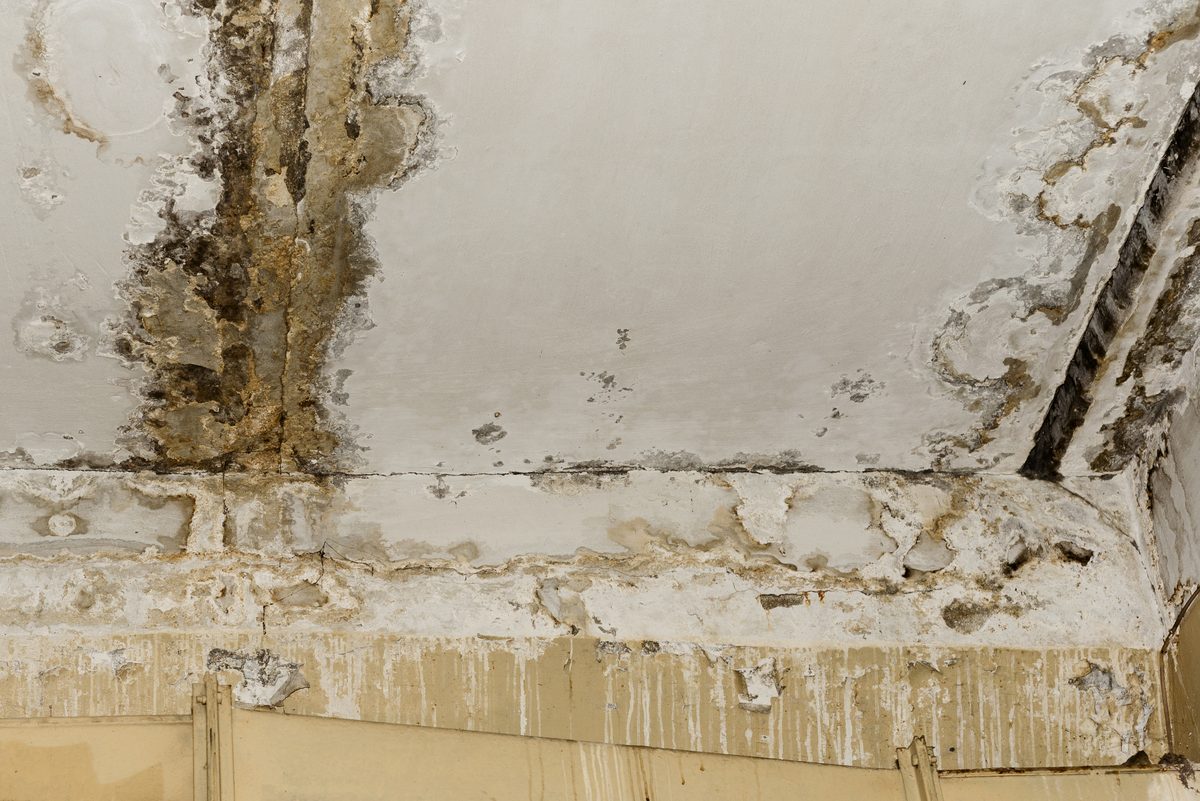
This kind of leak often shows up far from the actual source, appearing as a stain on a ceiling tile several feet away from where the roof is actually damaged.
Flat roof leaks are often gradual rather than sudden, so they can go unaddressed for longer than a homeowner would tolerate in a house. A business owner may notice a ceiling tile discoloration months before realizing the same leak has also been soaking insulation and framing the entire time.
HVAC and Appliance Related Water Damage
Commercial HVAC systems generate a surprising amount of condensation, and that moisture has to go somewhere. A clogged condensate drain line or a cracked drain pan can send water straight into a ceiling or wall cavity instead of outside where it belongs. Because HVAC units are often tucked away in mechanical rooms or rooftop enclosures, this type of leak can run for days before anyone notices water stains below.
Water heaters, ice machines, and other appliances that rely on a constant water supply carry similar risk. A supply line fitting that loosens over time, or a water heater tank that finally gives out after years of daily use, can release a large volume of water in a short amount of time, especially in a building that operates around the clock.
Noticed a musty smell near a break room sink or a ceiling tile that keeps staining at your Orlando business? Give us a call at (407) 278-7715, and we will send a certified technician out for a free visual assessment before it turns into a bigger problem.
Storm and Flooding Related Water Damage
Central Florida's storm season brings rainfall levels many commercial buildings were not originally designed to handle, especially older structures with drainage systems that haven't been updated. Parking lots that pool water instead of draining it, loading docks positioned below street level, and older window seals all become entry points once a storm brings heavy, sustained rain.
Businesses located near retention ponds, low-lying areas, or older stormwater infrastructure face an added layer of risk during the heaviest part of the rainy season. Even a business that has never had a water issue before can find itself dealing with flooding after an especially strong storm, particularly if nearby drainage has not kept pace with newer development in the area.
Sprinkler System and Fire Suppression Malfunctions
Fire suppression systems are designed to protect a building, but the pipes and sprinkler heads that make up those systems can fail on their own, independent of any actual fire. A cracked sprinkler head, a corroded pipe joint, or a system that was not properly maintained can release a large volume of water across an entire floor in a matter of minutes.
Because these systems are pressurized and built to distribute water broadly, a malfunction tends to affect a much larger area than a typical plumbing leak. Ceiling tiles, flooring, inventory, and electronics can all be affected at once, which is why responding quickly matters once a sprinkler-related leak is found.
Signs an Orlando Business Should Call Right Away
A handful of warning signs, across any of these causes, are worth acting on the same day rather than waiting to see if they resolve on their own.
- A ceiling tile that keeps re-staining after being replaced
- A musty smell near a kitchen, break room, or mechanical room
- Water pooling in a parking lot, loading dock, or entryway after normal rainfall
- A sprinkler head or pipe joint showing visible corrosion
- Flooring that feels soft or spongy near a fixture or drain
Matching the Cause to the First Response
Every one of these causes calls for a different first response. A slow plumbing leak needs to be traced back to its source before repairs can begin, while a sprinkler malfunction usually needs the water shut off at the system level before any drying can start.
Misreading the cause of a water event can lead to repairs that address the symptom without solving the actual problem, often meaning the same issue resurfaces later.
| Cause | Common Warning Sign | First Response Needed |
|---|---|---|
| Plumbing failure | Warped flooring or a musty smell near a fixture | Shut off the water source and trace the leak |
| Roof leak | Ceiling tile staining far from the actual leak | Locate the source on the roof, not just the stain |
| HVAC condensation | Water stains below a mechanical room or rooftop unit | Check the condensate line and drain pan |
| Storm flooding | Water pooling in a loading dock or parking area | Clear drainage and extract standing water |
| Sprinkler malfunction | Sudden water release across a large floor area | Shut off water at the system, not just the head |
For property managers and business owners across Orlando, Winter Park, Altamonte Springs, Oviedo, Winter Springs, Winter Garden, and Ocoee, understanding these common causes is where prevention starts, whether that means scheduling more frequent roof inspections, keeping an eye on aging plumbing, or making sure HVAC drain lines get checked as part of routine maintenance.
Frequently Asked Questions
Can a business have more than one of these causes at the same time?
Yes. A property with an aging roof and outdated plumbing can experience a roof leak and a plumbing failure independently, which is why a full inspection traces every water source rather than assuming a single cause.
How often should Orlando businesses have plumbing and roofing checked?
Most commercial properties benefit from an annual roof inspection and a periodic plumbing check, especially for buildings with aging fixtures or the flat roofing common across Central Florida.
Does commercial insurance treat these causes differently?
Coverage can vary by cause and policy, particularly between a sudden pipe failure and gradual damage from a slow leak, so confirming details directly with the carrier is worthwhile.
Our IICRC-certified technicians are available 24 hours a day for a free visual assessment, and we work directly with major carriers to make the claims process easier. Call (407) 278-7715 to get started.