


Certified Fire and Smoke Damage Restoration in Daytona Beach, FL
United Water Restoration Group of Daytona Beach provides fire damage restoration in Daytona Beach, FL, from board-up and soot removal to smoke odor treatment and the permitted rebuild. We serve the city from our Hand Avenue base in Ormond Beach, and a real person answers the phone 24 hours a day.
Fire jobs on this coast carry two local complications. Humid coastal air speeds the corrosion that smoke residue starts, and parts of the city sit in FEMA flood zones where a large rebuild must meet new-construction rules. One team handles the water, soot, odor, and reconstruction, so your claim file stays in one place.
What Happens to a Daytona Beach Home in the Week After a Fire
Once the fire is out, the damage keeps spreading for days, and most of it happens out of sight.
Burning PVC, the plastic in much wiring insulation and vinyl, releases hydrogen chloride, which forms acid on damp surfaces. That acidic residue settles in rooms the fire never touched. In humid air, it pits chrome, etches glass, and dulls aluminum faster than it would in a dry climate.
Firefighting water adds a second loss. On slab foundations, water from fire hoses spreads under tile and into wall cavities instead of draining away. The same crews behind our 24/7 water damage restoration in Daytona Beach extract it, usually on the first visit.
Smoke also travels in stacked buildings. Thousands of the city’s homes are in buildings with 20 or more units, including the condo towers along A1A. Smoke moves through shared shafts, corridors, and trash chutes, so a kitchen fire on one floor can leave odor and residue in units the flames never reached.
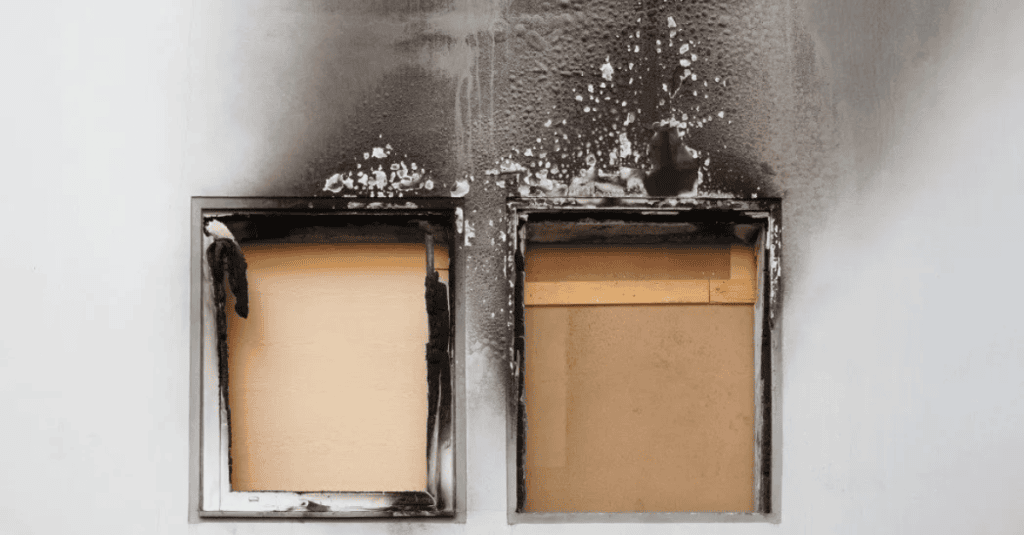
These signs show the damage reached past the burned room.
- Odor that returns when the AC cycles on or the afternoon heat builds.
- A gray film on window sills, ceiling fan blades, and the tops of door frames down the hall.
- Dark outlines around outlets and switch plates, where air pushed soot through gaps in the wall.
- Swollen baseboards or cabinet kicks near the room where crews fought the fire.
- Dull, spotted, or pitted chrome, stainless steel, and aluminum in the days after the fire.
Cleanup Built for Coastal Humidity and Older Homes
Two local conditions shape how a fire job runs here.
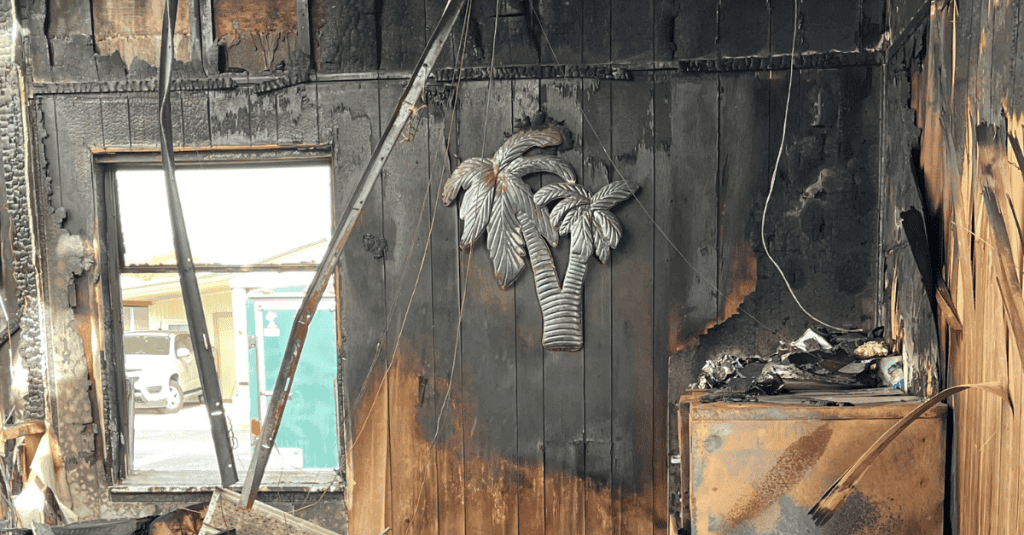
Humidity Comes First
Damp air helps soot cling and lets odor bind into drywall, insulation, and fabric, so drying has to start alongside the first cleaning pass. Wet drywall left closed up in Florida can grow mold in roughly 24 to 48 hours, which can add mold remediation in Daytona Beach to the claim.
Older Homes Hide Residue
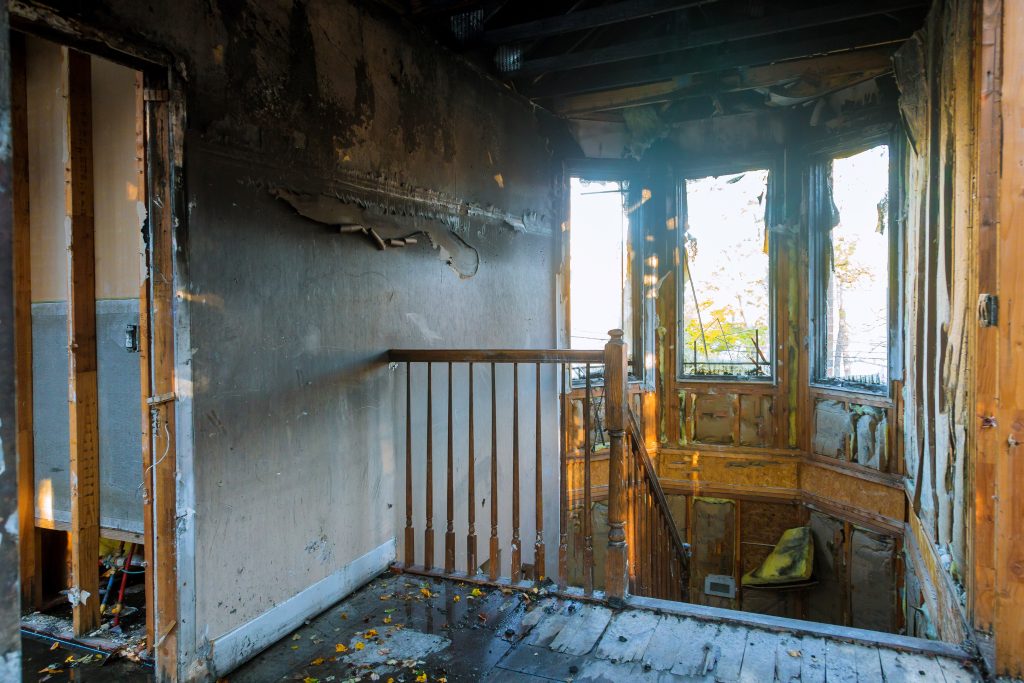
ZIP 32114 has a median build year of 1964. Older homes have often been remodeled more than once, and smoke works into the gaps between old and new finishes. A thorough job checks wall cavities, attic insulation, and electrical boxes behind the painted surface.
How Fire Damage Restoration in Daytona Beach, FL Works
Every fire loss follows the same sequence, adjusted to the building and the residue. Work inside starts once the property is released.
Scene Release and Your First Call
After the Daytona Beach Fire Department clears the fire, investigators from the Florida State Fire Marshal’s Office may hold the property while they determine the cause. Call us during that wait. A technician calls back with an ETA, and the first on-site visit is free.
Board-Up and Roof Tarping
We board broken openings and tarp roof damage to keep rain, salt air, and intruders out. Atlantic hurricane season runs from June 1 through November 30, so an open roof cannot wait. We provide the same board-up and tarping as part of storm damage restoration in Daytona Beach.
Assessment and Documentation
We photograph the loss, take meter readings, and scope the work. The scope separates what can be cleaned from what has to come out, and it becomes the core of your insurance file.
Water Removal and Structural Drying
We extract the water and dry the structure with dehumidifiers and air movers. Drying continues until meter readings reach dry standard, not for a set number of days. Wet insulation and drywall that cannot dry in place come out early to limit mold risk.
Soot and Smoke Odor Cleaning
Each residue type calls for a different cleaning method, and the wrong one can set a stain for good. We use HEPA filtration to capture loose soot, then air scrubbers and deodorization to treat the odor that cleaning leaves behind.
Residue Typical source How it gets cleaned Dry smoke residue Fast, hot fires in paper and wood HEPA vacuuming and dry chemical sponges before any wet cleaning Wet, oily residue Smoldering fires in plastics, foam, and synthetics Degreasing detergents, then sealing any surface that stays stained Protein residue Stovetop and cooking fires Enzyme or alkaline cleaners, since the film is nearly invisible but holds strong odor Acidic chloride film Burned PVC wiring, vinyl, and plastics Prompt neutralizing cleaning of metal, glass, and electronics Surfaces that stay stained after cleaning are typically sealed with an odor-blocking primer before paint, so smoke smell does not bleed back through.
Contents and Electronics
Our fire restoration covers both contents and structure. Soot can conduct electricity, so televisions, computers, and appliances near the fire need cleaning or evaluation before anyone powers them on. Clothing, bedding, and upholstered furniture absorb odor and need different treatment from hard surfaces.
Rebuilding Under Daytona Beach’s 50% Rule
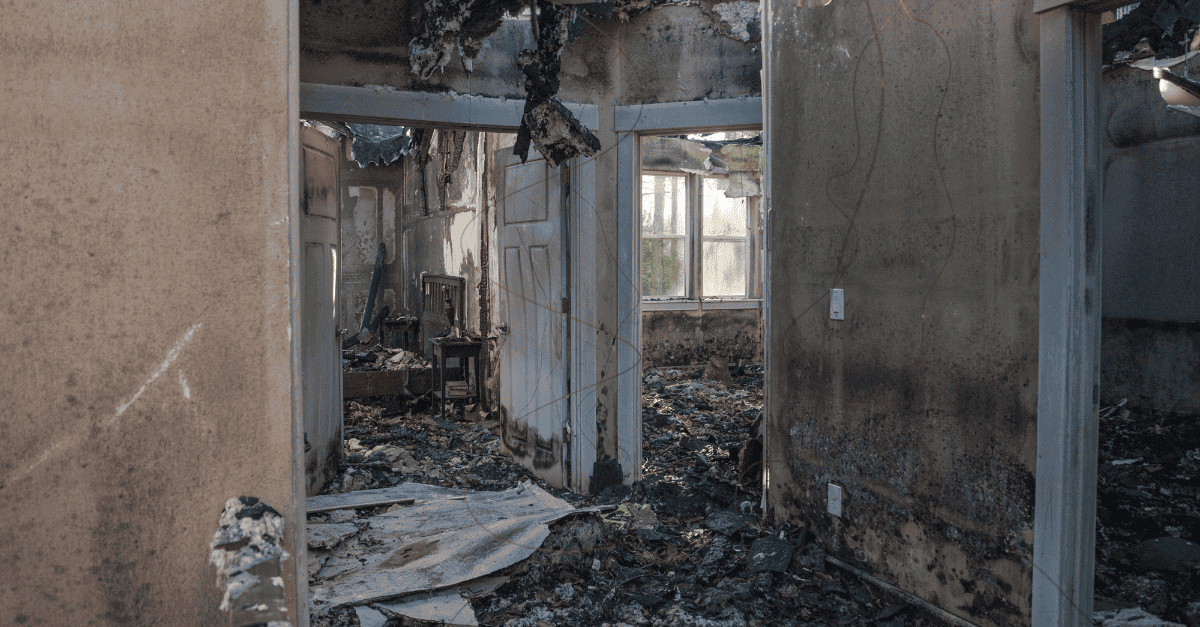
Large fire repairs in the city pass two checkpoints. One is the building permit, and the other, in a flood zone, is the substantial damage test.
The City of Daytona Beach Permits & Licensing Department at City Hall, 301 S. Ridgewood Avenue, issues permits through its online iMS portal. Repairs to framing, wiring, plumbing, or HVAC go through permitting and inspection under the current Florida Building Code.
In a FEMA Special Flood Hazard Area, the city requires a building to meet new-construction standards once repair costs equal or exceed 50% of its assessed value. That value comes from the Volusia County Property Appraiser’s record before the fire, not from a sale price. A home over that line must be elevated 1 foot above the base flood elevation, which can turn a repair into a much larger project.
The same team that handles the cleanup also provides reconstruction services in Daytona Beach, from drywall and insulation to flooring, cabinetry, trim, and paint matched to what was there, and one final walkthrough closes the job. Before demolition starts, check the flood zone and assessed value, because both shape what the rebuild must include.
Fire Insurance Claims for Homes, Rentals, and Condos
Florida rewrote its property insurance rules in late 2022, and one change affects who controls a fire claim.
On policies issued or renewed on or after January 1, 2023, Florida law voids any assignment of post-loss benefits to a contractor. The claim stays in your name. We work with all insurance providers, including State Farm, Allstate, USAA, Liberty Mutual, and Travelers. We bill your carrier directly where the policy allows, and we give the adjuster the scope, photographs, and moisture readings the file needs.
More than half of the city’s occupied homes are rented, which splits many fire claims in two. The landlord’s policy usually covers the building. A tenant’s renters policy, if there is one, usually covers belongings and often the cost of living elsewhere during repairs. Our insurance claim assistance in Daytona Beach helps with the paperwork on each claim.
Condo fires follow Florida’s condominium statute, section 718.111(11), which sets what the association insures and what the unit owner insures. The statute applies to every residential condominium in Florida, and each policy spells out its own terms.
| Usually the association's policy | Usually the unit owner's policy |
|---|---|
| Building structure, exterior walls, and roof | Floor, wall, and ceiling coverings inside the unit |
| Hallways, stairwells, and other common elements | Electrical fixtures, appliances, water heaters, and in-unit AC equipment |
| Building systems that serve more than one unit | Built-in cabinets, countertops, window treatments, and personal belongings |
For deductibles and work your policy does not cover, see our payment options.
Start the claim file today. Call (386) 233-7080 for a free on-site visit, and have your policy number and any photos ready.
Why Owners Trust United Water Restoration After a Fire
These are the facts behind our fire restoration work.
- Since 2008. Our restoration team has handled water, fire, mold, and storm losses across Central Florida, backed by a national restoration network.
- Certified, licensed, and insured. Our technicians hold IICRC and IRI certifications, and our team is licensed and insured.
- 4.9 stars on Google. Our Daytona Beach location has more than 550 Google reviews.
- Referred by professionals. Condo boards, property managers, and plumbers send their customers to us.
- Homes and businesses. The same team handles commercial fire restoration in Daytona Beach for offices, retail stores, restaurants, hotels, and multifamily buildings.
“They explained absolutely everything that had to be done step by step.” Bobbe M., Google review after a house fire
Neighborhoods and Areas We Reach From Hand Avenue
Our crews dispatch from 1270 Hand Ave in Ormond Beach, minutes from I-95 and US-1, and serve mainland and beachside Daytona Beach.
That coverage includes Seabreeze and the condo towers along A1A, along with Daytona Gardens and Rio Vista Gardens.
ZIP codes 32114, 32117, 32118, 32119, and 32124 sit inside our response area. Across Volusia County, we also serve nearby Holly Hill, Port Orange, and Ponce Inlet, and we provide restoration services in Ormond Beach, where our crews are based.
Questions About Fire and Smoke Damage in Daytona Beach
These are the questions owners ask most in the first days after a fire.
How long does fire damage restoration take?
Smoke and soot cleaning usually takes a few days, and drying runs until meter readings reach dry standard. Full reconstruction and structural repairs can take several weeks. Permits, a flood zone review, or insurance approvals can add time, so ask about them at the first walkthrough.
Should I run the air conditioning after a small kitchen fire?
Leave it off until the system has been checked. The air handler pulls residue from the kitchen into the return and spreads it through the ductwork, which turns a one-room cleanup into a whole-house job. ANSI/IICRC S590 gives the industry method for assessing HVAC systems after a fire.
Can I clean the soot myself?
A dry chemical sponge can handle a small, lightly dusted area. Avoid water, household cleaners, and vacuums without HEPA filters, because wet wiping smears oily soot and can set acidic stains into paint, grout, and stone. Wear a mask, keep electronics unplugged, and photograph everything first so your claim has evidence.
Do you work in condo buildings along A1A?
Yes. Condo losses often span more than one unit, so we coordinate access with the association and management company. We document what damage is on association property and what is inside each unit, so both insurance carriers get what they need.
How do I find out whether my home is in a flood zone?
A property survey should state the FEMA flood zone. The City of Daytona Beach Permits & Licensing Department at City Hall, (386) 671-8140, can confirm it, and the Volusia County Property Appraiser’s record shows the assessed value used for the 50% rule.
Get Fire Damage Help Around the Clock
Call before the residue sets. United Water Restoration Group of Daytona Beach answers (386) 233-7080 around the clock, and the first on-site visit is free. A technician calls with an ETA, walks the property with you, and mitigation usually begins on that first visit.
United Water Restoration Group of Daytona Beach
- 1270 Hand Ave, Ormond Beach, FL 32174
- (386) 233-7080
- Open 24/7, serving Daytona Beach from our Ormond Beach base