


Professional Mold Removal in Daytona Beach, FL
United Water Restoration Group of Daytona Beach provides mold remediation in Daytona Beach, FL from our base on Hand Ave in Ormond Beach, minutes from I-95 and US-1. Our IICRC-certified technicians find the moisture source, seal off the affected area, remove contaminated materials, and rebuild what comes out. One team handles the work from the first inspection to the final repairs, and we help with the insurance paperwork.
The local climate provides plenty of moisture for mold. The rainy season from June to mid-October brings about 60 percent of the year’s rain, a single thunderstorm can drop 2 to 3 inches, and relative humidity averages close to 75 percent. Mold can start growing on wet drywall, wood, or insulation within 24 to 48 hours, sometimes before anyone finds the leak.
Mold Remediation in Daytona Beach, FL: Common Moisture Sources
Indoor mold always starts with moisture. These sources are common in coastal Volusia County homes, and local construction affects how far they spread.
Air Handler Closets and Condensate Drain Lines
An air conditioner removes water from humid air and sends it down a condensate drain line. When algae or debris clogs that line, the drain pan can overflow onto the closet floor, soaking the surrounding drywall and baseboards. Growth on the evaporator coil or inside the ductwork can also spread spores to other rooms through the supply vents.
Slab Floors, Baseboards, and Wall Cavities
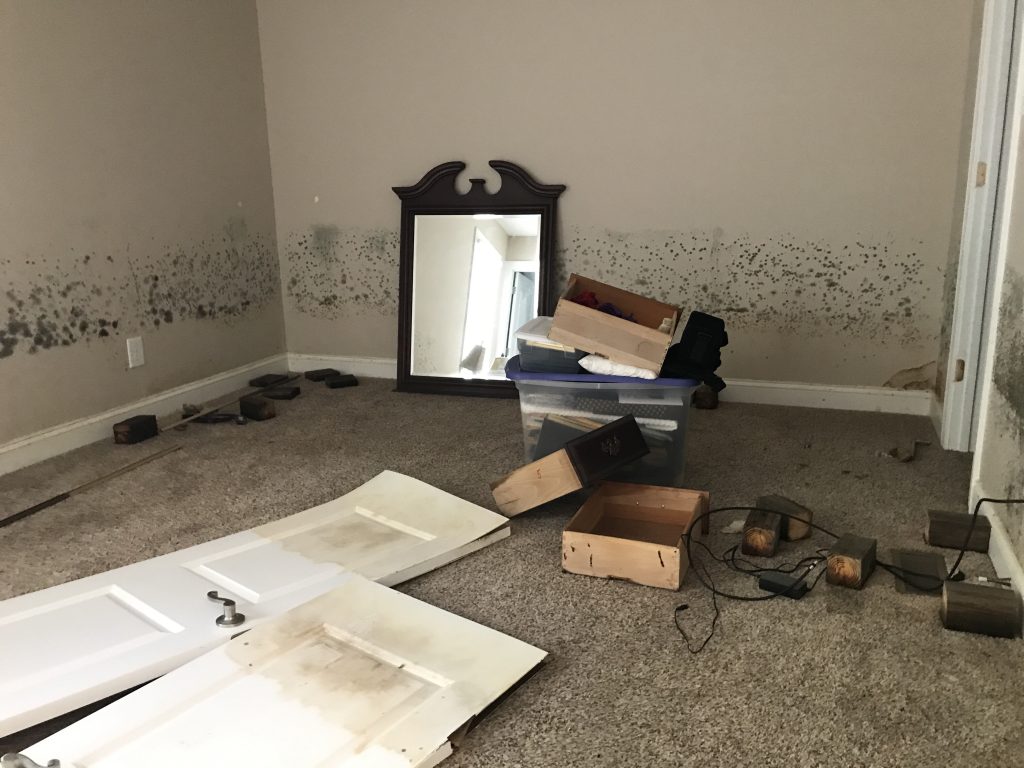
Few local homes have basements. On a slab-on-grade foundation, water from a supply line or water heater leak spreads under tile and laminate, then wicks into the bottom of the wall. Mold can grow behind baseboards, cabinet toe kicks, and vanity bases for weeks before it stains the paint. If water is still on the floor, our 24/7 water damage restoration in Daytona Beach crew can extract it and start drying the structure right away.
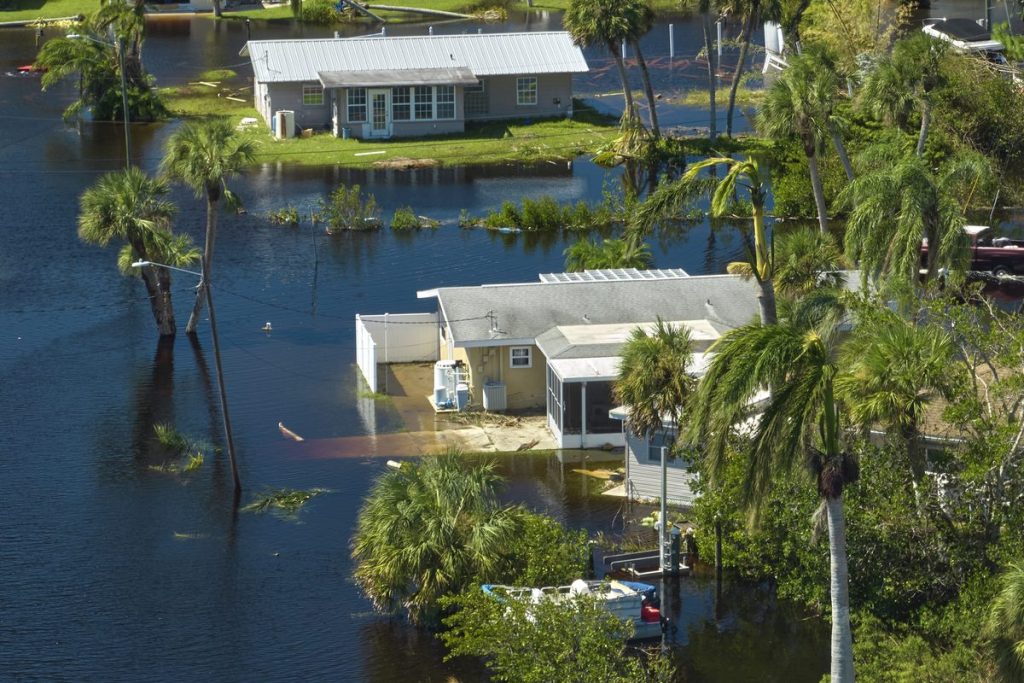
Roof Leaks and Wind-Driven Rain After Storms
Hurricane Ian flooded homes on Kottle Circle and left other flood-prone Daytona Beach streets underwater for days in 2022. Volusia County later estimated Ian’s damage at $377 million and Nicole’s at more than $522 million. Wind-driven rain can push water past roof flashing, soffits, window frames, and sliding doors, and wet insulation can hold that water inside a wall that looks dry. Our storm damage restoration team handles emergency board-up and water extraction, and mold remediation addresses any areas that stayed wet.
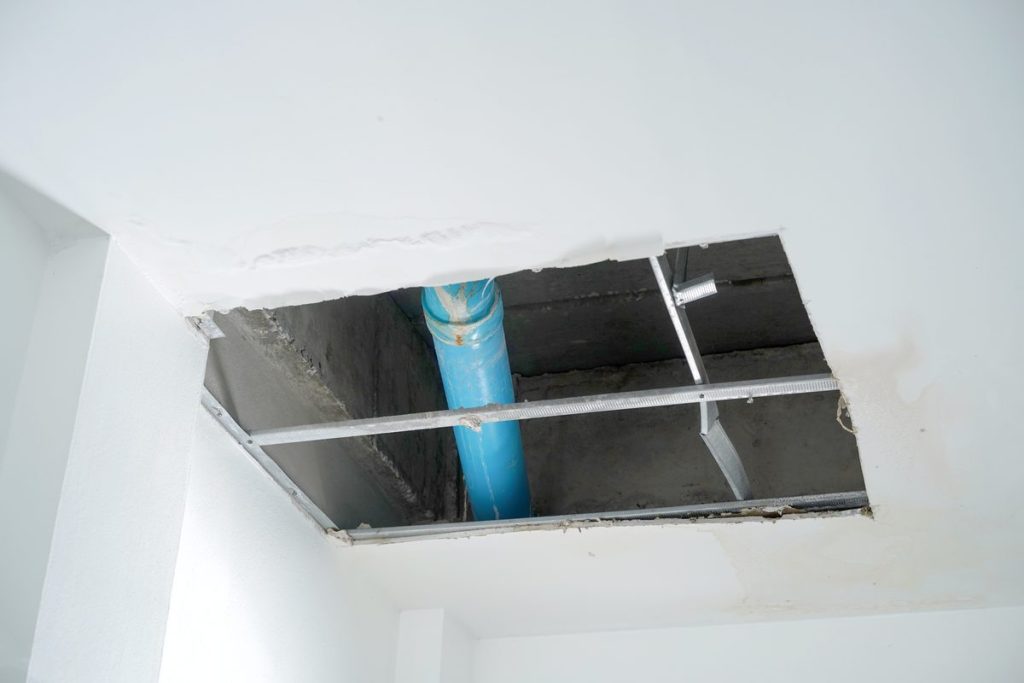
Shared Plumbing in Beachside Condos
In stacked buildings along A1A, a leak in one unit can travel down the plumbing stack and through the ceilings below. Mold can then appear a floor or two away from the source, in ceiling drywall, behind kitchen cabinets, or under flooring. Several owners and the association may share the damage.
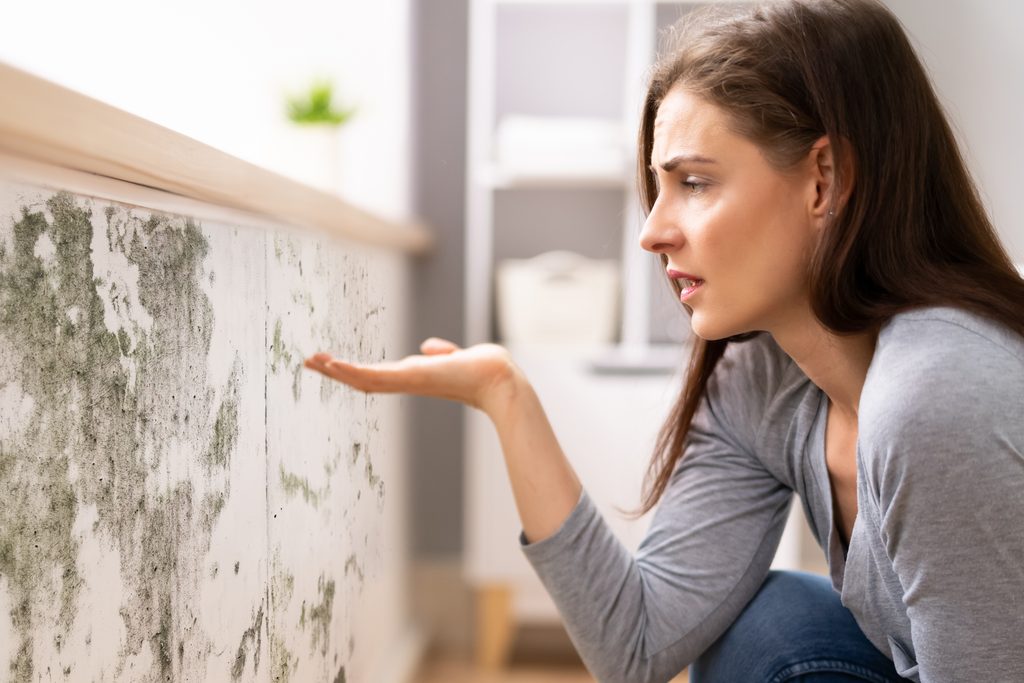
Older Homes and Condos Closed for the Season
In older homes, aging roof flashing, window seals, and cast iron drain lines tend to leak more often than newer materials. Seasonal homes carry a different risk: when the owner turns the air conditioning off for the summer, humid air can sit against drywall, cabinets, and furniture for months.
Signs You Need a Mold Inspection
Mold often shows up as a smell or a stain before anyone sees a colony. Any of these signs is worth a moisture check:
- A musty, earthy odor that comes back after cleaning
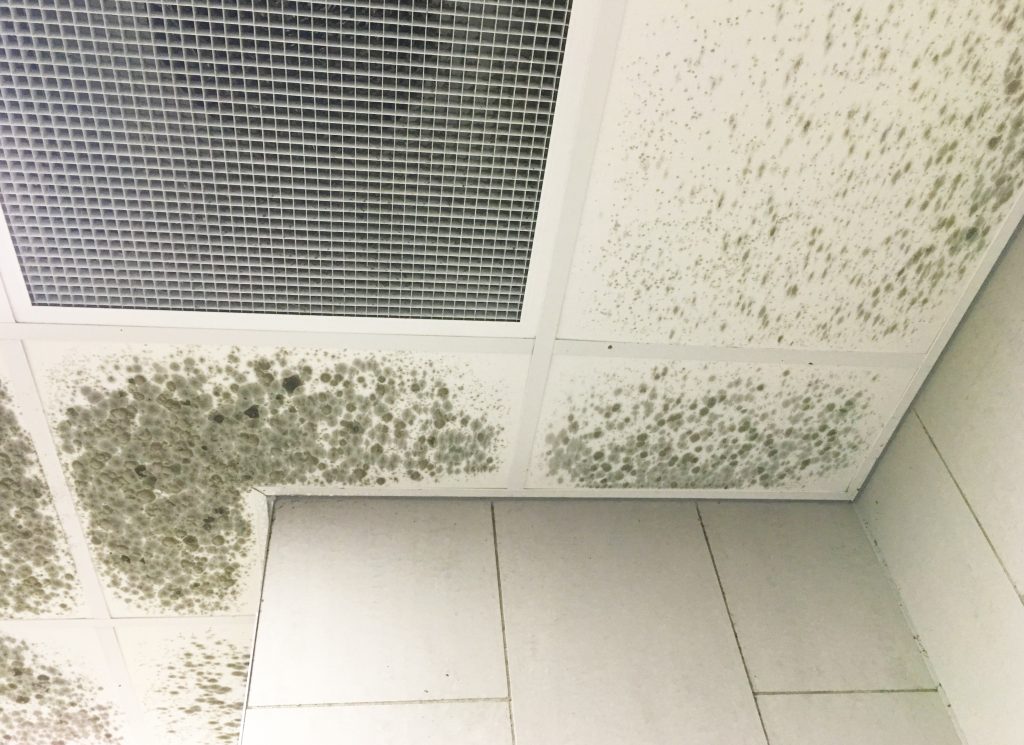
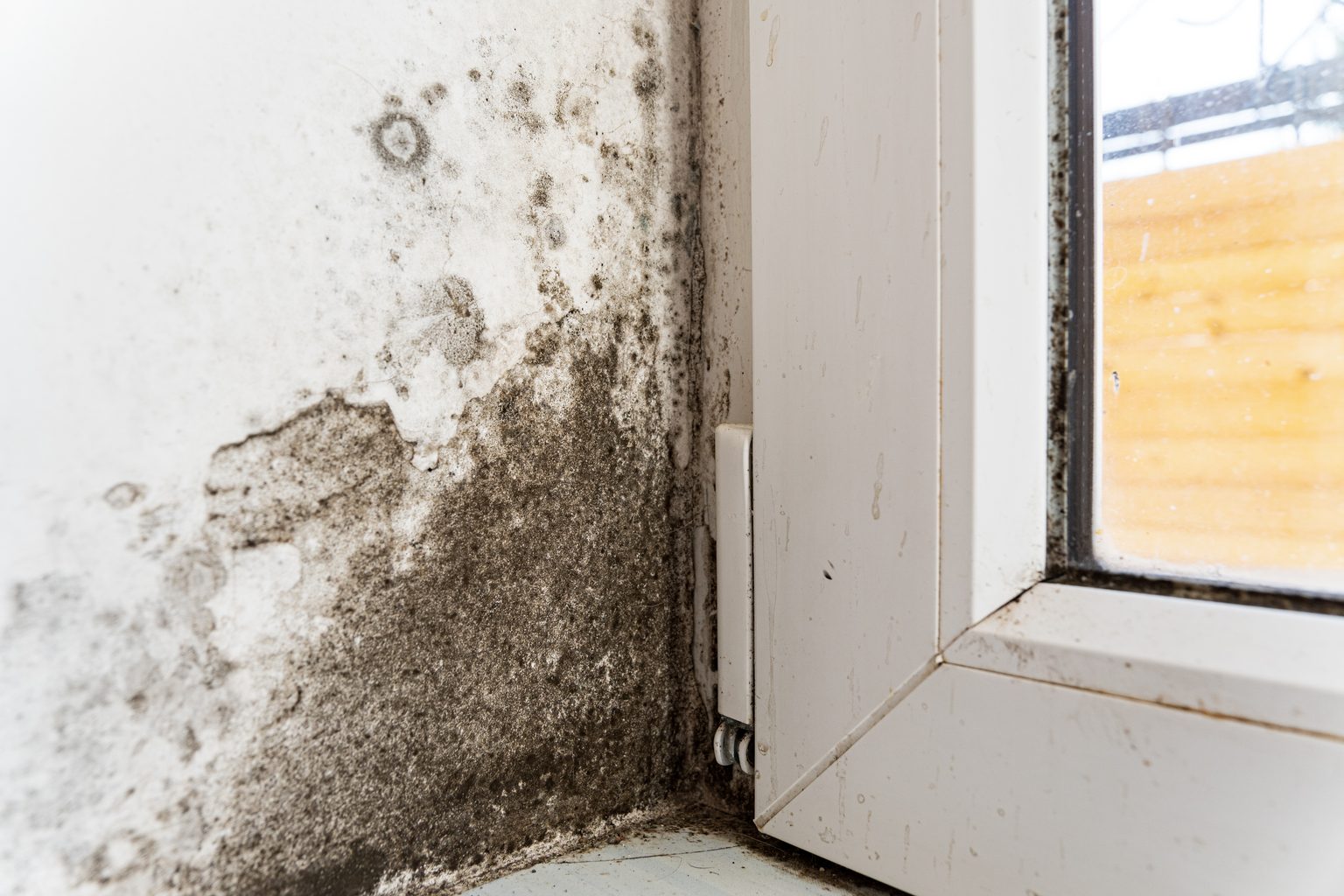
- Dark speckling or gray-green growth on drywall, grout, ceilings, window sills, or vent covers
- Bubbling paint, peeling wallpaper, or soft drywall near the floor or under a window
- Warped baseboards, cupped wood flooring, or loose tile
- Condensation on supply vents or a wet ring around the air handler or water heater
- Coughing, congestion, or itchy eyes that improve when you leave the house
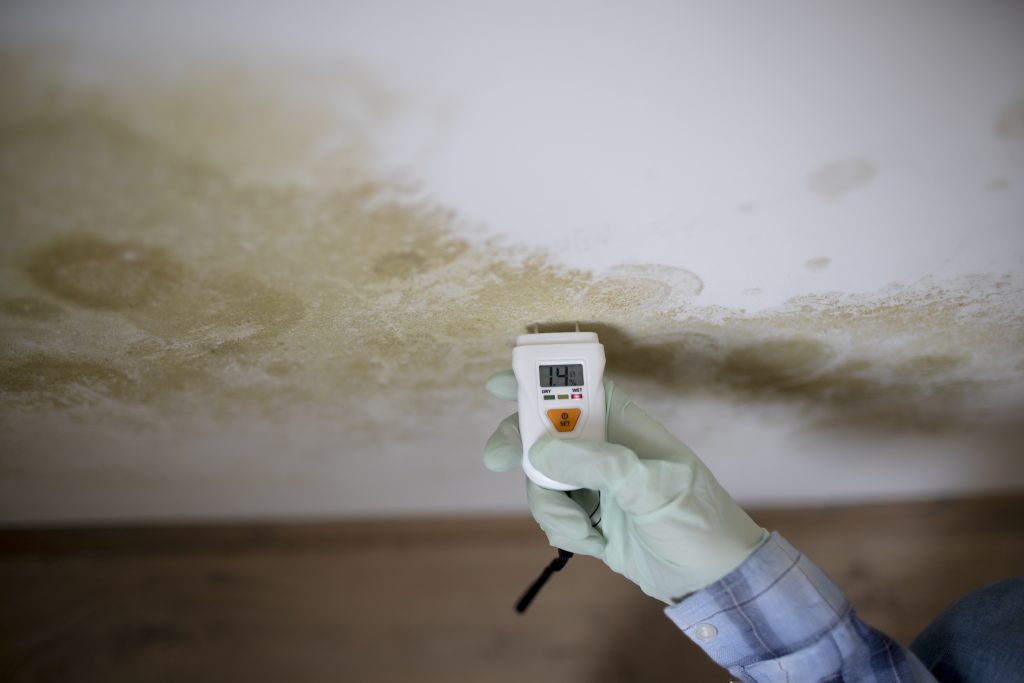
Book a free inspection. A technician checks moisture levels in the walls and ceilings before anyone cuts drywall.
Black Mold and Other Common Household Mold Types
The CDC lists Cladosporium, Penicillium, and Aspergillus among the most common indoor molds. EPA guidance treats all indoor mold growth the same way regardless of species: fix the moisture problem and remove the growth.
Black Mold (Stachybotrys chartarum) Removal
Stachybotrys chartarum, the greenish-black mold often called black mold, grows on high-cellulose materials such as drywall paper, ceiling tiles, and wood that stay wet for days or weeks. Finding it usually points to a long-running leak rather than a quick spill. Surface cleaning can leave growth inside the paper, so our technicians remove the affected material within containment and wear protective equipment.
Aspergillus, Penicillium, and Cladosporium
These molds commonly grow on damp dust, fabric, wood, painted surfaces, and HVAC components. They often appear as green, gray, or black spotting.
How Mold Exposure Affects Health
According to the CDC, mold exposure can cause a stuffy nose, wheezing, red or itchy eyes, and skin irritation. People with asthma, mold allergies, or weakened immune systems may react more strongly.
Florida Mold Laws: The 10-Square-Foot Rule and Independent Testing
Florida regulates mold assessment and remediation for areas larger than 10 square feet under Chapter 468, Part XVI of the Florida Statutes. Anyone who offers those services to the public generally needs a license from the Department of Business and Professional Regulation (DBPR), with limited exemptions such as owners working on their own homes.
Why Mold Testing and Mold Removal Come From Different Companies
Florida Statute 468.8419 bars a remediator from assessing a structure it remediated in the previous 12 months, and it bars an assessor from remediating a structure it assessed in that same window. That rule keeps testing independent: a licensed assessor handles air sampling, surface sampling, and clearance testing, and a separate company performs the removal.
What a Licensed Mold Assessor Does
A mold assessor inspects the property, collects air or surface samples, sends them to a lab, and reports where the mold is, how far it has spread, and what likely caused it. Assessors often write the remediation protocol that the contractor follows. Before work starts, ask both companies for their DBPR license numbers.
Post-Remediation Clearance Testing
Clearance testing, also called post-remediation verification, shows whether the work area has returned to normal conditions. The assessor typically inspects the area, confirms materials are dry, and compares indoor air samples with outdoor samples. The rebuild should wait until the area passes.
Our Mold Remediation Process From Inspection to Rebuild
Our crews follow IICRC and EPA guidelines and complete each step in order, because skipping one can bring the mold back.
1. Inspection and moisture mapping. Our technician uses moisture meters and thermal imaging to trace wet materials beyond the visible stain and locate the source, such as a supply line, roof leak, drain pan, window, or slab leak.
2. Source correction. The leak has to stop first. Removing mold while water still enters the area only restarts the problem.
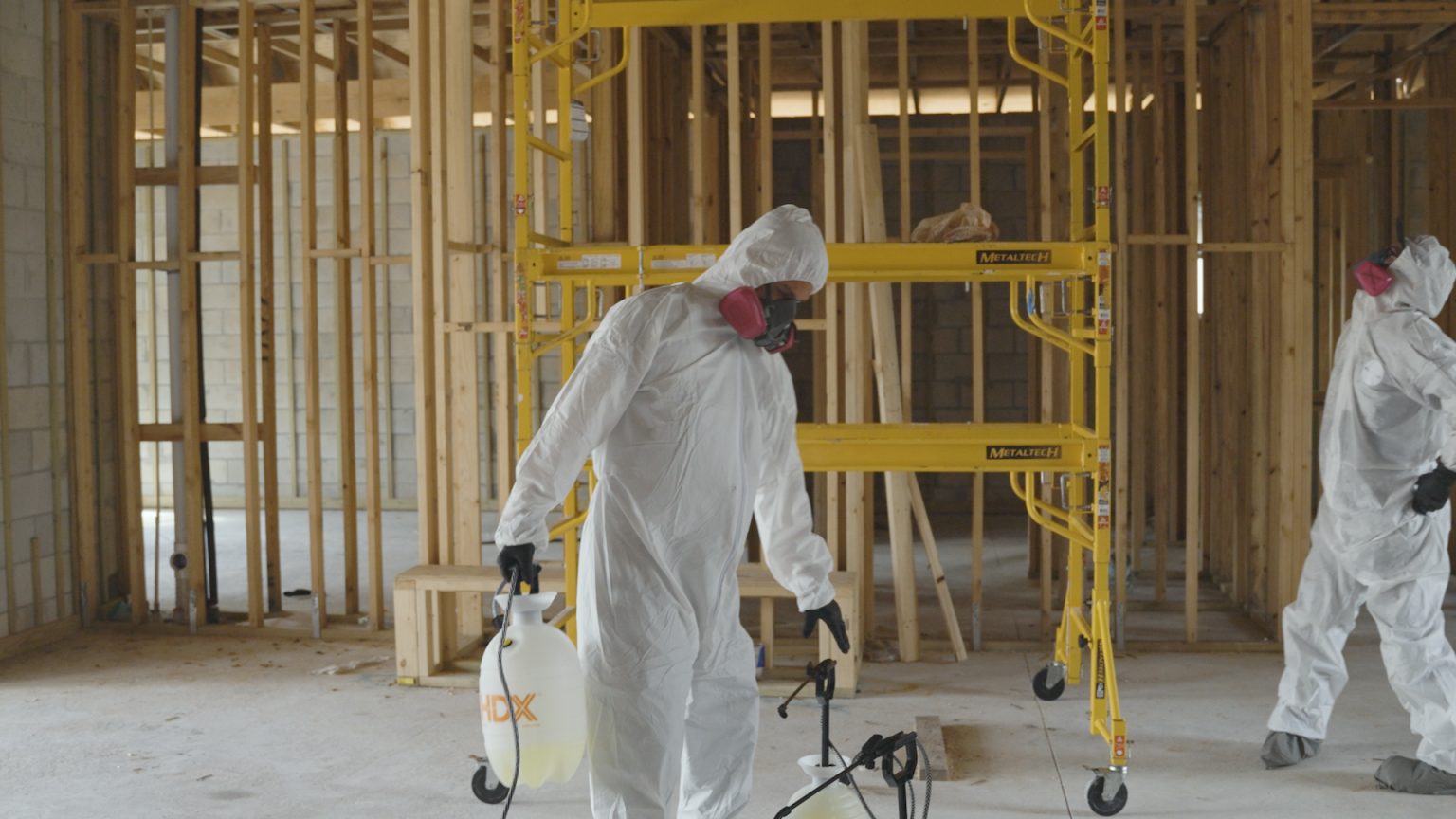
3. Containment. Plastic sheeting seals the work area, and negative air machines draw air into the enclosure instead of letting it escape, which keeps spores out of clean rooms.
4. HEPA air filtration. HEPA air scrubbers capture 99.97 percent of 0.3-micron particles, including spores released during removal.
5. Removal of contaminated materials. Industry guidance, including IICRC S520 and the EPA, calls for removing porous materials with mold growth, such as drywall, insulation, carpet pad, and baseboards, and sealing the debris in bags before it leaves the containment.
6. Cleaning. HEPA vacuuming, damp wiping, and wire brushing or sanding clean framing, subflooring, and other hard surfaces. Some remediation protocols also call for an EPA-registered antimicrobial on the cleaned surfaces.
7. Drying and dehumidification. Low-grain refrigerant dehumidifiers and air movers run until the framing returns to its normal dry moisture level. In a humid coastal climate, proper drying helps keep the new drywall mold-free.
8. Clearance and rebuild. After the area passes clearance testing, our reconstruction services crew replaces drywall, insulation, trim, flooring, and paint.
Containment Levels by Job Size
The EPA’s mold remediation guidance groups jobs into three size categories, and containment becomes more extensive as the affected area grows.
| Job size | Affected area | Typical containment |
|---|---|---|
| Small | Under 10 sq ft | Containment usually not required; HEPA vacuuming and damp cleaning |
| Medium | 10 to 100 sq ft | Limited containment: one layer of polyethylene sheeting around the area, kept under negative pressure |
| Large | Over 100 sq ft | Full containment: two layers of polyethylene, an airlock or decontamination chamber, and negative pressure with HEPA-filtered exhaust |
Mold After Sewage Backups or Flood Water
The IICRC S500 standard classifies sewage and flood water as Category 3 water. Mold jobs following those losses also require sanitizing and proper disposal of contaminated materials, which our biohazard cleanup team handles.
Get a clear scope before work begins. On the first visit, our technician takes moisture readings, photographs the damage, and scopes the work.
Mold Remediation for Homes, Condos, and Businesses
Each property type needs its own access planning and documentation.
Single-Family Homes
Containment isolates the affected rooms, which often lets the household use the rest of the home during the job.
Condos and Homeowners Associations
We coordinate access with the association and the management company, trace the leak to its source, and document which damage falls under association property and which belongs to the unit owner. That record gives both insurance carriers the information they need.
Rental Properties and Property Managers
Property managers receive the same documentation we prepare for insurance claims, including the scope, photographs, and moisture mapping.
Hotels, Offices, and Retail Space
For businesses, our commercial mold remediation in Daytona Beach service phases the work so operations can continue while containment isolates the affected areas.
What Affects Mold Remediation Cost
No one can accurately price a mold job over the phone because much of the damage stays hidden until inspection. These factors shape the final cost:
- The size of the affected area and its EPA size category
- The level of containment and how long air filtration runs
- The materials that need removal, such as drywall, insulation, cabinets, or flooring
- Whether growth has reached the evaporator coil, air handler, or ductwork
- How long the structure takes to dry
- Independent assessment and clearance testing fees, which the assessor typically bills
- The rebuild scope, including matching texture, trim, and flooring
Does Homeowners Insurance Cover Mold Remediation?
Coverage usually depends on the cause. Many policies cover mold from a sudden event, such as a burst supply line or storm damage, but exclude mold from long-term leaks or deferred maintenance. Some policies also limit mold coverage to a set dollar amount, so check your policy for a mold sublimit. We document the cause and timeline, bill your carrier directly where your policy allows, and help with the claim through our insurance claim assistance team.
Document the damage early. Call anytime, and our team will photograph the damage and take moisture readings for your claim.
How to Keep Mold From Coming Back in a Humid Climate
Remediation removes the growth, and moisture control helps keep it from returning.
- Keep indoor relative humidity below 60 percent, ideally between 30 and 50 percent, as the EPA recommends.
- Clear the AC condensate drain line regularly and replace air filters on schedule.
- Run bathroom exhaust fans during showers and leave them on afterward until the room clears.
- Repair roof, window, and plumbing leaks promptly, and dry wet materials within 24 to 48 hours.
- Leave the air conditioning or a dehumidifier running when you close a home or condo for the season.
- Keep gutters and downspouts clear, and grade soil so rainwater drains away from the foundation.
Serving Daytona Beach From Hand Ave in Ormond Beach
Our crews dispatch from 1270 Hand Ave, minutes from Daytona Beach, Holly Hill, and Port Orange. The family-owned company has handled water, fire, mold, and storm losses across Central Florida since 2008. Our technicians hold IICRC and IRI certifications, and the company has a 4.9-star rating across 556 Google reviews as of October 2026.
Our service area covers Daytona Beach ZIP codes 32114, 32117, 32118, 32119, and 32124. Our crews also work in Ponce Inlet and New Smyrna Beach. For nearby communities, see our restoration services in Ormond Beach and restoration services in Port Orange.
Mold Remediation FAQs From Daytona Beach Property Owners
These answers cover common questions from homeowners, condo owners, and landlords before remediation begins.
Do I need mold testing before remediation?
Not always. The EPA notes that when mold is visible, sampling is usually unnecessary to decide on cleanup. Testing helps when you smell mold but can’t find it, when an insurer or buyer asks for documentation, or when you want clearance results after the work. In Florida, a licensed assessor who is independent of the remediation company should handle that testing.
Does the City of Daytona Beach require a permit for mold work?
Florida licenses mold remediation through DBPR. Rebuild work after remediation may need a city permit. When the repairs involve framing, electrical, or plumbing, the City of Daytona Beach Permits and Licensing Department issues permits through its online iMS portal. Ask for the permit number before anyone closes the walls.
Should I check for mold after a hurricane or tropical storm?
Yes. Water that gets past roof flashing or a window during a storm can stay inside a wall for weeks before odor or staining appears. After each storm, check ceilings, closets, and the walls under windows, photograph any wet areas for your insurer, and schedule a moisture check if anything feels damp.
What is the difference between mold removal and mold remediation?
Mold removal usually means taking out visible growth. Mold remediation covers the full job: correcting the moisture source, containing the area, removing contaminated materials, cleaning and drying the structure, and confirming the result with clearance testing. Mold spores exist naturally indoors and outdoors, so remediation aims to return a space to normal levels, not zero.
How long does mold remediation take?
A contained problem in one room can take a few days, including drying. If growth reaches the ductwork or spreads through several walls, the job can take a week or more before rebuilding begins. Drying can also take longer during the rainy season.
Can I stay in my home during mold remediation?
Often, yes, depending on the job’s size and location. Containment and negative air pressure isolate the work area while HEPA air scrubbers filter the air. Children, older adults, and people with asthma, allergies, or weakened immune systems may want to stay elsewhere until clearance testing passes.
Can I clean mold myself?
Florida’s licensing law exempts residential owners working on their own property, and the EPA says you can usually clean an area smaller than about 10 square feet on hard surfaces with detergent and water. Avoid using bleach on drywall or other porous materials. Growth on drywall, a larger patch, or mold that keeps coming back usually points to hidden moisture and needs professional remediation.
Schedule Mold Remediation With Our Ormond Beach Team
Talk to a technician today. Call (386) 233-7080 any time for a free inspection. We find the moisture source, contain the affected area, remove the mold, rebuild damaged materials, and help manage your insurance documentation.
United Water Restoration Group of Daytona Beach
- 1270 Hand Ave, Ormond Beach, FL 32174
- (386) 233-7080
- Open 24 hours