


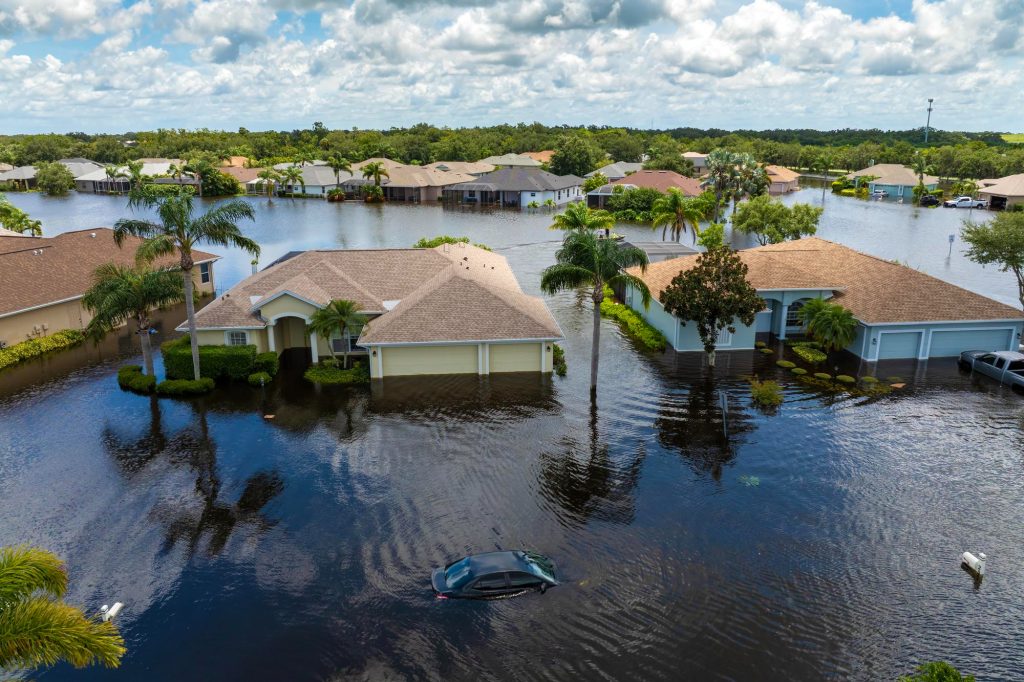
Cut the power to the flooded rooms, grab photos of everything, and call a restoration crew the same day, ideally before you even finish mopping up the obvious puddles. Storm water just isn’t clean water, you know. It drags in soil, lawn chemicals, and whatever else happened to be sitting in the yard, so the cleanup looks a bit different than what you’d do for a burst pipe.
We provide superior water damage restoration in Lakeland, FL, with IICRC- and IRI-certified technicians on call. Our phone gets answered at any hour, and we bill most carriers directly, which means drying can start before the claim is even settled. What you do in those early hours really does decide how much of your flooring makes it.
What to Do in the Hour After You Find Storm Water
Safety comes before anything else, and in a flooded Florida home that pretty much always means electricity. Water touching outlets, baseboards, or an appliance cord turns the whole room into a hazard zone.
So switch the breaker off before anyone wades through standing water. If the panel itself is wet, or it sits inside the flooded area, just leave it alone and call your utility provider instead. Honestly, no salvaged rug is worth reaching for a wet panel in the dark.
Documentation comes right after that, because your adjuster is going to build the claim from whatever you captured before cleanup started. Walk each room with your phone and shoot wide video before you touch a thing.
Then take close photographs of wet flooring, soaked baseboards, stained drywall, and any furniture sitting in water. Capture the ceiling too, even if it looks dry, since storm water often sneaks in high and travels down inside the wall.
Only once that record exists should you lift light items clear, because skipping this step is kind of exactly what happens when water damage goes untreated down the line, it just gets worse and costs more.
Why Storm Water Gets Treated Differently Than a Household Leak
Restoration crews actually sort water into categories based on what’s dissolved in it, and that category pretty much sets the entire scope of work. A supply line break produces clean water, so a lot of it can just be dried in place, no big deal. Storm water that crossed a yard or a street, though, arrives contaminated instead.
Porous materials that soaked it up usually need to come out rather than dry out in place. Carpet pad, soaked insulation, and the lower section of drywall all fall into that group, basically anything spongy. Our storm damage restoration crews take all of that out for you.
Polk County adds its own little wrinkle here, because so much of the housing stock sits right on a slab. A slab holds moisture a lot longer than raised construction does, and contaminated water reaching the slab edge just wicks sideways under the flooring. Nobody can see it happening, which is kind of the problem.
Our technicians map moisture with meters and thermal imaging instead of just judging by touch. Readings get logged daily until the structure actually reaches a dry standard. Surfaces that feel dry by day two routinely still read wet inside the wall, every single time.
Which Parts of a Lakeland Property Hold Storm Water Longest
Water follows gravity, then it follows the path of least resistance, simple as that. That path is rarely the one a homeowner actually expects, though. It runs under door thresholds, down the inside face of exterior walls, and into cabinet toe kicks where airflow never really reaches.
A room can look totally recovered while the cavity behind the baseboard stays wet enough to feed growth for months. Our crews open up and check those areas instead of just waiting around for a stain to show up.
The same logic applies above you too, by the way. Wind-driven rain pushes water past the roof flashing and soffit vents into the attic. It soaks the insulation up there, then drips through to the ceiling days later, sometimes almost a week later.
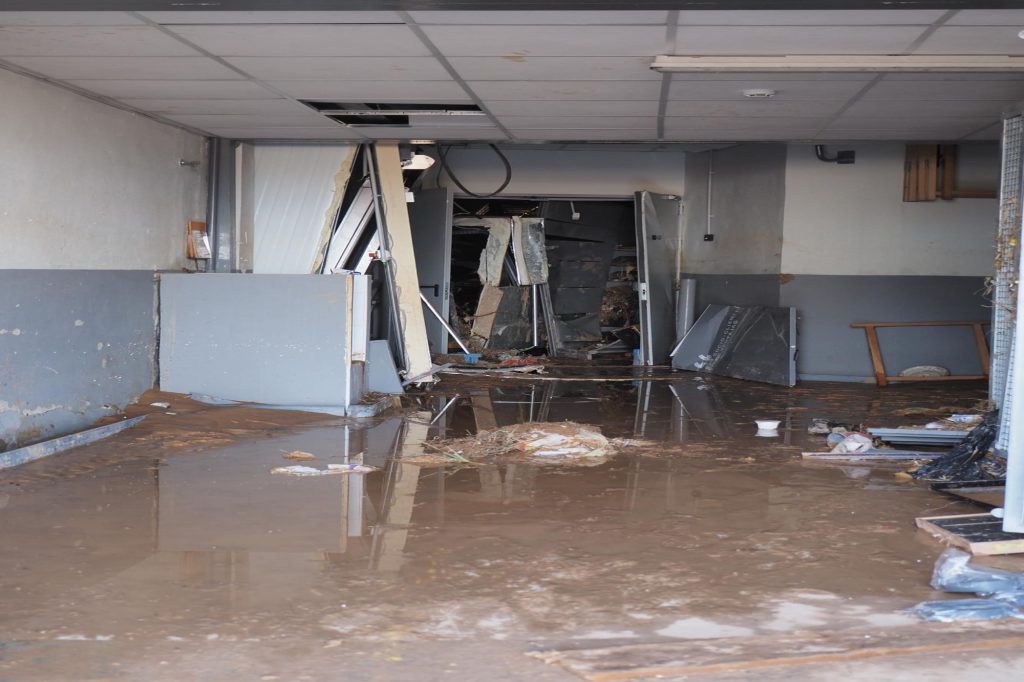
If your roof took any wind at all, the attic deserves a look even when the ceilings below still look perfectly clean. The wallboard tells its own story as well, and how water damage affects drywall is honestly worth understanding before you assume a wall is fine.
Have this ready before a crew arrives, since it shortens that initial visit considerably:
- Your policy number and carrier contact. The adjuster file opens faster when the crew can reference it on day one.
- The photographs and video you took. These establish the condition before any material was removed.
- A rough timeline of the storm. When water first appeared tells a technician how long materials have been wet.
- Access to the attic and the main shutoff. Both get checked on almost every storm call.
- A list of what has already been moved. It keeps your inventory and the adjuster’s record aligned.
Standing water still spreading through your property right now? Our Lakeland crews dispatch around the clock, and the moisture assessment won’t cost you a thing.
What Does Your Insurance Carrier Actually Need From You
Most Florida policies split a storm claim into two parts: mitigation and repair. Those two halves move on completely separate timelines, which trips people up constantly.
Mitigation covers the emergency work that stops the loss from spreading, so that’s extraction, containment, and drying. Repair covers putting the structure back together, everything from drywall and insulation through to flooring and paint. Knowing which half you’re actually in tells you what should be happening that week.
The distinction that decides most Polk County claims comes down to sudden versus gradual. Wind-driven rain entering through storm-damaged roofing is usually treated as sudden, which works in your favor.
Water that snuck in through a roof that was already failing gets treated differently, or sometimes excluded outright. Flood is its own separate category in Florida, and it typically needs its own policy. Rising groundwater and wind-driven rain can leave two rooms looking identical with very different coverage behind them.
None of that gets argued from memory weeks later, and honestly, it shouldn’t have to. The record settles it.
Our technicians photograph the loss from the very start, write a scope before work even begins, and hand the adjuster a daily drying log. Ask any company you call whether they produce that kind of documentation as standard, because a lot of them don’t. If the answer sounds vague, just keep calling around.
Noticed water creeping along your baseboards or a musty smell after the last storm? Give us a call at (863) 333-9865, and we’ll send someone out before it turns into a bigger problem.
How Fast Does Mold Follow Storm Water in Polk County
Growth can actually begin within twenty-four to forty-eight hours in Florida humidity, which is honestly faster than most people think. Contaminated storm water speeds that up even more, because it brings organic material in right along with it.
The window isn’t some countdown that resets once the visible water is gone, either. What matters most is how long the material actually stayed damp. A cavity that held moisture for five days has crossed the threshold, even if the room looked bone dry by day three.
This is honestly the strongest argument for calling the same day you find the damage, not next week. Mitigation is meant to start before the claim’s even approved, and most carriers expect exactly that. Every day you wait just enlarges the repair bill they’ll eventually have to pay.
Owners who wait around for permission often end up with a way bigger loss than the one they originally reported. Letting things sit untreated almost always costs more than people expect, it really does.
When Is It Time to Stop and Call Someone
A shop vacuum and a few box fans can handle a small contained spill of clean water on hard flooring, no problem. Storm water is just a different situation altogether.
Three signs mean the job has outgrown anything a homeowner can safely handle alone. Water reached more than one room. It soaked carpet, insulation, or the lower part of drywall, or maybe it came from outside rather than from a pipe.
Any one of those puts the real risk out of sight, which is exactly the problem. The danger isn’t really the water you can see, it’s the moisture left behind in materials you can’t open up.
Professional extraction pulls water out of the subfloor and wall cavities where you can’t reach. Commercial dehumidifiers then hold the air dry enough for that moisture to actually leave the structure. Daily readings prove when it’s really finished, and guessing your way through it can turn a three-day dry out into a full rebuild.
Frequently Asked Questions
Usually, yeah, because cooler air holds less moisture and that helps the whole drying effort along. The exception is any property where water reached the ductwork, the air handler, or the attic insulation around it. Running a contaminated system just pushes spores and odor through every single room. Get the equipment checked before you switch it back on.
Photograph it thoroughly before it goes anywhere, from several angles, including anything that identifies the item. Most carriers accept documented disposal of items that pose a health risk, which furniture sitting in storm water usually does. The record just has to exist before the item leaves your property. Ask your adjuster directly what they need, since requirements vary quite a bit between carriers and policies.
Three to five days is pretty typical for a storm loss caught early. Slab construction, which a lot of Lakeland sits on, often runs a day or two longer than that. The slab just releases its moisture slowly, there’s no rushing it. Equipment comes out when the meter readings say the structure is dry, not on some fixed schedule.
Most families stay, actually. Air movers are loud, and they’ll raise the temperature noticeably, but the property stays livable for a contained loss. If storm water mixed with sewage, or the structure took damage that affects safety, we’ll say so on day one rather than halfway through the job.
Contact Us
Storm water does its worst damage in the hours before anyone pulls it out, so don’t wait around. United Water Restoration Group of Lakeland dispatches 24/7 Emergency Service from 3928 Anchuca Dr. #6, Lakeland, FL 33811.
A real person answers the phone rather than a call service, which honestly makes a difference when you’re stressed. Reach our team at (863) 333-9865, or contact us online, and we’ll get a certified technician out while the record is still fresh.
Related Topics: