



When most people picture water damage, they think of a burst pipe or a violent storm tearing through the neighborhood. Those are the obvious culprits, the ones that make headlines and get noticed right away. But after years of offering professional water damage restoration services and storm damage repair to homeowners across Lakeland, we have seen that a surprising share of damage actually comes from quieter, easy to miss sources.
These are problems that can sit behind walls or under floors for weeks, sometimes months, before anyone notices anything is wrong. And because nobody catches them early, these slow leaks and hidden moisture issues often end up doing far more damage over time than a single dramatic event ever could.
The Washing Machine Connection Nobody Checks
Washing machine supply lines are one of the most common overlooked sources of water damage we come across. These hoses sit behind the machine, out of sight, and most homeowners never think to check them unless the machine itself stops working properly.
Over time, the rubber or braided lines can weaken, crack, or loosen at the connection point, and a small leak can go unnoticed for a long time simply because nobody looks behind the appliance.
By the time a homeowner notices water on the floor, moisture has often already worked its way into the surrounding flooring, the wall behind the machine, or even the space below if the laundry area sits on an upper floor. A quick visual check of these supply lines every few months can catch a weak spot long before it turns into a real water damage event.
Refrigerator Water Lines and Ice Makers
Similar to washing machines, refrigerators with built in water dispensers or ice makers rely on a small supply line that is easy to forget about entirely. These lines are thin, often plastic, and tucked behind the refrigerator where nobody sees them during regular cleaning.
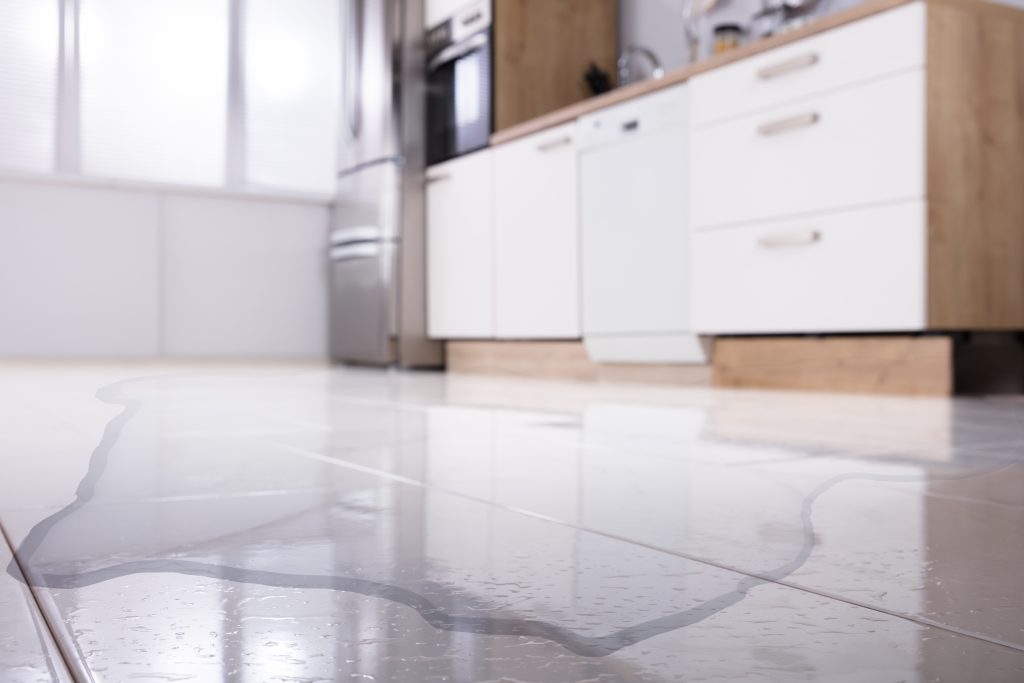
A slow leak here tends to show up as water damage to the flooring in the kitchen, sometimes spreading underneath cabinets before it becomes visible.
Similar to washing machines, refrigerators with built in water dispensers or ice makers rely on a small supply line that is easy to forget about entirely. These lines are thin, often plastic, and tucked behind the refrigerator where nobody sees them during regular cleaning. A slow leak here tends to show up as water damage to the flooring in the kitchen, sometimes spreading underneath cabinets before it becomes visible
Because kitchens often have hardwood or tile flooring, water from a refrigerator line leak can travel a surprising distance before it becomes obvious. We have seen cases where the actual leak point was several feet away from where the visible damage first appeared, which is part of why a full moisture assessment matters once any water damage turns up in a kitchen.
Roof Flashing and Small Gaps Around Vents
A roof does not need a major storm to develop a leak. Flashing around chimneys, vents, and skylights is one of the more common weak points on a home, and small gaps here can let water in gradually over time rather than all at once. Because this type of leak is often slow, it can take a long time before a homeowner notices a stain on the ceiling or ceases to think it is just a temporary issue after a heavy rain.
In Lakeland’s climate, with frequent rain throughout much of the year, these small roof gaps get tested regularly. A stain that appears after one storm and seems to fade afterward is often not actually resolving itself, it is simply drying between rain events while the underlying gap remains.
Left unaddressed, this kind of slow leak can lead to damaged insulation, weakened wood framing, and eventually mold growth inside the attic or ceiling.
Hidden Plumbing Leaks Behind Walls
Not every plumbing issue announces itself with a puddle on the floor. Pipes running behind walls or under slabs can develop small leaks that release water slowly into the surrounding structure rather than into a visible space. Because Florida homes commonly use slab foundations, a leak under the slab can be especially easy to miss until flooring starts to feel warm in one spot, or a water bill unexpectedly climbs without an obvious explanation.
A rising water bill with no clear cause is actually one of the more reliable signs of a hidden plumbing leak, and it is one that homeowners sometimes overlook or attribute to something else entirely. If your water usage jumps without any change in your routine, it is worth having the plumbing checked rather than assuming the increase is a billing error.
Air Conditioning Condensation Lines
Homeowners dealing with water damage restoration cases in Florida are often surprised to learn that a struggling air conditioner can be the culprit. Since the heat keeps these systems running for most of the year, the condensation line responsible for draining moisture away from the unit tends to get overlooked, even though it’s one of the more common sources of trouble. Once that line clogs up with algae or debris, water has nowhere to go but back up, spilling into the surrounding space instead of draining outside the way it’s supposed to.
This kind of leak usually turns up near an indoor air handler, often tucked away in a closet or utility room that people rarely think to check. Because that spot tends to stay out of sight, a clogged line can keep dripping for quite some time before anyone spots standing water or noticeable staining nearby.
Keeping up with routine HVAC maintenance remains one of the easiest ways to catch this problem early, before it turns into something far more costly to fix.
Why These Slow Leaks Cause More Damage Than People Expect
A sudden water event like a burst pipe or a flash flood gets noticed and addressed quickly, which actually limits how much damage occurs. Slow, hidden leaks work in the opposite direction. Because nobody notices them right away, they have far more time to spread moisture into flooring, framing, and drywall before anyone calls for help.
By the time a slow leak becomes visible, whether through a stain, a smell, or a spike in the water bill, the moisture has often already been present long enough to create conditions for mold growth and the need for mold remediation. This is part of why we encourage homeowners to check the less obvious spots in a home, appliance connections, roof flashing, condensation lines, and water bills, rather than only paying attention to water damage after it becomes visible on the surface.
Related Topics: