


After a leak or flood, it's easy to assume the job is done once the visible water is gone and the floor feels dry underfoot. But water rarely stays where it's easiest to see. It kind of finds its way into places you would not think to check.
For homeowners across Orlando, Winter Park, Altamonte Springs, Oviedo, Winter Springs, Winter Garden, and Ocoee, hidden moisture left behind inside walls, under flooring, or above ceilings is often what causes the most lasting damage. Long after the original leak has been fixed, that trapped moisture is just sitting there, doing its thing.
Our team, through professional water damage restoration services, treats hidden moisture as a central part of every job, not something addressed after the visible cleanup wraps up. Below, we explain why this step matters so much, where moisture tends to hide, and what can happen when it gets skipped or rushed.
Where Hidden Moisture Tends to Collect
Water moves along the path of least resistance, which often means it travels into spaces that aren't part of a normal walk-through inspection. Wall cavities, subfloors, the space beneath cabinetry, and areas around baseboards are common places where moisture settles and stays trapped long after a surface appears dry to the touch.
This is one of the main reasons a thorough water damage restoration in Orlando job goes well beyond drying what is visible on the surface.
Insulation is another material that holds onto moisture for an extended period. Once wet, insulation loses much of its effectiveness and can stay damp for a long time, especially in areas with limited airflow, such as a closed attic space or an interior wall without ventilation. A room can look and feel dry to someone standing in it while insulation inside the wall behind them is still fully saturated and continuing to cause damage out of view.
A few areas account for most of the hidden moisture our technicians find during an inspection.
| Area | Why Moisture Lingers There |
|---|---|
| Wall cavities | Limited airflow and no direct sunlight slow drying to a crawl. |
| Subfloors | Moisture travels downward and can sit beneath finished flooring unseen. |
| Insulation | Once saturated, it holds water and rarely dries out on its own. |
| Cabinetry and baseboards | Tight, enclosed spaces trap moisture against wood and drywall. |
Why a Dry Surface Doesn't Mean a Dry Structure
Surface materials like flooring and drywall often dry faster than what's underneath or behind them. That difference in drying speed creates a false sense that a problem has resolved itself, when in reality moisture is still present in the framing, subfloor, or insulation and continuing to cause damage out of sight.
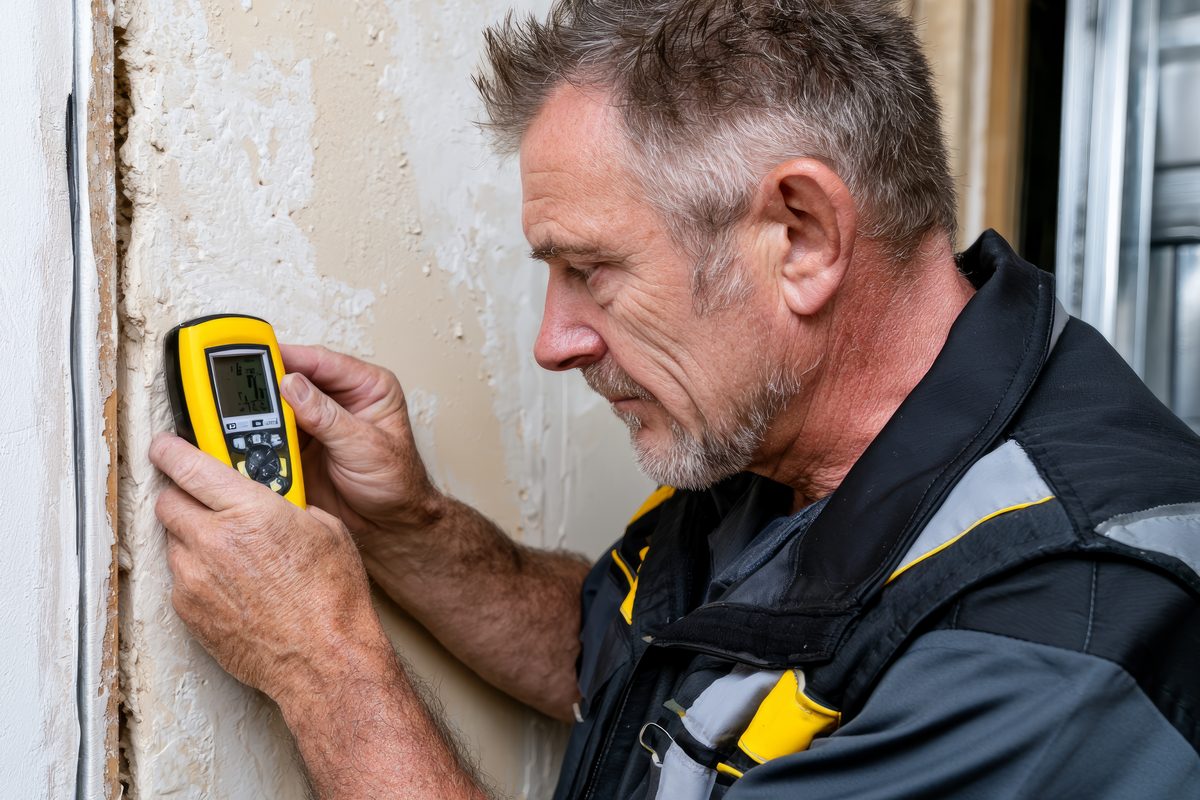
This is why our technicians rely on moisture meters and thermal imaging rather than a visual check alone. These tools identify dampness that isn't visible to the eye, which allows drying equipment to target the areas that actually need it instead of stopping once the surface looks fine.
The Risk of Mold Growth Behind Walls and Under Flooring
Mold needs moisture and a period of time to establish itself, and both conditions are met easily when hidden moisture goes unaddressed. Because these areas are out of sight, mold can grow for weeks before a musty smell or a health symptom finally alerts someone to the problem.
By that point, mold remediation often involves removing and replacing materials that could have been saved if the moisture had been caught and dried early. Addressing hidden moisture right after water damage occurs is one of the most direct ways to avoid a much larger mold problem later.
Still catching a musty smell or a damp patch days after a leak was supposedly fixed? Give us a call at (407) 278-7715, and we'll check what's happening behind the wall.
Structural Consequences of Moisture Left Behind
Wood framing and subfloors that stay damp for extended periods lose strength over time. This weakening happens gradually, which means a homeowner might not notice anything unusual until flooring feels soft underfoot or a wall shows signs of warping months after the original water damage occurred and the initial repair was considered finished.
Metal connectors and fasteners used throughout a home's structure are also vulnerable to corrosion when exposed to sustained moisture. These components hold framing together, so their gradual weakening is a structural concern even when a homeowner doesn't notice it during everyday use.
Left unaddressed long enough, that weakening can eventually affect how well a floor or wall holds up under normal weight and use.
How Our Team Confirms a Property Is Fully Dry
Rather than relying on how a space looks or feels, our technicians measure moisture levels throughout the drying process using specialized equipment. This includes checking materials directly affected by water, as well as adjacent areas where moisture may have traveled during the initial event, even if those areas were never part of the original damage report.
We continue this monitoring until moisture levels return to a normal range for the specific materials involved, not just until a set number of days has passed. That standard lets us confirm a property is genuinely dry, not just dry enough to look finished on the surface, and it's a step we don't skip, no matter how straightforward a job appears at first.
How our technicians confirm a property is genuinely dry:
- Check inside walls, subfloors, and cabinetry with moisture meters
- Scan for hidden dampness with thermal imaging equipment
- Test adjacent areas the water may have traveled through, not just the visible damage
- Monitor readings daily until levels return to a normal range for each material
Why This Step Protects the Value of a Home
Skipping the hidden moisture stage of restoration might save time upfront, but it tends to cost more later, whether through mold remediation, structural repairs, or the effect that either can have on a home's condition and value over time. Addressing this step thoroughly the first time protects the investment a homeowner has in their property.
For anyone dealing with water damage in Orlando or the surrounding areas, hidden moisture deserves the same attention as the visible damage that prompted the call in the first place. A property that looks restored on the surface isn't truly restored until the moisture behind that surface has been addressed as well.
Frequently Asked Questions
How can I tell if moisture is still trapped after a leak looks dry?
A room that still smells musty, feels more humid than the rest of the house, or shows a stain that keeps returning is often a sign moisture is still present. Moisture meters and thermal imaging can confirm this even when nothing looks wrong on the surface.
Does wet insulation need to be replaced?
In most cases, yes. Once insulation is saturated it loses much of its effectiveness and tends to stay damp for a long time, especially with limited airflow, so replacement is usually more reliable than trying to dry it in place.
How long does it take to confirm a property is fully dry?
It depends on how much water was involved and which materials were affected. Technicians continue monitoring moisture levels until they return to a normal range for each material, rather than stopping after a fixed number of days.
Can hidden moisture affect a home's resale value?
Yes. Moisture problems that go unaddressed can lead to mold growth or structural repairs that a buyer's inspector may flag later, so drying a property completely the first time protects its condition and value over time.
Our IICRC certified technicians are available 24 hours a day for a free in-home visual assessment, and we work directly with major carriers to make the claims process easier. Call (407) 278-7715 to get started.