


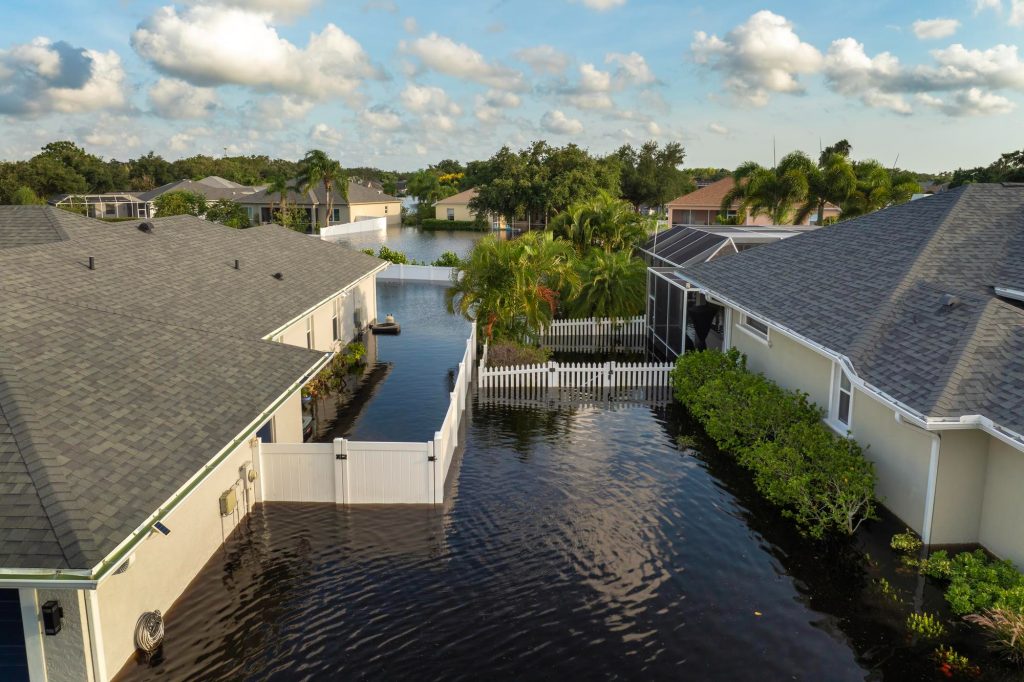
Severe weather pushes water into Orlando homes through the roof, around window frames, and up from the ground. The damage keeps spreading after the sky clears. Most storm calls are not a flooded living room, you know. They are wet insulation over a ceiling and a subfloor still holding water a week later.
United Water Restoration Group of Orlando handles professional water damage repair in Orlando, FL around the clock from Winter Park. Our technicians hold IICRC and IRI certifications, and every job opens with a free in-home visual assessment.
The drying plan comes from moisture readings rather than a guess. Walk the house once the weather passes, and just look up before you look down.
Where Storm Water Gets Into an Orlando Home
Wind-driven rain does not need a hole to get inside. It needs a gap. Orlando homes lose water at roof flashing, ridge vents, window seals, and the joint where a soffit meets the wall.
Each of those is a seam rather than an opening, so the damage kind of shows up indoors first. A shingle lifted in a gust can settle back down and still leave an open nail line beneath it. The view from the driveway will never show you that.
The ground route is slower and easier to miss. Water pooling against a slab works through the edge and into the flooring from below. A storm loss can surface as a soft spot in the hallway days later, maybe even a week.
Our crews trace the path back to the entry point before any drying starts. Sealing the roof while the wall cavity stays wet only traps the problem inside. This is also how roof leaks spread water damage, with the stain and the source sitting several feet apart.
What to Check Once the Weather Clears
Photographs taken before anything is moved carry more weight with a carrier than a description written later. Work through the house in a set order before any storm damage restoration begins, while the damage is still as the storm left it. Go only where the building is safe to enter, and keep the power off to any room holding standing water.
- Ceilings and upper corners. Stains, sagging drywall, or a line that was not there yesterday.
- Window and door frames. Damp sills, bubbled paint, or a gap where the caulk has pulled away.
- Flooring along exterior walls. Cupping boards, lifting grout, or carpet that feels cool underfoot.
- The attic, from the hatch. A flashlight across the insulation shows dark, compressed patches where water came through.
- Anything electrical that got wet. Leave it alone until an electrician has looked at it.
Hold on to receipts for tarps, fans, or anything else you buy right after the storm, since carriers usually treat emergency measures separately from the repair itself. A documented spend on day one tends to come back to you later in the claim.
If you spot a stain or a damp frame after the storm, just call our Orlando team at (407) 278-7715, and we’ll take a look before the moisture reaches the framing.
Why Central Florida Humidity Shortens Your Window
Drying is a race against the air in the building. In Orlando, Florida, that air works against you for most of the year. Mold needs moisture, warmth, and an organic surface, and a wet wall cavity in July supplies all three.
Growth can begin inside 24 to 48 hours. Every decision after a storm gets measured against that window. Clearing gutters and sealing weak points is part of preparing for tropical storm water damage, and it leaves moisture fewer places to hide.
Running the air conditioning feels like the obvious fix. It is just the wrong move while the ducts are wet. Conditioned air traveling through damp ductwork carries moisture into rooms the storm never touched.
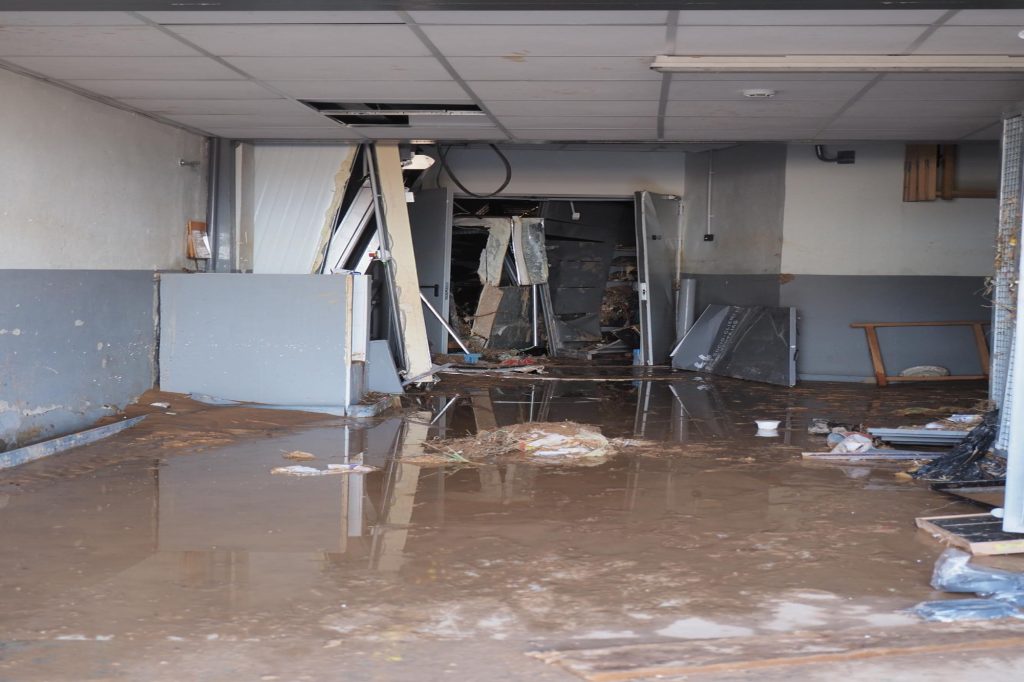
A problem that started at one window ends up spread across a floor. Our technicians read moisture levels inside the materials themselves, then set air movers and dehumidifiers to pull water out of the structure.
Humidity also keeps working on materials that look fine on the surface. Drywall and framing can hold moisture long after the paint feels dry, so a quick wipe-down rarely settles it.
What Your Insurance Carrier Will Want to See
Storm claims turn on documentation more than on severity. A carrier wants the cause, the date, the extent of the damage, and proof that the loss was addressed quickly.
Photographs taken halfway through a cleanup rarely answer all four. We log and photograph each affected area during the assessment. Moisture readings get recorded through the drying period, and the file stays open until the work closes out.
We bill carriers directly, including State Farm, Allstate, Nationwide, and Progressive. That keeps the paperwork on our side rather than yours. It matters most in the week after a major storm, when adjusters are working through a backlog. A file that arrives complete moves ahead of one that needs another visit.
What the Repair Usually Looks Like
Immediate work leads, and it is rarely glamorous. Board-up and tarping stop the weather from getting back in. Extraction removes the standing water. Structural drying then runs until the materials read dry rather than feel dry, which typically takes three to five days. Water that reached framing or subfloor pushes that timeline out.
Reconstruction follows once the readings hold. Drywall, insulation, flooring, and cabinetry come back in, and larger losses move into structural repair. Our storm crews carry a job from the opening tarp through the final repair. You are not handing the building between a mitigation company and a contractor halfway through.
The next storm is easier if the last one was properly dried. A free in-home visual assessment will tell you what is still wet before anyone writes a repair estimate, so contact us or call (407) 278-7715 any hour, and the crew at 6959 Stapoint Ct, Suite K, Winter Park, FL 32792 will take it from there.
Related Topics: