



Preparation comes down to three things settled in advance. Where the water shuts off, what your policy covers, and who you are calling at two in the morning. Everything else is detailed. Our crews at United Water Restoration Group of Daytona Beach have answered local Daytona Beach water damage restoration calls since 2008.
The properties that come through a failure best are the ones where somebody already knew which valve to turn. Certified technicians dispatch around the clock from Hand Ave in Ormond Beach, though the fifteen minutes before anyone arrives still belong to you. Go find your main shutoff this week and confirm it turns.
Know Where Your Water Shuts Off, and Prove It Turns
The main shutoff usually sits in a meter box near the street. On some properties it sits where the supply line enters the structure instead. Plenty of homeowners have never touched theirs, and a valve that has not moved in a decade seizes.
Finding it is only half the exercise. Turn it, confirm the water stops, then turn it back. A valve that resists needs replacing before you need it rather than after.
Individual fixture valves matter just as much, since most failures are local rather than whole property. Every toilet, sink, dishwasher, refrigerator and water heater has its own shutoff. Closing the right one stops the leak without taking the building off water.
Walk the property once, open the cabinet under each sink, and make sure every valve turns. That single afternoon converts a flooded floor into a mopped one on the day something fails.
What to Have Ready Before Anything Happens
Preparation that survives contact with a real emergency is short and physical. These are the items our technicians most often wish a property owner had on hand.
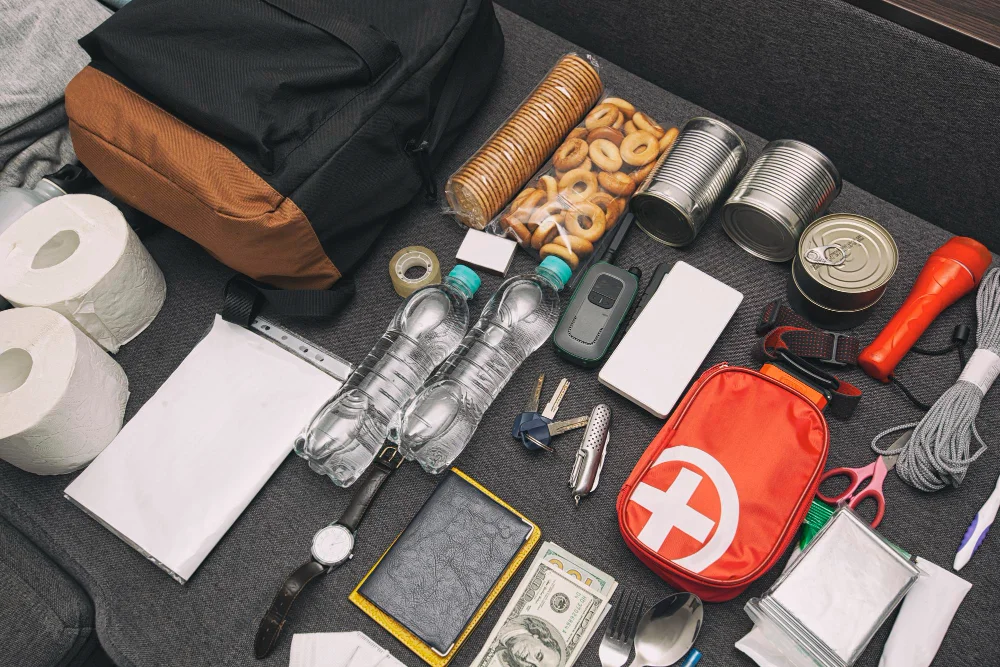
- A labeled photo of your main shutoff saved on your phone, not in a drawer.
- A shutoff key or wrench stored somewhere other than a flooded garage.
- Your policy number and claims line written down and accessible offline.
- Recent photographs of each room taken while everything is intact.
- A restoration company saved as a contact rather than searched for under pressure.
Those photographs carry more weight than people expect. Adjusters work from evidence of what a property looked like before. A phone album of intact rooms settles arguments about finishes and contents that would otherwise rest on memory.
Knowing the sequence also helps, and what to do if a storm floods your home covers the first moves once water is already inside.
Understand Your Policy Before You Need to Use It
Most water damage claims turn on cause rather than on damage, which is worth understanding while nothing is wrong. Sudden and accidental events are covered under most standard policies, including a burst supply line or a failed water heater.
Gradual seepage that went unnoticed for months frequently is not. Carriers treat it as a maintenance failure, and the same wet floor can land in either category depending on the documentation.
Flood sits outside a standard homeowners policy entirely, which matters on a coastline where storm surge and heavy rain are routine. Condo owners have a further split to understand, since association policy and unit owner policy divide responsibility differently building to building.
Call your agent and ask which category each scenario falls into. Ask specifically about matching coverage for flooring, since that answer decides whether a damaged section gets patched or replaced.
Worth settling before storm season peaks. Call us at (386) 233-7080. Our certified technicians dispatch 24/7 across Volusia and Flagler County. The on site assessment is free whether the loss turns out large or small.
Prepare for the Weather This Coast Actually Gets
Storm exposure here is seasonal and predictable enough to plan around. Clear gutters and downspouts before the season rather than during it. Water backing up at a roof edge finds its way inside faster than through any other entry point.
Check the seals around windows and sliding doors on the exposed side of the property. Wind driven rain arrives horizontally, and a gap that never leaks in normal weather will leak in a band of tropical rain.
Have board up materials or an arrangement in place before you need them. Know which room in the property you would protect first. Beachside addresses take more of this than inland ones, since salt air works on fasteners and sealants faster than most owners realize. The longer view on all of it sits in how hurricane preparation prevents water damage.
Maintain the Things That Fail Most Often
Failures cluster around the same short list of components, which makes twice yearly attention unusually efficient. Replace rubber washing machine hoses with braided stainless lines and note the date.
Look at the base of the water heater for rust streaking. A tank that is seeping has already started failing and will not improve.
Pull the refrigerator forward far enough to check the ice maker line for mineral crust at the fitting. Air handlers deserve their own mention in this climate. A blocked condensate drain in an attic unit sends water through the ceiling below.
Running a cup of water through the line before summer takes about two minutes. The drain pan underneath is worth a look while you are there. None of this requires a trade license. All of it costs less than one night of water running through a wall cavity.
Decide Now Who You Are Calling
The worst time to compare restoration companies is while standing in water, which is exactly when most people do it. Choosing in advance lets you ask the questions that matter without pressure.
Ask whether technicians are IICRC certified and whether the assessment costs anything. Ask whether the company bills your carrier directly. Ask whether the same team handles the rebuild or hands it to a separate contractor.
That last question separates a three day job from a three month one. A company that extracts, dries and then leaves puts you in the middle of the rebuild. You end up coordinating a quote with a contractor who never saw the demolition, and the carrier receives two scopes that do not reconcile.
We carry a job from the first moisture reading to the final walkthrough under one crew. There are 4.9 stars across 542 Google reviews behind that. Where a storm has already breached the building, our storm damage restoration crews handle board up and extraction together.
Frequently Asked Questions
What is the most important step I can take to prepare for a water emergency?
The single most valuable step is finding your main water shutoff and confirming it turns. It’s usually in a meter box near the street or where the supply line enters your home. Turn it, check that the water stops, then turn it back on. While you’re at it, check the individual shutoff valves under each sink and behind toilets, dishwashers, refrigerators, and water heaters. Knowing these valves well means you can stop a leak quickly and keep a small issue small.
What should I keep on hand in case of a water emergency?
A short, practical kit makes a big difference. Save a labeled photo of your main shutoff on your phone, keep a shutoff key or wrench somewhere easy to reach, and write down your policy number and claims line so it’s available offline. We also recommend taking recent photos of each room while everything is in great condition, since adjusters rely on these to document your property accurately. Finally, save a trusted restoration company as a contact so help is just one tap away.
Will my insurance policy cover water damage?
Most standard homeowners policies cover sudden and accidental events, such as a burst supply line or a failed water heater. Flood coverage is typically a separate policy, which is helpful to know on the coast. Condo owners can also confirm how responsibility is shared between the association and unit owner policies. A quick call to your agent now gives you clarity, and it’s worth asking specifically about matching coverage for flooring so you know exactly what to expect.
How can I protect my property during storm season in Daytona Beach?
A little seasonal maintenance goes a long way. Clear gutters and downspouts before storm season, and check the seals around windows and sliding doors, especially on the side facing the weather. Have board-up materials or an arrangement ready ahead of time. Twice a year, check common sources of leaks: upgrade washing machine hoses to braided stainless lines, look over your water heater and refrigerator ice maker line, and flush your air handler’s condensate drain with a cup of water. These simple steps take only minutes and help keep your property dry and protected.
Save a number before you need it. Give us a call at (386) 233-7080. Our team covers Daytona Beach, Ormond Beach, Holly Hill, Port Orange and the communities between them. Certified technicians dispatch 24/7, and every job starts with a free on site assessment.