Storm water moves through a Florida house differently than a plumbing failure does. It arrives fast, it is often dirty, and it tends to show up while the power is still on and the wind is still blowing. What happens in the hour after it gets in decides how much of the house comes back.
Our family owned team has provided professional water damage restoration services in Daytona Beach, FL since 2008, and the pattern rarely changes. The homeowners who came through in the best shape stayed out of the water, took photographs before anything moved, and called before a weekend closed the window on drying.
The Hour After Storm Water Enters Your Home
Everything in this window is about safety and evidence. Not cleanup. A well meaning mop and a running air handler do more avoidable damage than most people expect, because the mop erases the record of what happened and the air handler pushes contamination into rooms the water never reached. Work through this list while help is on the way.
- Stay out of standing water near outlets, appliances or a submerged panel. Live circuits and storm water often share a room.
- Cut power to the affected rooms at the breaker, but only if you can reach a dry panel without wading.
- Leave the air conditioning off. The air handler draws damp, contaminated air into its return and sends it through ducts that serve every room, so a problem in two rooms becomes a problem in all of them.
- Photograph wide, then close. Every room, the water line on the baseboards, the point of entry such as a broken window or roof opening, and the contents before anything is moved or thrown out.
- Move what you can safely lift to a dry room. Documents, electronics, anything upholstered.
Resist the urge to start pulling carpet or cutting drywall. A storm damage restoration technician needs to see the loss in the state the storm left it, and so does your carrier. Tear out before documentation makes a legitimate claim harder to prove.
Why Storm Flooding Is Not the Same as a Burst Pipe
A supply line breaks and releases clean water. Storm surge, wind driven rain through a failed window, and rising ground water do not.
They carry soil, sewage, lawn chemicals and whatever was on the street, which changes the entire scope of work and what can be salvaged. Any useful hurricane flood guide starts with that distinction, because it decides what can be saved.
The restoration industry sorts water into three categories, and the category drives everything that follows.
| Category | What it is | What happens to porous materials |
|---|---|---|
| Category 1 | Clean supply line water | Carpet, pad and drywall are usually dried in place |
| Category 2 | Water with meaningful contamination | Pad comes out, carpet may be salvageable, drywall is assessed |
| Category 3 | Grossly contaminated, including storm and ground water | Porous materials are removed, not dried |
Most storm losses we handle in Daytona Beach start at Category 3, which is why a homeowner who spends a day fanning the room usually ends up with the same demolition anyway, plus a mold problem. Time spent drying contaminated materials is time the loss spends getting worse.
What Happens When Our Crew Arrives
A proper water damage restoration service starts with diagnosis. On the initial visit, our IICRC and IRI certified technicians:
- Find the entry point
- Take moisture readings in the walls and subfloor
- Map the true footprint with thermal imaging
- Scope the work
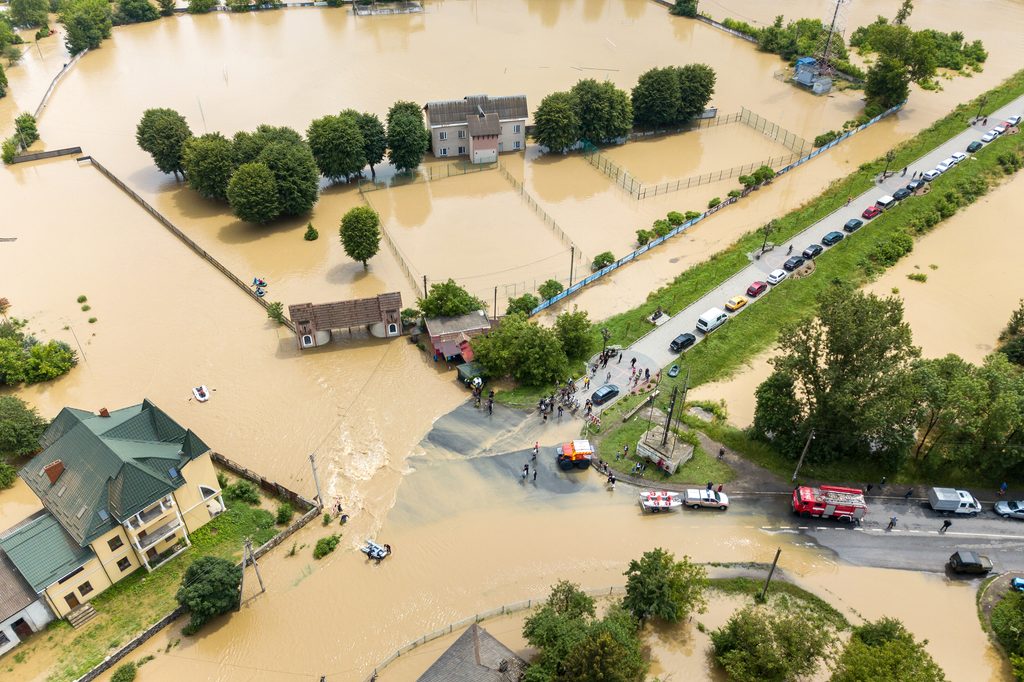
The visible wet patch is rarely the real boundary, because on the slab on grade homes common along this coast, water runs sideways under tile and climbs into wall cavities and cabinet bases where nobody sees it.
Mitigation usually begins during that visit, with extraction, then containment, then a drying plan built around the readings. Crews also point out the entry points worth sealing before the next storm, since our tips to prevent water damage come from the same walkthrough.
Where the policy allows, we bill the carrier directly, and the adjuster receives our scope, photographs, moisture maps and daily drying logs. Coverage questions then get answered with records instead of recollection.
Storm damage keeps its own hours, and so do we. When you need water damage restoration in Daytona Beach, FL, a real person answers the phone at any hour, and the assessment at your home is free. Calling early is the simplest way to limit what has to be torn out.
Water still standing in a room after a storm off the coast here? Give us a call at (386) 233-7080, and we will tell you what category it is before you spend a day drying material that has to come out.
What Your Policy Covers After a Hurricane or Tropical Storm
Rain driven in through an opening the storm created is treated differently from water that rose from the ground:
- A standard homeowners policy commonly covers the rain.
- Rising water is commonly excluded, and separate flood coverage exists to fill that gap.
Two neighbors on the same street can see very different outcomes for the same inch of water. Photographs showing where water entered, and in what order, often decide which side of that line a loss falls on.
Most Florida homeowners policies also carry a separate hurricane deductible, typically 2, 5 or 10 percent of your dwelling coverage rather than a flat dollar amount. It applies only to losses from a storm the National Hurricane Center has declared a hurricane, and only once per calendar year.
Your declarations page lists the exact dollar figure, so check it before assuming what you will owe. The file behind every water damage restoration job we run is built to answer exactly these questions, with photographs of the entry point, moisture readings and daily drying logs in one place.
That holds whichever carrier you have, since we accept all insurance providers, from State Farm and Allstate to USAA and Travelers.
Drying a Flooded House in Coastal Humidity
Box fans and open windows only push wet air around a house when outdoor humidity sits near seventy percent, as it often does on this coast.
Structural drying works the other way. The wet area is sealed off, and air movers run alongside low grain refrigerant (LGR) dehumidifiers, so the moisture pulled out of walls and floors is captured and removed instead of settling into the next room.
We dry to a standard, not to a schedule. Readings come daily, and the equipment stays until materials reach dry standard against an unaffected reference point elsewhere in the house. Hardwood can often be saved with injection drying if the water was clean enough to dry in place and we reach it early.
Mold can take hold within roughly 24 to 48 hours in this climate, which is why we push for same day extraction instead of a Monday appointment.
Frequently Asked Questions
Should I run fans and open the windows before help arrives?
Only in rooms where the water was clean, and only when outdoor humidity is low, which is rare here. With surge or rising floodwater, fans push contamination into rooms that stayed dry. Leave the air conditioning off entirely, since the duct system would carry spores and odor through the rest of the house.
How long does a flooded home take to dry?
Most residential dry outs take three to five days once extraction is complete, though the number depends on how much water came in, which materials absorbed it and how quickly drying started. Surge and other contaminated water usually mean removal rather than drying, which shifts the timeline toward reconstruction.
Do I need to move out during work?
It depends on how much water the house took. When flooding is limited to part of the home, we contain the affected area so the rest can stay in use. Losses involving sewage, large scale demolition or an unsafe structure are the usual exceptions, and we will tell you plainly at the assessment rather than after equipment is running.
What if the storm damage turns into mold?
Mold found during a water loss is handled as part of the same job. We contain the area, remove affected material, treat what remains and correct the moisture source so it does not come back. Reconstruction stays with our team, so you deal with one crew and one file from extraction through the rebuild.
Our team dispatches to Daytona Beach, Ormond Beach, Holly Hill, Port Orange, New Smyrna Beach, Palm Coast and the rest of Volusia and Flagler County, with emergency response available around the clock. The assessment costs nothing and the sooner it happens, the more of your home stays repairable. United Water Restoration Group of Daytona Beach Address 1270 Hand Ave, Ormond Beach, FL 32174 Phone (386) 233-7080 Availability 24/7 emergency service
Resources: