


Extraction only removes the water you can see. Moisture that soaked into drywall, subfloor and framing has to leave the building as vapor, or it stays. In Daytona Beach that is the harder half of the job, since ambient humidity will refill a room the air movers just dried. Our technicians at United Water Restoration Group of Daytona Beach run low grain refrigerant dehumidifiers alongside air movers on every drying job.
We work as an emergency restoration company across Volusia and Flagler County for exactly these conditions. Dry means a meter reading, not a surface that feels dry under your hand. Ask any contractor what number they are drying to, and notice whether they have one.
What Dehumidification Actually Does
Drying a structure is a two part process that most people collapse into one. Air movers do the first part. They move air fast across wet surfaces, so moisture evaporates out of the material and into the room.
That evaporation is only progress if something then removes the vapor. Otherwise humidity in the room climbs until evaporation stalls and the materials stop releasing anything at all.
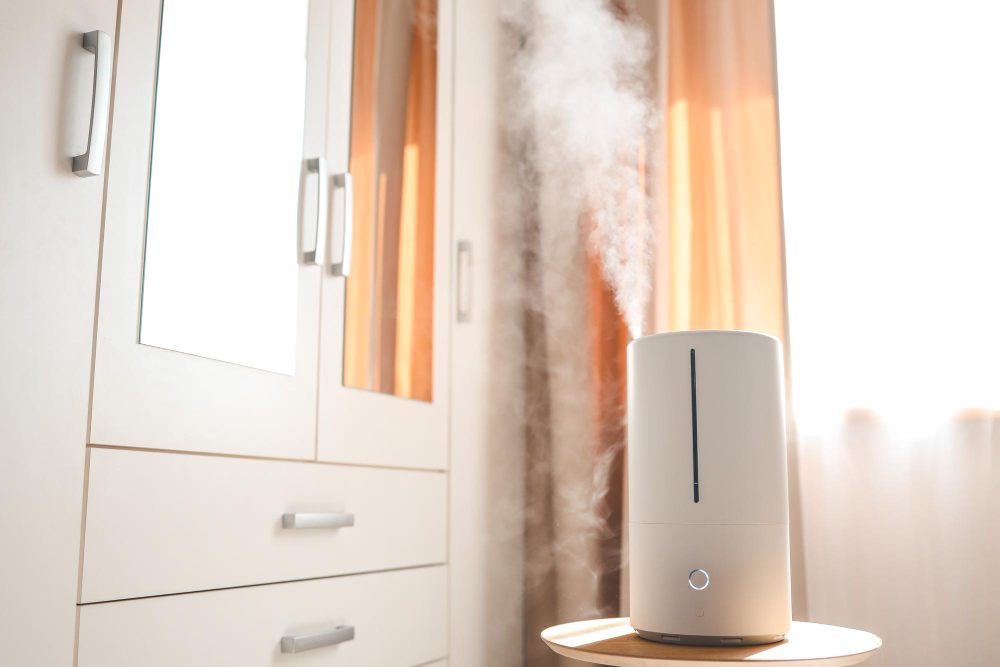
Dehumidifiers do the second part. They pull water vapor out of the air and discharge it outside the building. The two pieces of equipment work against each other when either one is missing. A property with six fans and no dehumidifier is often wetter in the wall cavities than it looks.
The units we use are rated by grain depression, meaning how dry they can make the air they process. That rating decides whether drying finishes at all in a Florida summer.
Why Florida Humidity Changes the Math
Opening windows is the instinct, and here it works against you for most of the year. Outside air in Daytona Beach, FL regularly carries more moisture than the air inside a damaged property. Ventilating the room introduces water rather than removing it.
The same logic applies to a box fan aimed at wet carpet with the patio door open. That setup is the one our crews arrive to find more often than any other.
Coastal properties add a second layer. Salt air, high ambient humidity and slab construction work together against a drying plan. Water released at floor level spreads sideways under tile, then wicks up into wall cavities where no air moves at all.
Those cavities need containment and controlled drying rather than open air. The difference shows up in the readings long before it shows on the surface. The instruments that catch it are covered in why moisture detection matters after water damage.
What Happens When a Property Is Not Properly Dried
Mold is the first consequence and the fastest. Growth follows water intrusion in roughly 24 to 48 hours in this climate. A wall cavity that still reads wet on day four is already colonized, whether anything is visible yet or not.
That turns a drying job into containment, material removal and air filtration. The cost of that work runs well past what the right equipment would have cost in the first place. Our crews see this most often on properties where somebody ran household fans for a week and assumed the job was done.
Materials are the second consequence, and they fail more slowly. Subfloor that stays damp loses structural integrity. Engineered flooring delaminates at the seams, and drywall paper stays soft enough that joint compound will never hold over it.
Air quality is usually what residents actually notice. A damp cavity feeds the room every time the air handler cycles. That is why water damage affects indoor air quality for weeks after the visible water is gone.
Running fans and hoping? Call us at (386) 233-7080. Our certified technicians take readings across the property 24/7 and tell you what is still holding water, at no charge for the assessment.
How We Know When a Property Is Actually Dry
Drying ends at a number, not on a day. Our technicians establish a dry standard by reading unaffected material of the same type elsewhere in the property. The affected material is then dried until it matches.
Hardwood, drywall, concrete and subfloor hold and release moisture differently. Each one gets measured on its own terms rather than averaged into a verdict about the room.
- Daily meter readings on every affected material, logged rather than estimated.
- Thermal imaging confirming the wet area is shrinking from the edges inward.
- Ambient readings of temperature and relative humidity inside the containment.
- Equipment adjusted as readings move, since a day one plan is rarely right on day three.
- A documented endpoint the carrier can see when the claim is reviewed.
Those logs serve two purposes at once. They tell the crew when to pull equipment.
They also give the adjuster evidence that the structure was dried properly rather than declared dry by eye.
Commercial Properties and Multi Unit Buildings
Condo buildings, hotels and offices along the coast carry the same physics with higher stakes. A leak in a stacked building rarely stays in one unit. Water that travels through a ceiling assembly into the unit below leaves two wet areas, and both need controlled drying.
Our crews work those losses behind containment that keeps the rest of the building operating. Closing a floor usually costs more than the damage itself.
Documentation carries more weight here than in a single family home. Associations and management companies need the split between association property and unit owner property recorded clearly.
Each carrier then receives what it needs, and drying logs per unit are part of that record. Our commercial restoration teams phase the work, so a property keeps running while the affected areas dry.
What a Property Owner Can Do in the Meantime
Leave the air conditioning off until a technician has checked the system. Running the air handler through a damp property pulls moisture and spores into the ductwork. A contained problem then spreads to every room in the building.
Keep interior doors to the affected area closed, and resist opening windows no matter how strong the instinct is.
Lift what you can off wet flooring. Furniture with stained wood feet bleeds color into carpet within a few hours. Photograph the water line on the baseboards before anything moves, since that line disappears once drying starts. It is the clearest evidence of how deep the water sat.
Then leave the rest alone, because pulling up flooring early removes the information a technician needs to scope the job.
Frequently Asked Questions
Why is dehumidification needed if the water has already been extracted?
Extraction removes the water you can see, while dehumidification takes care of the moisture that has soaked into drywall, subfloor, and framing. Air movers help that moisture evaporate into the room, and dehumidifiers then pull the vapor out of the air and discharge it outside. Working together, they dry your property completely and efficiently. At United Water Restoration Group of Daytona Beach, we run low-grain refrigerant dehumidifiers alongside air movers on every drying job.
Can I open the windows to help my home dry faster?
It’s a natural instinct, but in Daytona Beach, keeping the windows and patio doors closed is the better choice for most of the year. Outdoor air here often carries more moisture than the air inside your home, so a closed, controlled environment helps the drying process move faster. Our technicians use containment and commercial-grade equipment to create ideal drying conditions, even during humid Florida summers.
How do you know when my property is completely dry?
We dry to a measurable standard. Our technicians take readings from unaffected materials of the same type in your home, then dry the affected areas until they match. Throughout the process, we log daily meter readings, use thermal imaging to track progress, monitor temperature and humidity, and adjust equipment as conditions change. The result is a documented endpoint that gives you confidence and provides your insurance carrier with clear evidence of proper drying.
What can I do while I’m waiting for a technician to arrive?
A few simple steps help protect your property. Keep the air conditioning off until a technician checks the system, close interior doors to the affected area, and keep windows shut. Lift furniture off wet flooring when possible, and take a photo of the water line on your baseboards, since it’s helpful evidence for your claim. We recommend leaving flooring in place so our team can fully assess the situation and create the right drying plan.
Drying is where a water damage job is won or lost. Give us a call at (386) 233-7080. Our team brings commercial grade dehumidification to properties across Daytona Beach, logs the readings daily, and stays until the structure reaches dry standard.