


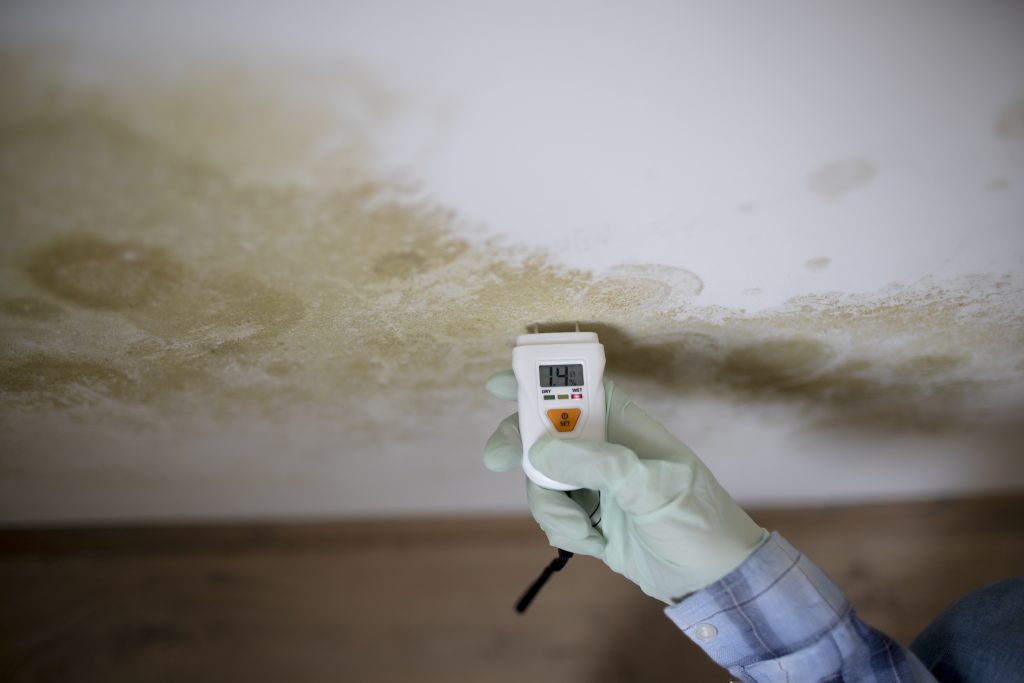
Every water damage job our crews run in Volusia and Flagler counties starts with moisture readings and ends with them. The readings on day one tell us what to dry. The final set tells us we can stop, which is one of the reasons homeowners call us the best water damage restoration service in Daytona Beach, FL.
A wet floor tells you almost nothing about the size of the loss. Water follows gravity and capillary action, not the outline of the puddle, so the boundary a homeowner can see is usually the smallest part of the problem. Instruments are how a crew finds the rest of it.
The Visible Wet Area Is Rarely the Real One
Building materials take on water at very different rates, so the wet footprint takes an irregular shape that seldom matches the stain. Most of it turns up in four places homeowners do not think to check.
- Under tile and laminate. Water on a concrete slab moves sideways beneath the flooring and can travel far past the stain before the surface shows anything.
- Up the drywall. Gypsum board wicks water upward against gravity, so a wall can be wet well above the baseboard.
- Along the bottom plate. The joint where wall framing meets the floor carries water under a wall and into the next room, sometimes a closet nobody thought to open.
- Behind finishes that trap it. Cabinet bases, vinyl wallcovering and vapor barriers hold moisture in and slow evaporation, so those spots stay wet long after the room feels dry.
Finding moisture two rooms from the source is not unusual, and missing it is how a dry out becomes mold remediation a month later. In restoration, water damage is mapped with meters before anyone judges its size.
On the slab on grade construction common along this coast, a failed laundry supply line can push water under tile across most of a hallway while the floor near the machine looks merely damp.
What Actually Gets Measured
There is no single instrument that answers the question, which is why a technician carries several and cross references them. Each one has a blind spot, and the readings hold up only when one tool covers for another.
Getting that picture right on day one is what decides the risk of mold & water damage spreading past the room it started in.
| Tool | What it reads | Where it is used | What it cannot tell you |
|---|---|---|---|
| Thermal imaging camera | Surface temperature, where wet areas read cooler | Fast scans to find the shape and edge of a wet area | Whether a cool spot is water or just a draft or an AC vent |
| Non invasive meter | Relative moisture through the surface, with no holes | Confirming thermal findings on finished walls and floors | An exact moisture content, or how deep the water sits |
| Pin meter | Moisture content at pin depth inside the material | Framing, subfloor and trim | Anything beyond the spot between the pins |
| Thermohygrometer | Temperature and relative humidity of the air | Tracking whether the drying setup is removing water | How wet the building materials are |
Thermal imaging is often misunderstood. The camera does not see water. It sees temperature, and a wet surface reads cooler because evaporation draws heat out of it.
That makes it excellent for finding where to look and weak as proof on its own, which is why thermal findings get confirmed with a meter before they go in the file.
Unsure how far the water spread under the tile in your Daytona Beach home? Give us a call at (386) 233-7080, and we will map the wet area with meters before anything gets closed up.
Readings Only Mean Something Against a Baseline
Wood framing in a Florida home in August sits at a different equilibrium than the same wood in a dry climate, so a reading that would signal a problem elsewhere may be entirely normal here.
Drywall, subfloor and trim each settle at their own levels too. A raw moisture number means little until it has something to be compared against.
A dry standard supplies that comparison. Our technicians set one the way the IICRC S500 standard describes, with readings from unaffected material of the same type in the same building, ideally in a room the water never reached.
The reference becomes the target, and affected material is dried until it gets there, not until a set number of days has passed or the surface feels dry to a hand.
Drying to a schedule rather than to a standard is a common reason a job comes back. A crew that pulls equipment on day three, only because day three is when equipment usually comes out, has no evidence the structure is dry. The readings decide when the drying ends.
Before you hire any water damage restoration service, ask:
- How the crew will set its dry standard
- How the daily readings will be documented
With our team, meter readings start at the initial walkthrough and the daily drying log runs until the materials reach that standard, which doubles as the insurance claim support you will want later.
Why Moisture Detection Decides Mold Risk
Mold needs moisture and time. The EPA’s guideline is to dry water damaged materials within 24 to 48 hours to prevent growth, and warm, humid conditions on this coast leave little margin inside that window.
That timeline is the whole case for detection over assumption, and the reason thorough water damage restoration starts with readings.
- A wall cavity that reads wet on day one and gets containment, targeted drying and confirmation readings typically stays a drying job.
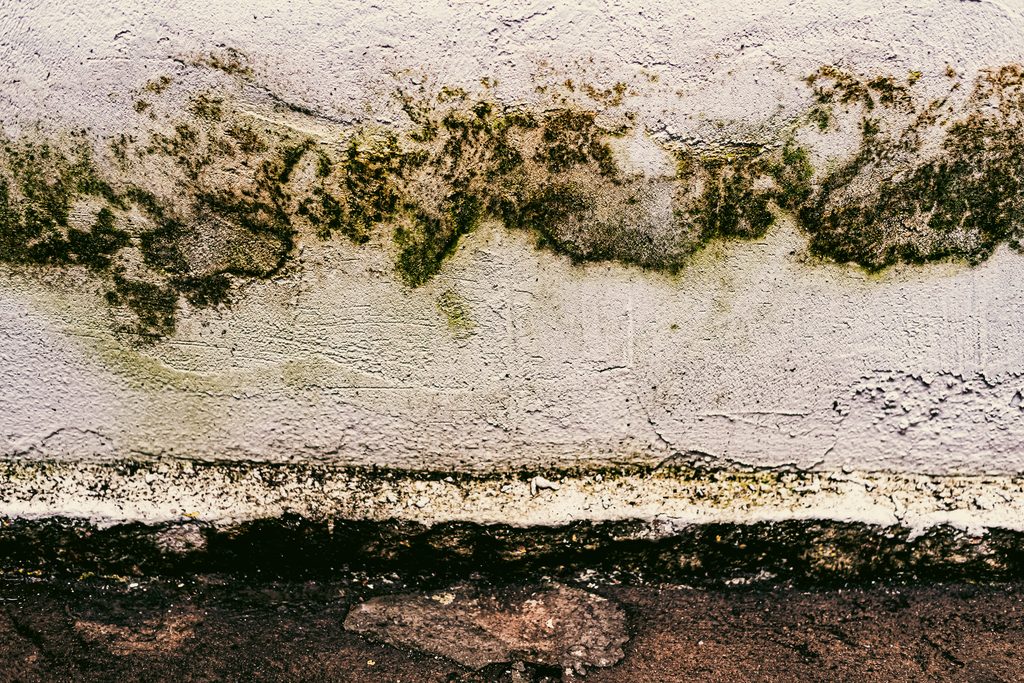
- The same cavity, missed because it sat beyond the obvious wet zone, holds moisture against the drywall’s paper facing in a dark, still space.
On a coast where relative humidity averages above 70 percent across the year, that moisture has little chance of leaving on its own.
Growth often follows, and it tends to surface weeks later as a musty smell or a tenant complaint. At that point the work is no longer drying.
The job becomes containment, removal of affected material, treatment, clearance testing by an independent assessor and reconstruction, on a wall that had already been repaired and repainted once.
Why Moisture Detection Decides Mold Risk
An adjuster reviewing a loss wants to know what was wet, how wet, how long the equipment ran, and what the readings looked like when it came out.
Daily drying logs answer all four in a form that does not depend on anyone’s recollection. In a claim file, that record carries real weight.
This matters most when coverage is questioned. A carrier weighing whether damage came from a sudden failure or from long term seepage is reading moisture patterns and documentation.
A file with mapped readings and dated photographs from the start of the job supports a position that a written summary cannot.
Our IICRC and IRI certified technicians build that record as the job runs. We work with all insurance providers, including State Farm, Allstate, USAA, Farmers, Liberty Mutual, Nationwide, Progressive, Travelers, American Family and The Hartford, and bill your carrier directly where the policy allows.
The same record protects you in the other direction, since final readings taken against the dry standard show the drying was finished before any reconstruction went in.