



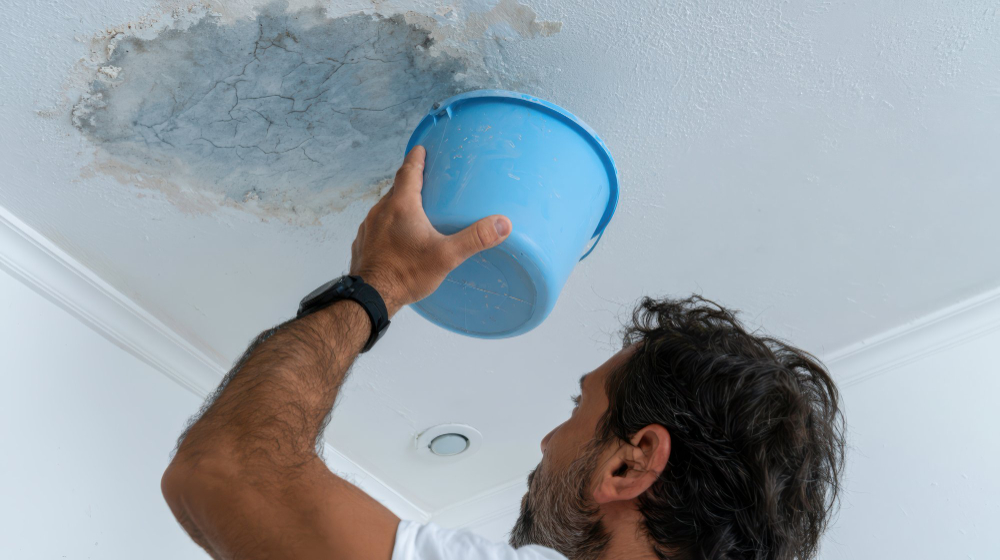
A ceiling has water damage when the paint stains, sags, flakes or smells musty. The leak itself almost never sits above the mark you can see. Water runs along a joist and drops wherever the drywall gives first, so a ring over the couch can start ten feet away.
United Water Restoration Group of Daytona Beach has handled certified water damage restoration in Daytona Beach, FL since 2008. Our certified technicians map the wet area with thermal imaging and moisture meters before anyone opens a ceiling. That mapping keeps the repair matched to the real footprint rather than the visible patch. Press a clean palm flat against the stain and note whether the board feels soft.
What a Water Damaged Ceiling Actually Looks Like
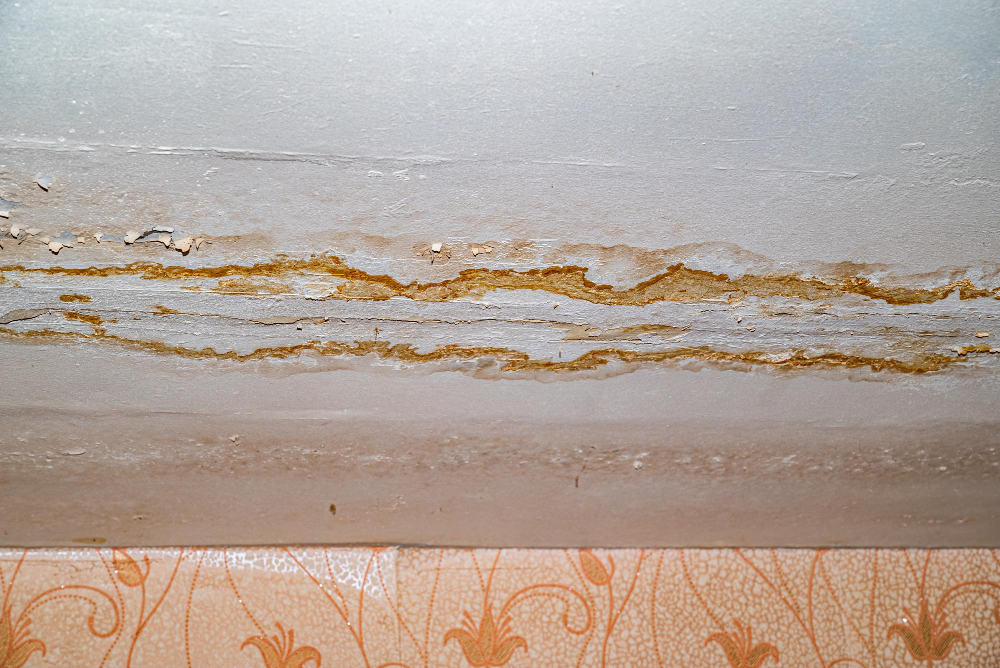
Color usually gives it away first. A brown or yellow ring with a darker outer edge means water has passed through more than once. Each cycle of wetting and drying leaves another tide line behind.
A single grey patch with no ring reads differently, and usually means the leak started within the last day or two. Insulation and flooring still dry in place inside that window.
Texture tells you how far the damage has traveled. Paint that bubbles or peels away in sheets means moisture is pushing out from behind the surface. Drywall that sags or feels spongy has lost its strength and will not recover.
Textured ceilings hide staining well, so watch for drooping and crumbling instead of a clean mark. A ceiling that has begun to bow is holding weight it cannot hold, and nobody should be standing underneath it.
Where the Water Is Coming From in a Daytona Beach Home
Plumbing above the ceiling causes most of what our crews find indoors. A tub drain seal, an upstairs supply line or a loose toilet flange will drip for weeks. The ceiling shows nothing for most of that time.
Attic air handlers are standard in Florida construction. A blocked condensate line overflows into the ceiling below, which is why these calls spike through summer.
Roof and storm damage accounts for the rest. Wind driven rain gets under a lifted shingle or past failed flashing around a vent. It then follows the decking to the lowest point before dropping through. Beachside properties take this harder, since salt air works on fasteners and sealants faster than it does inland.
Water that reaches a ceiling rarely stops there. Once it runs down inside a wall cavity the signs change completely, which is covered in spotting water damage behind walls.
The Signs That Mean You Should Stop and Call
Some ceiling marks are old scars from a leak somebody already repaired. Others are active, and an active leak adds water every hour you wait. Our technicians treat these descriptions as urgent when they arrive over the phone.
- A stain that is larger today than yesterday. Mark the edge in pencil and check it in the morning.
- Drywall that gives under light pressure. Soft board is saturated board.
- A musty smell with no visible mark. Odor arrives first when the leak sits above insulation.
- Water beading on a light fixture. Electrical and water in one cavity is an immediate hazard.
- A sagging bulge holding weight. Clear the room and leave it alone.
Any one of those means the cavity is still wet. A stain that has not changed size in a year, feels hard and carries no odor is usually historical. Our technicians still take a reading rather than assume.
Seeing one of these signs right now? Call at (386) 233-7080, our team dispatches a certified technician 24/7. The on site assessment is free, so you learn what is wet before committing to anything.
Why a Wet Ceiling Turns Into Mold So Quickly Here
Mold needs moisture and time, and Florida supplies both for free. Visible growth follows water intrusion in roughly 24 to 48 hours in this climate. A ceiling cavity packed with insulation holds humidity better than almost anywhere else in a house.
The insulation is the real problem, because wet batting stays wet long after the drywall surface feels dry and keeps feeding the cavity above.
What homeowners notice is the air rather than the ceiling. Spores from a wet cavity move through the room each time the air handler cycles. A bedroom can smell wrong days before any stain appears, which is why water damage affects indoor air quality well after the leak stops.
Containment goes up before demolition starts, so the rest of the property stays clean while the affected section comes out.
What Our Crew Does After a Ceiling Leak Is Reported
A real person answers the phone and takes the details. The assigned technician then calls back with an arrival window. He will tell you what to move out of the room before the crew gets there.
The walkthrough itself starts with readings rather than tools. We measure moisture across the ceiling and the walls below it, run thermal imaging to find the wet edge, and trace the source. Everything gets photographed for the file your carrier will eventually want.
Mitigation usually begins on that first visit. We contain the room and remove saturated insulation where it will not dry. Air movers and refrigerant dehumidifiers then run together, so evaporated moisture leaves the building rather than settling elsewhere.
Drying continues until readings reach dry standard, not until a set number of days has passed. Repairs put the ceiling back to its pre loss condition afterward. We bill the carrier directly rather than handing you the paperwork.
What It Costs to Wait a Week
A ceiling leak caught early is usually a small job. The source gets fixed, a section of drywall comes out, the cavity dries, and patch and paint finish it.
Our technicians regularly reach homes where that was the whole scope, because somebody called the day they noticed the ring.
Left alone, the arithmetic changes fast. Saturated insulation stops insulating and starts holding mold. Wet joists stay wet, since nothing is moving air through the cavity.
The stain then spreads across seams into the next bay. One section of drywall becomes containment, mold remediation, a larger rebuild and a claim with a much longer timeline attached.
Frequently Asked Questions
Can I paint over a water stain on my ceiling?
Only once the leak is fixed and the cavity is fully dry. Paint over a wet ceiling will just bleed through again, and it hides the moisture still trapped in the insulation above. Get moisture readings first. After that, a stain-blocking primer under fresh paint will cover the mark for good.
How long does it take a wet ceiling to dry?
It depends on how much water got in and whether the insulation is soaked. A small, fresh leak with professional air movers and dehumidifiers often dries in three to five days. Saturated insulation usually has to come out because it won’t dry in place. Drying is done when moisture readings hit dry standard, not after a set number of days.
Does homeowners insurance cover ceiling water damage in Florida?
Most policies cover sudden, accidental water damage, such as a burst supply line or an overflowing condensate line. Damage from a slow leak that went on for months, or from deferred maintenance, is often excluded. Photograph everything and report it quickly. Thermal imaging and moisture readings give your carrier the documentation it will ask for.
Is it safe to stay in a room with a leaking ceiling?
If the drywall is sagging, bulging, or water is reaching a light fixture, leave the room and turn off power to that circuit at the breaker. A small, firm stain with no sagging is usually safe to be around, but it should still be checked soon. Leaks keep adding water, and mold can start within 24 to 48 hours in Daytona Beach’s humidity.
A free on site assessment settles the question either way. Get us a call (386) 233-7080, and our certified technicians take readings across the ceiling, tell you whether the cavity is still wet, and explain the repair before any work starts.