



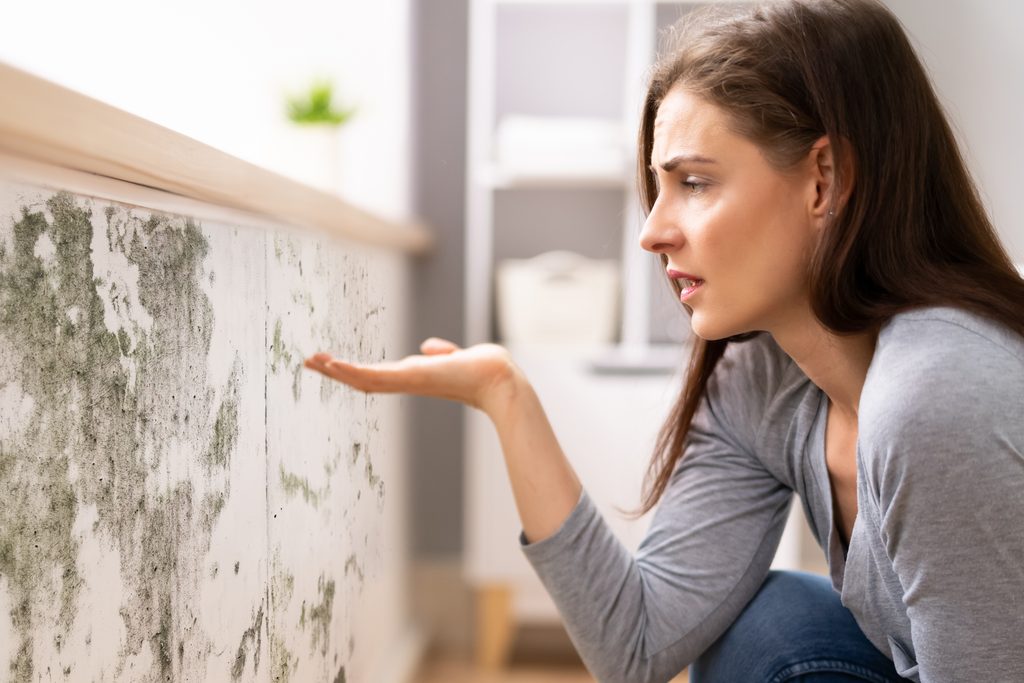
A wall hides a leak well. Drywall absorbs, paint holds its color, and the framing stays out of sight until drying alone can no longer fix it. When a stain shows up, the leak behind it may have been running for weeks.
Our family owned team has been drying and rebuilding walls on this coast since 2008, and working with an experienced water damage restoration company early keeps a small leak from turning into a full wall replacement. The warning signs repeat often enough that a homeowner can catch them with a flashlight and a bit of attention. None of the checks below needs special equipment.
The Visual Signs That Show Up Early
Paint and drywall tend to move before they discolor. Moisture pushing in from behind makes the wall swell slightly, and the movement shows at its weakest points, the taped seams and fasteners. Watch for these, particularly on walls that back onto a bathroom, kitchen, laundry room or the exterior:
- Tape seams lifting or bubbling, often in a straight vertical or horizontal line that follows the drywall joint.
- Nail pops appearing in a cluster rather than one at a time, where swelling framing and softened drywall have loosened the fasteners.
- Staining with a defined edge, usually a ring or tide line, that grows outward over several days.
- Baseboards pulling away from the wall or swelling along an edge, since trim wicks moisture quickly and can show it before the drywall does.
- Paint that flakes or blisters in one patch while the rest of the wall stays sound.
A stain that dried and stopped growing may be old damage, left from a leak that has since been fixed. One that keeps spreading points to an active leak, and water damage restoration on that wall gets cheaper the sooner it starts.
Calling in mold remediation early is the smarter move too, since our technicians can treat what is growing behind the drywall before it reaches the framing. Painting over it only hides the evidence a technician needs.
What Your Nose and Hands Tell You
Smell is frequently the earliest signal, and the one people dismiss most readily. Once drywall paper, framing or the back of a cabinet stays damp, mold and bacteria can take hold on it.
That growth gives off an earthy, musty odor, sometimes within a couple of days. It gets stronger in a closed room, after rain, or when the air handler kicks on and draws air from the cavity.
Touch narrows it down. Press a thumb into the suspect area with moderate pressure:
- Sound drywall resists.
- Wet drywall gives slightly, feels cool and may hold a faint impression.
Concentrate on the vulnerable areas to water damage in any house, meaning the walls shared with a bathroom, kitchen or laundry.
Tap along the wall with a knuckle too. Wet sections usually sound duller than the hollow knock of dry drywall. Neither test settles it alone, but a patch that is soft, cool, dull and musty very likely has water behind it.
| Check | Dry Wall | Wet Wall |
|---|---|---|
| Smell | No odor | Earthy, musty odor, stronger in a closed room, after rain or when the air handler runs |
| Thumb press | Firm and resists pressure | Gives slightly and may hold a faint impression |
| Temperature | Same as the surrounding wall | Feels cool to the touch |
| Knuckle tap | Hollow knock | Duller sound |
Found a soft, musty patch on a wall in your Daytona Beach home? Give us a call at (386) 233-7080, and we will find the leak behind it before the framing and insulation come into it.
Signs Specific to Slab Homes and Beachside Condos
Very few homes on this coast have basements, and that single fact changes where hidden water shows up.
When a supply line fails under a slab, the water can travel sideways under tile or laminate. It then climbs into the bottom plate and the lowest few inches of drywall, so the wall may show damage before the floor looks wet.
Other clues point to a leak under the slab. A warm spot on tile can mean a leaking hot water line, and a patch of flooring that never quite dries is another tell.
So is the sound of running water with every fixture off, or a water bill that jumps with no change in use. Checking that meter every few months is one of the simplest tips to prevent water damage from going unnoticed under a slab.
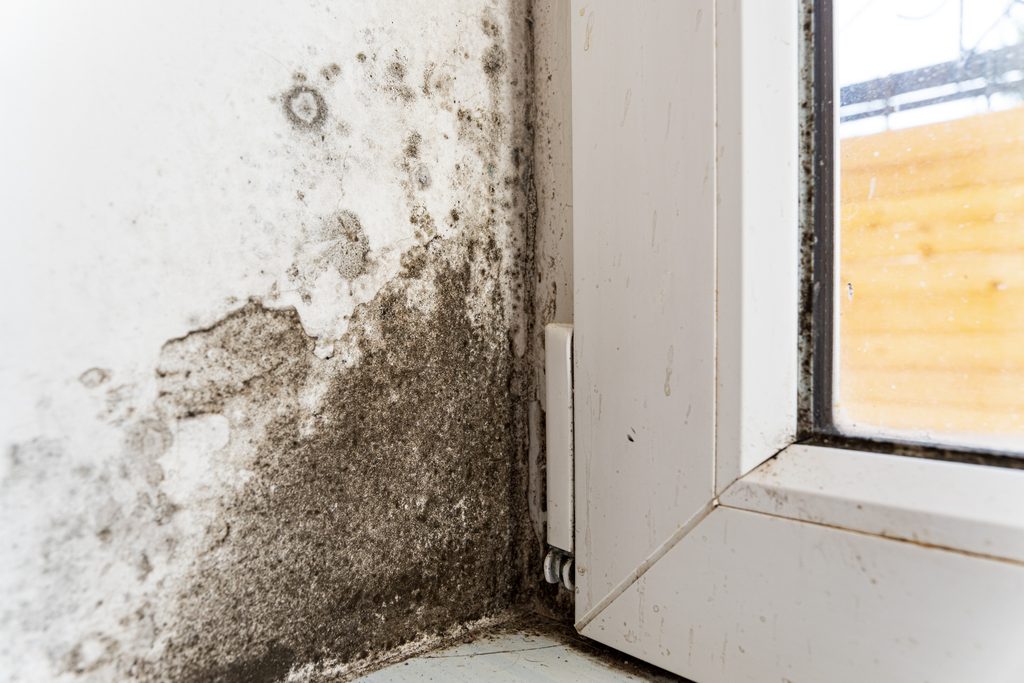
Stacked condo buildings, common along A1A, work differently, because the leak often starts in someone else’s unit.
Leaking water travels down a shared plumbing chase, so a ceiling stain in a lower unit may be the earliest evidence of trouble above. On those losses we coordinate access through the association and document what sits on association property versus the owner’s side.
Coastal humidity compounds all of it. Relative humidity here averages in the mid seventies across the year. In air like that, a closed, wet wall cavity has little chance of drying on its own.
Why the Damage You Cannot See Matters More
The wall surface is the last thing to show a problem and the least consequential thing damaged. Behind it sit the bottom plate, the studs, the insulation and often the electrical. Wet batt insulation loses much of its insulating value and holds water against the framing.
Mold is the constraint that sets the schedule. Materials that stay wet past 24 to 48 hours can start growing it, and a dark, still cavity lined with paper facing suits it well.
A leak caught in week one is typically a dry out and a drywall patch. Found in month two, the same leak can mean demolition, mold remediation and rebuilt finishes.
The cost difference between those two outcomes is substantial, and it mostly comes down to how early someone looked. That look costs nothing, since the on site visit is free, and our water damage restoration service can usually begin mitigation on the spot.
How We Find Water Inside a Wall Without Opening It
Guessing where to cut is how homeowners end up with a wall full of test holes and an unsolved leak. In restoration, water damage inside a wall gets mapped before anything is opened.
Our IICRC and IRI certified technicians trace the wet area, then open the wall only where the readings call for it.
- A thermal imaging camera reads surface temperature. Evaporating moisture cools the drywall face, so a wet area shows up as a cold patch with a visible outline. An AC duct or a cold water line inside the wall can read cold too, so every thermal finding gets checked with a meter.
- A non invasive meter reads moisture through the surface without leaving a pinhole.
- A pin meter takes depth readings where confirmation matters.
We compare each reading with an unaffected wall of the same material in the same house, because a raw number means little without that baseline.
Those readings go into any insurance claim alongside photographs of the loss. The adjuster gets the moisture map our crew uses to plan the water damage restoration. Where the policy allows, we bill the carrier directly.