


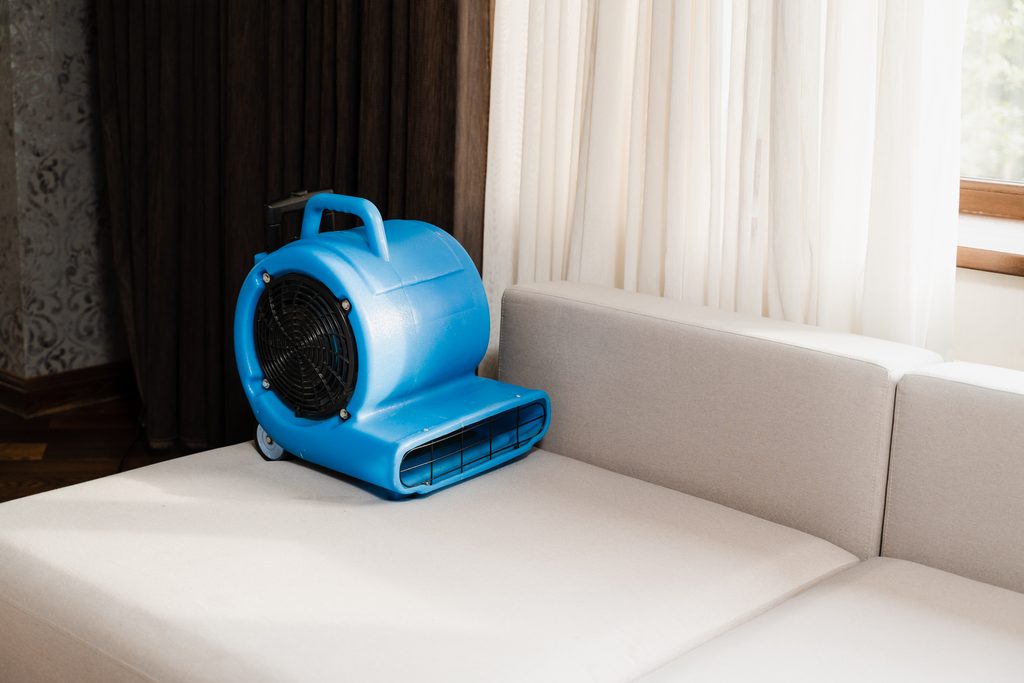
Most homeowners imagine restoration as a room full of fans. Fans are part of the setup, but on their own they do the least. Without dehumidifiers running, they can push humid air into rooms that were dry to begin with. The equipment that decides the outcome is harder to spot.
Each machine on a job does one thing, and running them in the right order is half the work. That sequencing is exactly why it pays to call a reliable water damage restoration crew in Daytona Beach, FL rather than rent a few units and hope for the best.
Our family owned team has restored homes across Central Florida since 2008. Most homes on this coast sit on a concrete slab, where water slips under the flooring and into the walls well past any visible stain.
Extraction Equipment Starts the Job
Water pulled out as liquid never has to be evaporated. Mechanical removal is dramatically faster and cheaper than turning the same volume into vapor and pulling it from the air. That is why extraction always comes ahead of drying on any water damage restoration job.
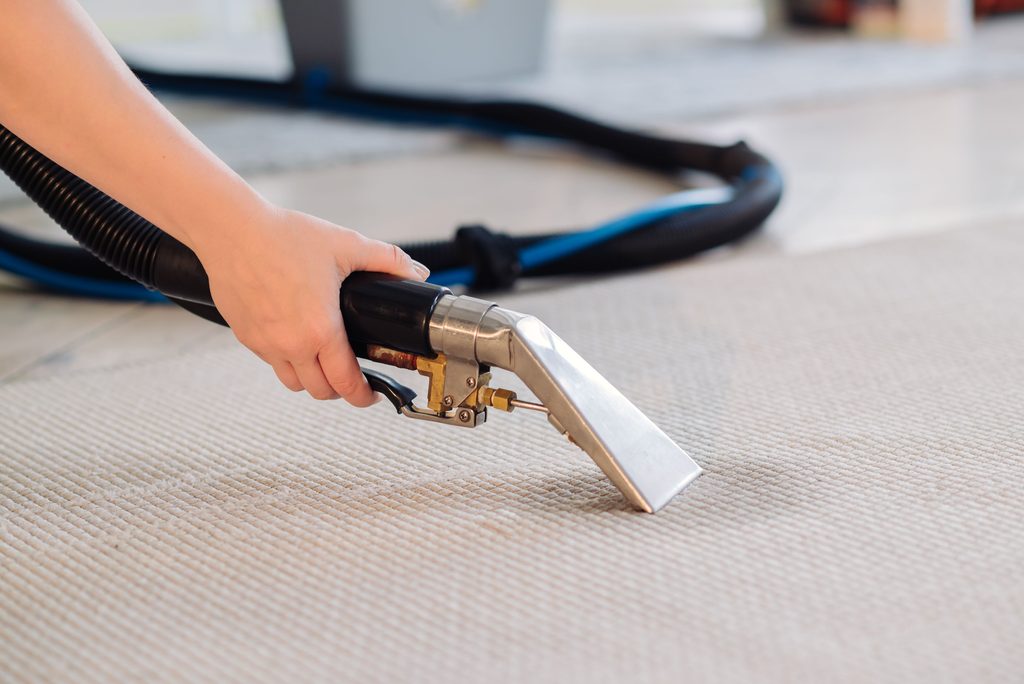
Truck mounted and portable extractors handle standing water. On carpet, stand on tools use the technician’s body weight to press the carpet and pad against the extraction head.
The added pressure forces water up out of the pad, where suction alone does a poor job. Slow, overlapping passes pull far more water than one quick pass, which is why our storm damage restoration crews take their time on this step.
On tile over slab, squeegees and wands clear grout lines and low spots before drying equipment goes in. Rushing this step to get fans running is a common shortcut. It can add days to the job.
Air Movers and What They Actually Do
An air mover has a narrower job than drying a room. It breaks up the boundary layer, the thin film of saturated air that clings to a wet surface and slows evaporation to a crawl. Clear that film away and the surface keeps releasing water.
Placement is most of the skill. In applied structural drying, technicians angle units low and close to the walls so the airflow circles the room. The circulation lifts moisture off every wet surface and into the air, where the dehumidifiers can catch it. Aiming a fan straight at one wet spot accomplishes little by comparison.
Some materials need air moved through them rather than across them. Hardwood is the common case. Injection drying lets a floor that can recover be dried in place with no tear out.
Renting a few fans for a wet room in your Daytona Beach home and not sure it is working? Give us a call at (386) 233-7080, and we will take readings and tell you what the floor and walls still hold.
Dehumidification Is Where Water Leaves the Building
Air movers load the air with moisture, and something has to take it back out. Left in the air, that moisture settles into drywall, cabinetry and contents in rooms that were never wet.
Cabinet bases, baseboards and wall cavities are the vulnerable areas to water damage in that scenario, so poorly run jobs create new damage next door. The type of dehumidifier matters as much as the number of units.
| Dehumidifier | How it removes water | Where it fits |
|---|---|---|
| Standard refrigerant (household type) | Condenses moisture on a cold coil | Small spills caught early; output drops as the air dries |
| Low grain refrigerant (LGR) | Pre cools incoming air so the coil condenses more water per pass | Most structural dry outs; keeps pulling water as humidity falls |
| Desiccant | Draws moisture onto a desiccant wheel, then vents it outside with heated air | Dense materials like hardwood and concrete, and cooler spaces |
Opening the windows to air the house out tends to backfire. Average relative humidity on this coast runs about 74 percent across the year, and higher in late summer. For much of the year, outdoor air holds more water than a closed, dehumidified work area, so crews keep the space sealed.
Air Scrubbers, Negative Air and Containment
Drying and air quality are handled together, because demolition and strong airflow both stir up whatever is in the affected material:
- HEPA air scrubbers run inside the work area and pull air through the filter, capturing dust and spores before they reach the next room.
- Plastic barriers seal the area off.
- A negative air machine vents filtered air outside the containment, holding the work zone at lower pressure than the rest of the house, so contaminants are far less likely to drift into clean rooms.
In sewage backups and other grossly contaminated losses, classified as Category 3 under the IICRC S500 standard, filtration carries the same weight as drying. Porous materials in that kind of loss are generally removed and discarded, and tear out is when the scrubbers work hardest.
The Instruments That Decide When Equipment Leaves
The least photogenic tools on a job carry the most authority. In restoration, water damage is tracked by the numbers. Every reading our IICRC and IRI certified technicians take goes into the daily drying log that supports your insurance file.
- Thermal imaging camera. Maps surface temperature differences to show the likely outline of the wet area. The camera reads temperature, not water, so every finding gets confirmed with a meter.
- Non invasive moisture meter. Reads through finished drywall and flooring without leaving a mark, which makes it a fast way to trace the edge of the damage.
- Pin meter. Takes readings at depth inside framing, baseboards and subfloor, where a surface reading can mislead.
- Thermo hygrometer. Tracks temperature and relative humidity so the crew can confirm the dehumidifiers are actually pulling water out of the air.
Those readings are measured against a dry standard, taken from unaffected material of the same type in the same building. The equipment comes out when the wet materials match that reference.
We bill your carrier directly where the policy allows, and the log is the evidence behind the bill. Readings like these separate professional water damage restoration from a house full of rented fans.