



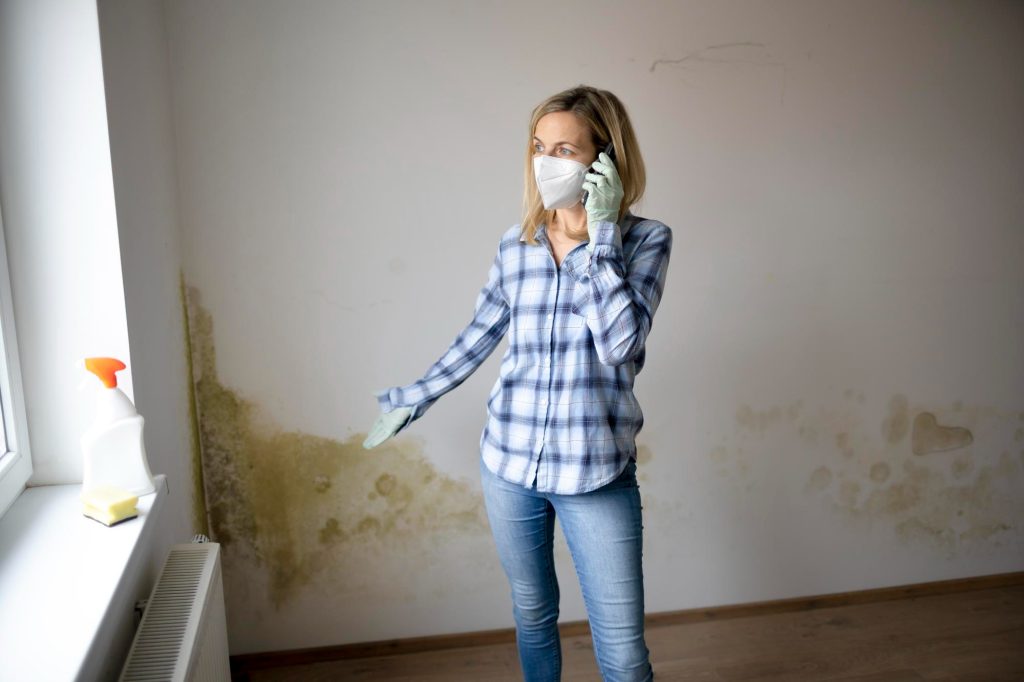
Water damage hurts indoor air in two stages. Humidity climbs within hours, then spores and microbial compounds drift into the air within days as wet organic material starts breaking down. Most people notice the smell before anything else. That musty odor is basically the building telling you a biological process is already underway.
Our crews have worked as a reputable water damage repair company in this market since 2011, so we’ve seen a lot of these. Air quality is part of the drying plan here, not something we sell you afterward. If a room smells different with the windows closed than it did last month, maybe something in it is holding water.
What Happens to the Air After Water Sits
Wet material keeps releasing moisture into the room around it, so indoor humidity rises and just stays there. High humidity alone changes how a space feels, and it gives dust mites and bacteria conditions they otherwise would not have. That is the early stage, and it begins almost immediately.
The next stage involves the material itself. Gypsum, wood, paper backing, and cabinet board are all organic, and what happens to soaked carpet is kind of the same story, since the pad underneath is organic too.
Once colonized, they release spores and microbial volatile organic compounds, which is what your nose registers as that musty smell. Mold growth can begin on wet organic material within 24 to 48 hours. The air is not contaminated by the water. The water is contaminated by what it allowed to grow, which is why ventilating a room rarely clears the odor on its own.
Why Our Climate Shortens the Timeline
Drying depends on the surrounding air having room to absorb moisture. In Jacksonville, that room is limited for much of the year, you know. A soaked baseboard in a dry region gives up its water to the room, and the problem shrinks. Here it holds, the room stays humid, and the material stays hospitable.
Storm season adds volume to that. Wind-driven rain gets in through roof penetrations, window flashing, and siding gaps. It wets insulation and sheathing where nobody will ever see it, and the building cannot dry those cavities on its own.
Preventing water damage during storm season mostly comes down to checking those entry points before the weather turns. An unnoticed cavity intrusion in August becomes an air quality complaint by October.
Who Notices It Early and What They Report
Air quality changes rarely arrive as a dramatic event. They show up as a complaint somebody keeps making, and nobody connects it to the building. That is why a problem like this can run for months in homes and workplaces alike, long before anyone thinks about mold remediation.
- A musty smell strongest in one room, or when a closet opens
- Congestion or irritated eyes that improve a few hours after leaving
- Worsening asthma symptoms in an occupant whose condition had been stable
- A clammy feeling in a room that the thermostat setting does not explain
- Condensation on windows or registers in a space that never had it before

Children, older adults, and anyone with a respiratory condition tend to register these changes earlier than other occupants. In a commercial setting, the pattern usually looks different, with several employees on one side of a floor reporting the same symptoms during the same month.
If you’ve noticed a musty smell or odd symptoms around your Jacksonville property, give us a call at (904) 312-7990, and we’ll take a look before it turns into a bigger problem.
Where the Problem Hides in a Property
Visible damage is seldom where air quality problems originate, so our technicians start with the enclosed assemblies. Those are the spots with moisture, organic material, warmth, and no airflow.
Wall cavities with insulation hold water against sheathing and framing, and they dry very slowly through an intact wall face. Subfloors under cabinet runs and appliances stay wet beneath a surface that looks fine.
Carpet pad holds many times its weight in water and lets it out slowly into the room above. Ductwork and air handler cabinets are the worst case. A wet duct interior sends spores to every room the system serves, which turns a localized loss into a building-wide complaint.
We have walked into properties where the only visible damage was a stained baseboard in a laundry room. The odor complaint came from a bedroom at the far end of the house, connected by nothing but the supply duct. Pad really is the reservoir nobody suspects, and that tends to surprise people.
How We Handle Air Quality Inside Restoration Work
Containment comes before anything else on a job with suspected growth. We seal the affected area and put it under negative pressure with HEPA-filtered equipment. That keeps spores from drifting into the clean parts of the building while work is underway.
Skip that step and a contained problem becomes a building-wide one. Air scrubbers run the whole time, filtering particulate out of the working air rather than pushing it somewhere else.
Dehumidification then pulls the room’s humidity down and holds it there, which is what lets wet materials let go of their moisture. Material that cannot return to a dry, measurable state gets removed rather than treated in place.
Surface cleaning obviously doesn’t reach growth inside porous board. Where colonization is confirmed, our mold remediation protocols govern how material comes out and how the cavity is cleaned.
Our technicians take daily readings through the drying period, and a job only closes when the numbers hold. An odor that returns two weeks later just means drying stopped before the building was dry.
If anyone in a Jacksonville property reports a persistent musty smell, or symptoms that ease when they leave, contact us for a free assessment, or call (904) 312-7990 or stop by 9556 Historic Kings Rd S STE 404, Jacksonville, FL 32257. Our crews respond 24 hours a day, 365 days a year, and we bill insurance carriers directly for covered losses.
Related Topics: