


Standing water in a lower level is one of the few property emergencies where the first ten minutes shape the whole outcome. Our team at United Water Restoration Group of Jacksonville takes these calls at every hour, and the properties that recover cleanest are the ones where someone cut the power, stayed out of the water, and called for emergency water extraction in Jacksonville before trying to move anything themselves. Here is the sequence that protects both the people and the building.
Make the Area Safe Before You Step In
Water and electricity share a space badly. Before anyone goes down a stairwell into standing water, the power to that level needs to be off at the breaker, and if the panel itself sits in the flooded area, that call belongs to an electrician or the utility rather than a homeowner with a flashlight. Submerged outlets, extension cords, and appliances all stay energized until the circuit is cut.
Gas appliances deserve the same caution. Water heaters and furnaces that have been partially submerged should not be operated until they have been inspected, since control valves and burner assemblies do not tolerate immersion. If you smell gas at any point, leave the property and call the utility from outside. None of this is about overcaution. It is about a hazard that is invisible in murky water. Floodwater also hides sharp debris, displaced furniture, and open floor drains, so even a level that looks shallow deserves a careful approach rather than a quick wade through.
Why Jacksonville Properties Flood at the Lowest Level
Full basements are uncommon across most of Duval and the surrounding counties. Our water table sits high, and the majority of homes here are built on slabs or raised with crawl spaces, so when a property owner describes a flooded basement, what our crews usually arrive to find is a flooded ground floor, a finished lower level in a split design, or a crawl space holding several inches of standing water. The response is the same regardless of what the space is called, and our flood damage restoration services get scoped around what we find rather than the label on the room.
The causes repeat. Storm surge and heavy rainfall overwhelming drainage, groundwater pushing up through slab penetrations, failed sump equipment, burst supply lines, and backed-up sewer laterals account for most of what we see. Each one carries a different contamination level, which changes the cleanup entirely, and that distinction drives the scope our crews set on arrival.
What To Do in the First Few Hours
Once the area is electrically safe and you have called for help, a few actions clearly improve the outcome. Most of them are about documentation and limiting spread rather than removing water, which needs equipment you likely do not have on hand.
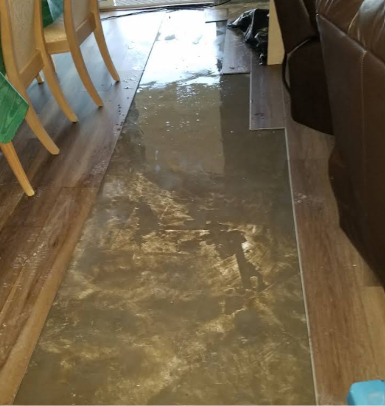
Worth doing while you wait for a crew.
- Photograph and video everything before anything gets moved
- Shut off the water supply at the main if the source is a failed line
- Lift smaller contents and furniture legs out of the water where it is safe to reach
- Note the time you found the water and what you believe caused it
- Remove documents, electronics, and valuables from the affected level
- Leave wet drywall, carpet, and pad in place for the technicians to assess
Speed changes the material outcome more than almost anything else, and why fast water removal matters comes down to how quickly absorbent materials cross from salvageable to disposal.
Standing water in a lower level right now? Our crews run 24/7 across Jacksonville, and the assessment costs nothing.
When Floodwater Is Contaminated
Not all water carries the same risk, and the category it falls into decides whether a material gets dried or hauled away. Clean water from a supply line degrades as it sits, picking up bacteria from the materials it touches, so the classification on day three is rarely the classification on day one.
| Category | Source | What it means for materials |
| Category 1, clean | Supply lines, rainwater | Most materials dry in place if addressed fast |
| Category 2, grey | Appliance discharge, washing machine overflow | Porous materials often removed, surfaces sanitized |
| Category 3, black | Sewage backup, floodwater from outside | Porous materials removed, full decontamination |
Anything involving a sewer backup or exterior floodwater is handled as a biohazard situation from the start, with containment and protective equipment, and our sewage cleanup after contaminated flooding follows that protocol rather than a standard water job.
How Our Crews Handle a Flooded Lower Level
Extraction comes first, with truck-mounted units pulling standing water out of flooring and from below the slab line where it has pooled. Technicians then open the assemblies that hold water out of sight, pulling baseboard, drilling weep holes, and lifting flooring where the pad underneath is saturated. Skipping that step is the most common reason a space smells wrong three weeks later. Contents get evaluated at the same time, with salvageable items moved out to dry and unsalvageable material documented before disposal.
Drying runs on instruments. Air movers and commercial dehumidifiers hold controlled conditions while technicians take readings at marked points daily until the structure reads dry throughout, not just at the surface. Our IICRC- and IRI-certified technicians document the whole sequence, and we bill insurance carriers directly, which keeps the moisture log and the claim file attached to each other instead of scattered between vendors.
Flooding at the lowest level of a Jacksonville property gets worse by the hour. Call (904) 312-7990 for 24/7 emergency response from a family-owned, locally operated team.
Related Topics: