



Not every water problem announces itself with a puddle on the floor. Some of the most damaging moisture issues in Orlando homes and businesses build up quietly behind walls, hidden from view. By the time you notice something is off, the damage has, kind of, already done its work.
Knowing what to look for makes a real difference. That is where trusted water damage restoration services in Orlando, FL, come in. Catching hidden moisture early is, you know, a lot easier to deal with than waiting until repairs get serious.
Visible Signs That Often Point to Hidden Moisture
Long before moisture becomes visible as standing water, it tends to leave smaller clues on the surface of a wall. These changes can be subtle at first, sometimes appearing as nothing more than a faint shadow near a baseboard or corner.
- Yellow or brown discoloration on the surface
- Paint that has started to bubble or peel
- A musty smell that does not go away after airing out the room
- Warped or soft drywall
- Flooring that feels slightly spongy near a wall
How Thermal Imaging Finds Moisture Without Opening a Wall
Thermal imaging cameras read surface temperature differences across a wall, and wet materials typically show up as cooler or warmer than the surrounding dry areas depending on conditions. This lets a technician scan an entire wall or ceiling quickly, without cutting into drywall just to check whether an area is dry or wet.
Thermal imaging is a strong first tool for spotting a likely problem area, but it works best when paired with a direct moisture reading. Temperature differences can point toward possible moisture, but they do not always confirm it on their own.
Using Moisture Meters for a Direct Reading
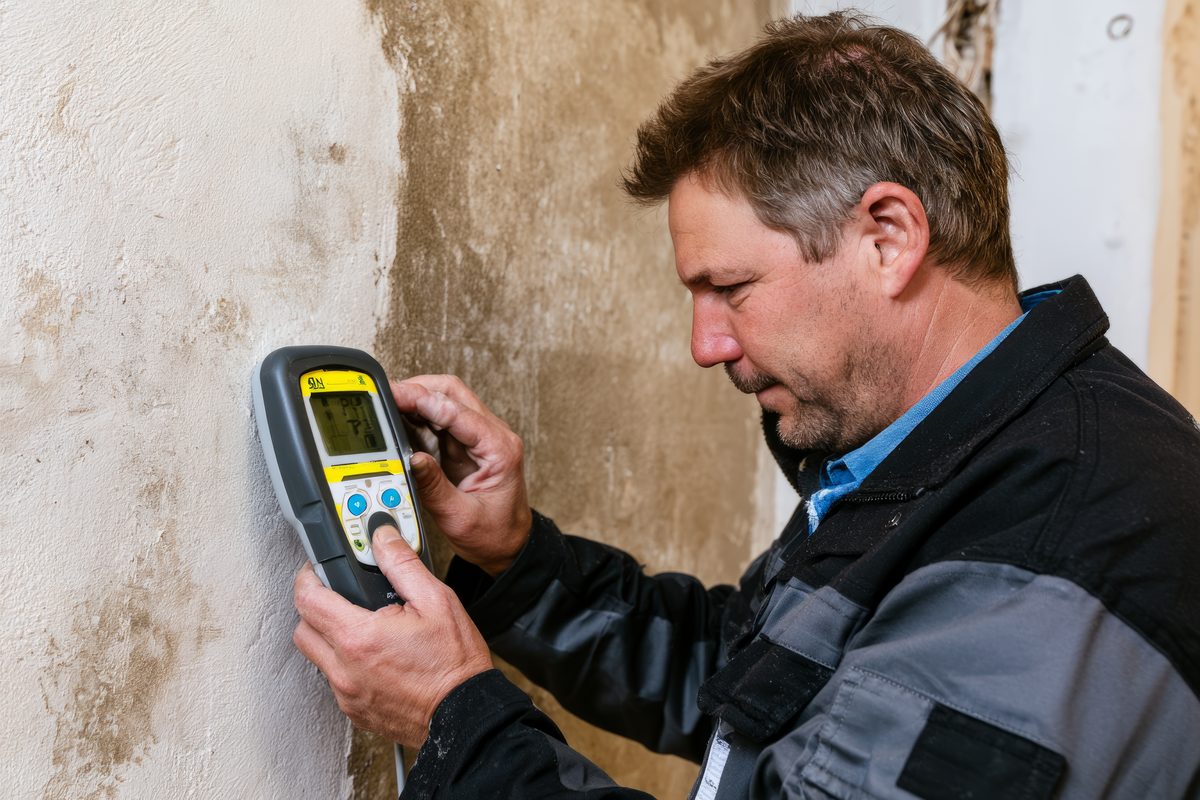
Moisture meters give a direct percentage reading of how much water is present inside a material, rather than relying on temperature alone. These readings help confirm what thermal imaging suggests and give a technician a clear number to track over the course of a drying process.
| Detection Method | What It Shows | Best Used For |
|---|---|---|
| Thermal imaging | Surface temperature differences across a wall | Scanning a large area quickly |
| Pin moisture meter | Direct percentage reading via small probes | Confirming a suspected spot on unfinished surfaces |
| Pinless moisture meter | Direct reading without marking the surface | Finished walls where visible holes are not wanted |
Suspect hidden moisture behind a wall in your Orlando home or business? Call us at (407) 278-7715, and a certified technician can run a thermal imaging and moisture meter assessment before the problem spreads further.
Common Causes of Moisture Trapped Behind Walls in Orlando
A slow plumbing leak inside a wall cavity is one of the more common sources, often going unnoticed for weeks because the leak is small enough that no puddle ever forms on the floor.
Roof leaks that travel down through framing before reaching a visible ceiling stain are another frequent cause, especially after the kind of wind driven summer storms common across Central Florida. Getting ahead of one keeps trapped moisture from spreading further into the wall cavity.
Poor exterior sealing around windows and doors allows rain to seep in slowly during heavy weather, and high humidity levels typical of this region can also contribute moisture over time even without an obvious leak.
In older homes throughout Orlando, Winter Park, Altamonte Springs, Oviedo, Winter Springs, Winter Garden, and Ocoee, aging weatherproofing around these openings is a common contributor that often goes unnoticed until an inspection reveals it.
Why Catching Hidden Moisture Early Makes a Difference
Moisture that sits inside a wall for an extended period does more than threaten the drywall itself. Framing, insulation, and electrical components can all be affected the longer that moisture stays, and materials left wet long enough often need to be replaced rather than dried out.
Mold is the other concern tied to hidden moisture, since it needs sustained dampness rather than a single wet day to take hold. A wall cavity that stays moist for more than a day or two creates conditions where growth can begin out of sight, which is the point at which mold remediation becomes part of the job rather than drying alone.
Catching the moisture first is what keeps the work to drying rather than containment, material removal, and antimicrobial treatment.
When to Schedule a Professional Moisture Assessment
A stain that keeps returning after being cleaned or painted over, a smell that lingers in one part of a room no matter how often it is aired out, or flooring that stays soft near a specific wall are all signs that the source has not actually been resolved.
Homes and businesses that have recently gone through a storm, a slow plumbing leak, or a roof repair are also good candidates for a moisture check, even without visible symptoms yet.
Frequently Asked Questions
Can hidden moisture be present without any visible signs?
Yes. Moisture behind a wall can take days or weeks to show a visible sign, which is why an assessment after a storm or leak can catch it earlier.
Does thermal imaging alone confirm moisture is present?
Not on its own. Thermal imaging points to a likely area, and a moisture meter reading confirms it.
How long can moisture sit behind a wall before mold becomes a concern?
Conditions can become favorable for mold in as little as a day or two of sustained dampness.
Our IICRC-certified technicians are available 24 hours a day for a free in-home visual assessment, and we work directly with major carriers to make the claims process easier. Call (407) 278-7715 to get started.