


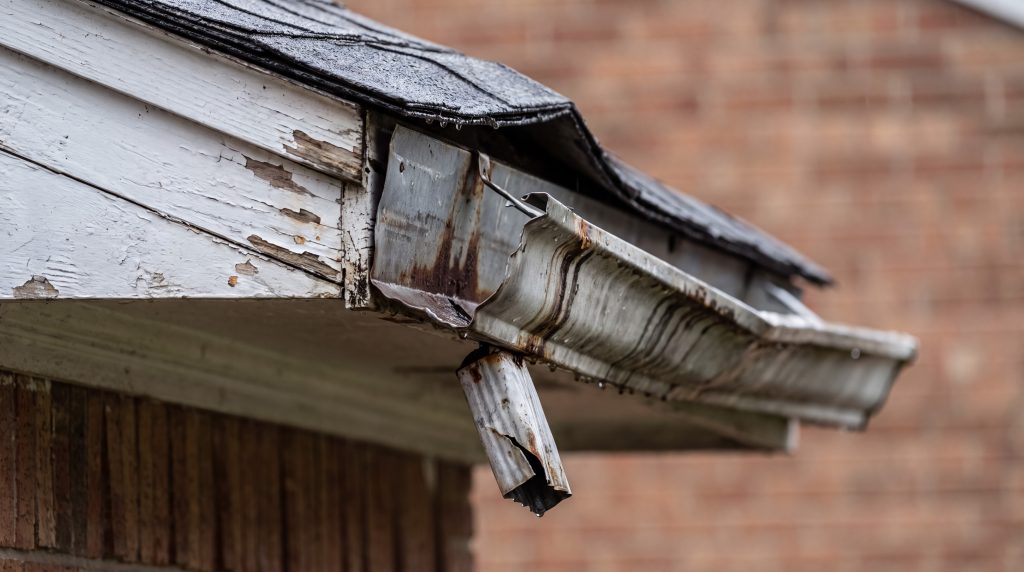
The roof is only the way in. Once a homeowner notices anything, the water has usually passed through three or four building layers, and a roof repair fixes just the top one. The rest of the house holds the moisture, which is why a trusted water damage restoration company is worth calling the moment you spot a stain.
Central Florida makes this worse than it would be in a drier climate. Summer storms deliver a great deal of water in a short window, then the humidity that follows slows evaporation to a crawl. An attic soaked in a July downpour can still be damp in August if nobody dries it. Damp, dark, warm and enclosed is a fair description of ideal growing conditions for mold.
Where the Water Actually Gets In
Failures cluster around penetrations rather than open field shingles:
- Plumbing vent boots crack and pull away from the pipe.
- Flashing at chimneys, skylights and roof to wall junctions lifts or corrodes.
- Valley metal collects debris, water backs up behind it and works sideways under the covering.
- Ridge vents and nail pops let small volumes through repeatedly.
Those penetrations are among the usual causes of water damage we trace on Orlando roofs.
Wind driven rain is its own category. Rain moving horizontally gets under covering material that sheds vertical rain perfectly well, which is why a roof with no history of leaks can leak during a named storm and then behave normally afterwards. Homeowners read that as a one off and stop looking. The attic is still wet.
The Path Water Takes Once it is in the Attic
Water landing on the underside of the decking does not fall straight down. It runs along the slope of the rafter or truss chord until it reaches something that stops it, such as a brace, a joist hanger or a run of ductwork.
Only then does it drip, and that drip can land several feet from where the water came through. Tracing the path from the drip back to the entry point is where thorough water damage restoration begins.
Whatever sits under that drip takes the load:
- Blown in insulation absorbs water and compresses, and compressed insulation loses much of its insulating value, so cooling bills can quietly rise.
- Batt insulation holds water against the ceiling drywall below it.
- Ductwork running through the attic takes the same soaking.
Caught late, the drywall and insulation both come out, which turns a drying job into reconstruction services.
Why The Stain Rarely Appears Where the Leak Is
Ceiling drywall absorbs from above and spreads moisture laterally through the paper and gypsum before any discoloration shows on the painted side. The stain that eventually appears is usually smaller than the wet area around it.
Cutting a repair patch to the size of the visible stain can leave saturated material in place on all sides. In restoration, water damage is mapped outward from the stain with a meter, so the cut line lands on dry material.
Water that reaches the top plate still has an easier route. It follows the framing down inside the wall cavity, past outlets and switch boxes, and settles at the bottom plate or on the slab. Often nothing shows on the wall surface at all.
The earliest symptoms are a musty smell in a closet, baseboard that has swelled at one end, or carpet that feels damp along a single wall, which is the reason to address wet carpets the same day rather than waiting to see if they dry.
| Material | What roof water does to it | Usual outcome |
|---|---|---|
| Blown in insulation | Absorbs, compresses, loses insulating value | Removed and replaced |
| Ceiling drywall | Wicks laterally, sags, releases from fasteners | Dried if caught early, otherwise cut past the wet line |
| Roof decking and framing | Holds moisture at depth, feeds fungal growth | Dried in place where readings allow |
| Wall cavity and bottom plate | Traps water with no airflow | Opened, dried and treated |
| Flooring over slab | Cups, buckles, delaminates from below | Depends on how long it stayed wet |
If a ceiling in your home has stained, softened or started to bow, the safest assumption is that the water has spread farther than you can see. Keep people and furniture out from under a bowing section, because it may be holding water.
A professional water damage restoration service starts with moisture readings that settle the question before you commit to a repair scope. Our team can take those readings at any hour.
Spotted a fresh ceiling stain after one of Orlando’s afternoon storms? Give us a call at 407) 278-7715, and we will map how far the water travelled before the drywall and insulation have to come out.
What a Roof Leak Does to your Air Conditioning
Many Florida homes run their ductwork through the attic, and some put the air handler up there too, directly in the path of roof water. That places the risk of storms & water damage right on top of the system the house depends on.
Water that lands on an air handler can collect in its drain pan and soak the insulation lining the cabinet. Wet insulation wrapped around a duct run can stay damp for weeks, because nothing up there moves enough air to dry it.
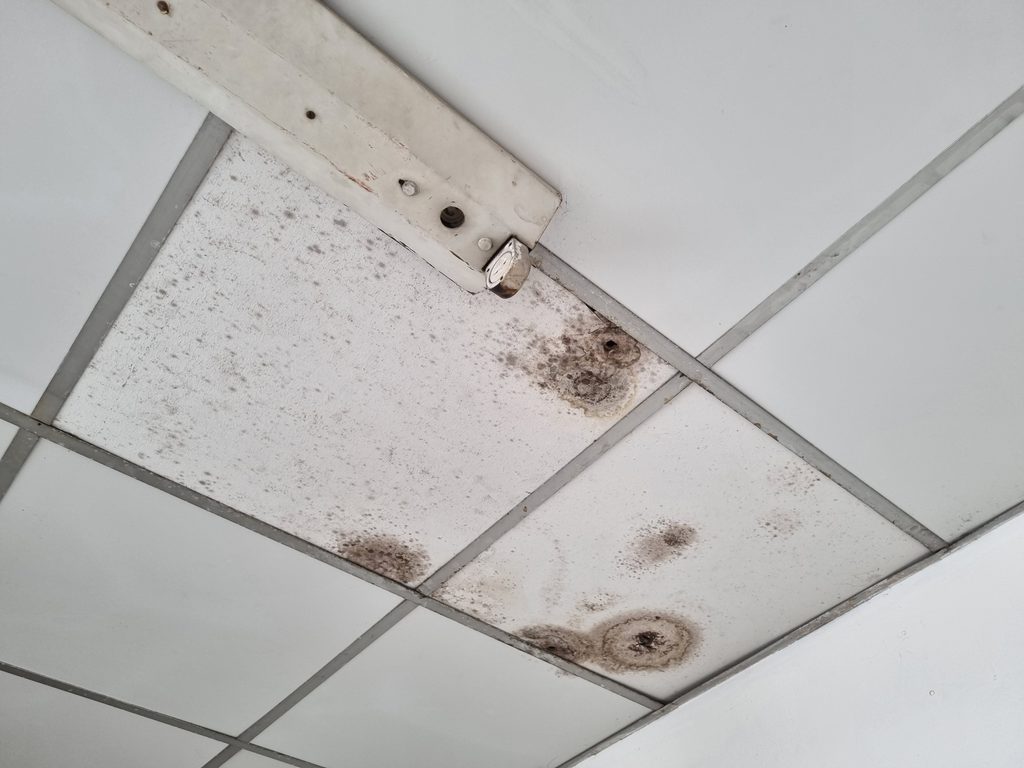
The system then works against you. Every cycle pulls air across damp surfaces and pushes moisture into rooms the leak never touched, which gives growth somewhere new to start.
A musty odor that appears at the vents rather than at the stain often points to this. Switch the system off if the attic has taken water, and have the ductwork checked before it runs again.
Fixing The Roof Does Not Dry the House
A roofer, or an emergency tarp, stops the intrusion. That step has to come before anything else, yet it does nothing for the water already inside.
A patched roof over wet insulation and saturated framing closes the attic back up with the moisture still in it, and the structure stays wet underneath a repair that looks finished.
Drying is separate work with separate equipment. Our IICRC and IRI certified technicians:
- Map the wet area with moisture meters and thermal imaging
- Pull affected insulation and open the cavities that hold water
- Run air movers and dehumidifiers until the materials meet a dry standard, not until they feel dry to the touch
- Take readings daily, leaving the equipment in place as long as the numbers say it should stay
Where moisture has sat long enough for growth to start, mold remediation happens under containment as part of the same job.
For water damage restoration in Orlando, FL that does not stop at the roofline, our crews handle the drying, the remediation and the rebuild in house.
A ceiling that came down for access goes back up without another contractor or another wait.
Signs of an Active or Recent Roof Leak
- Ceiling staining that grows after heavy rain
- A musty smell in a closet, laundry room or hallway with no visible source
- Swollen baseboard or cupped flooring along a single wall
- Flattened or darkened insulation in patches across the attic floor
- Rusted nail heads or fasteners on the underside of the roof decking