




It is tempting to give a small ceiling stain a few days to see whether it grows. The stain only marks where water broke through. The leak itself may sit several feet away, and the wet area in the attic is often much larger than the ring.
That gap between what shows and what is actually wet shapes how we work at United Water Restoration Group of Tampa. Moisture mapping comes before any cutting or patching, which is why homeowners lean on experienced water damage repair contractors to find the full extent of the problem. Catching a leak early usually costs far less than finding it weeks later.
Where Ceiling Leaks Usually Begin
The water tends to come from one of four places, and each one moves it a little differently.
- Roof and flashing leaks. Rain gets in at a lifted shingle, a nail hole, or the flashing around a vent pipe. It can run along the roof deck or a truss for several feet before it drips onto the ceiling.
- AC air handlers and ducts. Clogged condensate lines can overflow the drain pan under an attic unit and soak the ceiling below. In muggy weather, a poorly insulated duct or the metal boot behind a ceiling vent can sweat enough to stain the drywall around it.
- Bathrooms on an upper floor. Worn shower pans, failed toilet wax rings, and cracked grout can let water seep into the ceiling of the room underneath. These leaks tend to be slow, so they can run for weeks or months before a stain appears.
- Supply lines above the ceiling. Plumbing that runs through the attic or between floors can drip at a fitting with no sign below. The insulation may soak up that drip for a long time before any water reaches the drywall.
Local weather keeps two of these sources busy. The National Weather Service office for the Tampa Bay area dates the rainy season from about May 25 to October 10.
Storms arrive nearly every day in that window. Roof leaks can open during an afternoon downpour and stop again by evening, before anyone thinks to check the attic.
The same humid months keep air conditioners running for long stretches, so a clogged condensate line has plenty of water to spill. Hurricane season, from June through November, adds wind driven rain and storm damaged roofs to the mix.
Our DIY prevention tips start here: on an older roof, checking the attic with a flashlight after a hard storm can catch a leak while it is still small. If a storm has opened the roof, our crews can tarp it to keep more rain out until the roof is repaired.
The Routes Water Takes Through the House
Ceiling drywall hangs from the bottom of the joists or trusses. Attic insulation typically rests right on top of it.
Water reaching the attic floor soaks that insulation and spreads across the back of the drywall until it finds a seam or low spot. One leak can leave a stain near the opposite wall, or several stains in different rooms.
Pipes, ducts, and interior walls give the water more places to go:
- Some of it runs along the top plate of a wall and trickles down inside the cavity, out of sight.
- In the block and slab homes common around our Waters Avenue office, water that reaches the slab can travel under the flooring into the next room, which is why water damage restoration on a ceiling leak often covers rooms that never showed a stain.
Wet insulation stops insulating well and holds moisture against the wood around it. Mold can start on damp framing and on the paper facing of drywall within a day or two, so calling us early keeps mold remediation small, quick, and far less disruptive to your home. With humid air most of the year, a ceiling can feel dry to the touch while the materials behind it stay damp for days.
Spotted a stain on the ceiling during Tampa’s rainy season, even one that stopped growing? Give us a call at (813) 738-6130, and we’ll check the attic above it before the water finds its way into the next room.
What Happens If a Ceiling Leak Is Ignored
Left alone, a ceiling leak tends to get worse in stages rather than all at once. At first it might just be a small yellow or brown ring on the ceiling. Over time, that area can start to sag, bubble, or feel soft when pressed, which usually means the drywall itself has absorbed enough water that it is losing structural integrity.
If the leak continues without being addressed, the risk moves beyond cosmetic damage. A ceiling that has taken on enough water can eventually collapse in that section, and the framing above it can develop rot if moisture sits against wood for an extended period. Leaky pipe damage insurance usually turns on how quickly the loss was reported, so a stain left for months can also cost you on the claim.
Electrical fixtures mounted near a ceiling add another layer of risk once water is involved. A light fixture, ceiling fan, or smoke detector near an active leak can become a safety concern, which is one more reason a growing stain should not be treated as a purely cosmetic issue.
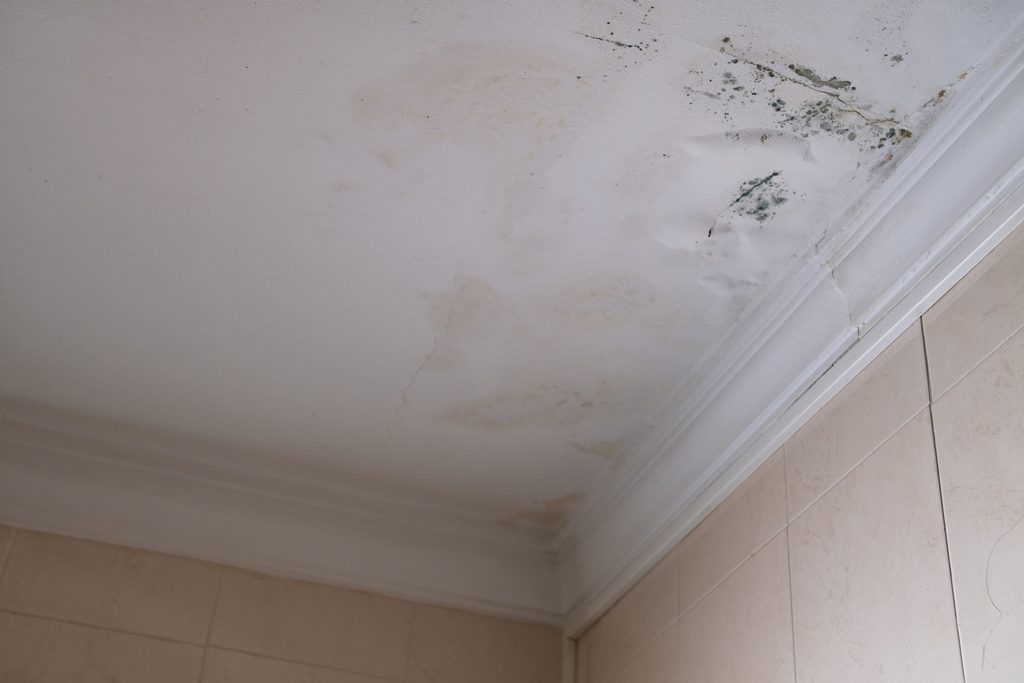
Finding the Source Before Fixing the Stain
A proper water damage restoration job on a ceiling starts in the attic, not at the stain:
- We check the attic above every affected room.
- Thermal imaging picks up cooler, wet areas beyond the visible ring.
- Moisture readings mark where the wet zone actually ends.
Stopping the water comes next, which can mean calling a roofer, plumber, or HVAC technician. Then everything the leak reached has to dry.
Air movers and commercial dehumidifiers dry the framing and drywall, and we log readings every day until they meet a documented dry standard.
Insulation that has stayed soaked for days often comes out, since it rarely dries well in place. Patching over damp materials is a common reason a ceiling stain comes back, which makes verified drying the core of restoration.
Water damage that is dried and checked this way leaves a sound base for new drywall and paint. Once the readings confirm the structure is dry, our crews replace the drywall, insulation, and ceiling finishes under Certified Building Contractor License CBC1261128.
That keeps your water damage repair in Tampa, FL, with one company from the attic inspection to the final walk through. We photograph the damage, put the full scope in writing before work begins, and bill your insurance company directly.
Why Tampa Homes Are Especially Prone to This Type of Damage
Tampa’s climate plays a real role here:
- High humidity throughout much of the year means materials do not dry out quickly on their own the way they might in a drier climate, so any moisture that gets trapped above a ceiling tends to linger longer than it would elsewhere.
- Frequent heavy rain means roofs and attic spaces are tested more often than in many other parts of the country.
Homes with older roofing, aging plumbing, or air conditioning units that have not been serviced in a while are more likely to develop the kind of small, slow leaks that eventually show up as ceiling stains.
Regular attic checks and staying on top of roof maintenance are some of the more practical ways Tampa homeowners can catch these issues before they turn into a larger repair.
Homeowners in Clearwater, Brandon, Safety Harbor, Carrollwood, and Town ‘N’ Country deal with much the same conditions, so this pattern of slow ceiling damage applies across the wider Tampa Bay area rather than one specific neighborhood.