


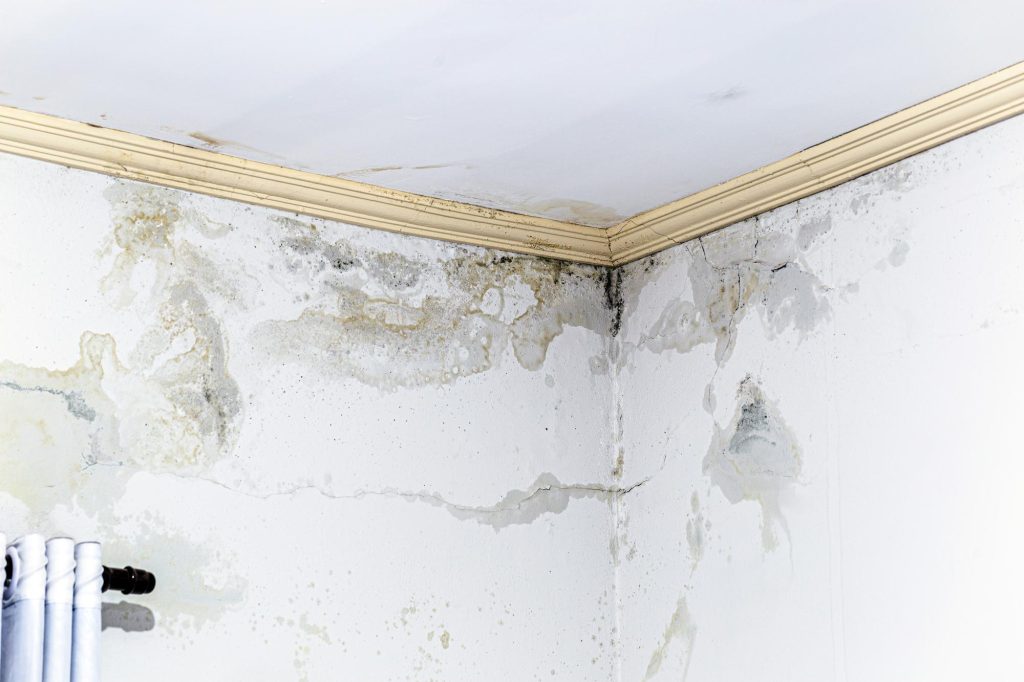
Drywall absorbs water upward through its gypsum core, so a wall standing in two inches of water is usually wet to twelve inches or higher within a day. The paper facing holds that moisture against the core, the core softens and loses compressive strength, and the sheet stays structurally compromised even after the surface dries to the touch.
Our crews provide skilled water damage repair across Tampa by reading the wall with calibrated meters rather than judging it by sight, because drywall that looks fine at eye level is frequently saturated at the baseboard. Just push gently on the wall a foot above the floor. If it gives even a bit, the core is already gone.
What Water Actually Does to a Sheet of Drywall
Gypsum board is just a compressed mineral core between two layers of paper, and each part fails differently. The core is porous, so it pulls water up against gravity through capillary action, which is why the damage climbs instead of staying at the waterline.
As it absorbs, the core swells, its crystalline structure breaks down, and the board can’t hold a screw anymore, so residential reconstruction services end up replacing it instead of patching it.
The paper facing is the other half of the problem. Paper is organic, so once it gets a bit damp, it becomes a growth surface, and it’s sandwiched tight against a wet core inside a sealed wall cavity with almost no airflow. That combination is why drywall is usually the earliest thing to smell off after a water event, well before anyone sees staining.
How Far Up the Wall the Damage Really Goes
The visible line is almost never the actual line. A technician reading a wall after a floor-level loss will often find moisture six to twelve inches above anything a homeowner spotted, and a lot higher where the water sat for several days. That’s why flood cuts go above the measured waterline, not at it.
Tampa Bay construction pushes this further. Concrete block on slab means water reaching the slab runs sideways beneath the flooring and climbs the base of multiple walls at once, including walls in rooms that never looked wet.
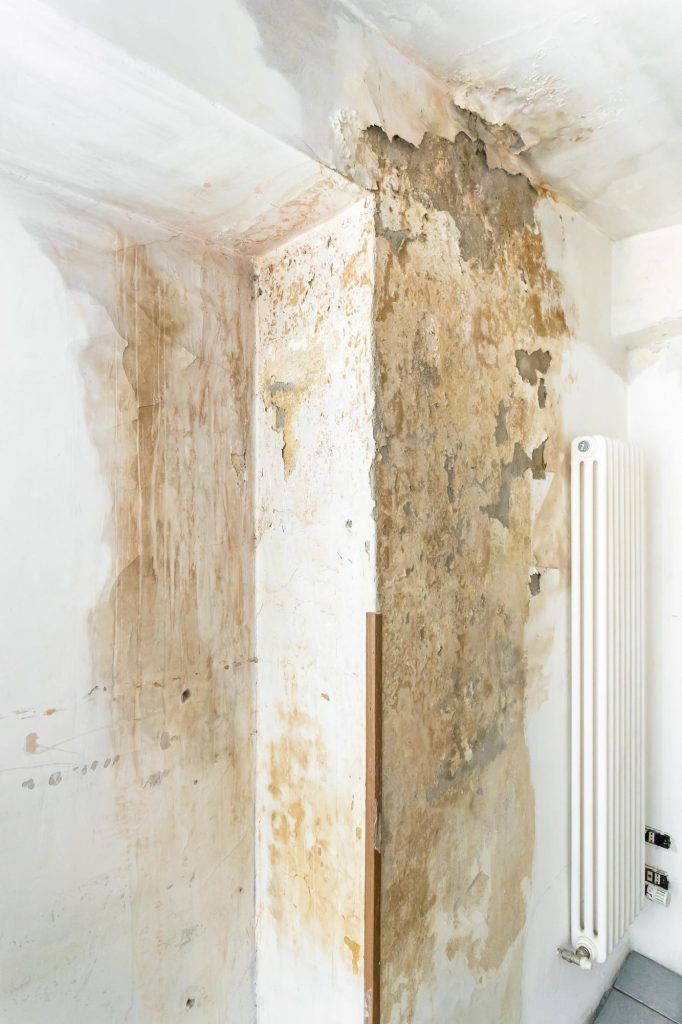
Insulation sitting in that cavity holds water far longer than the board in front of it, so a wall can read dry on the face while the cavity behind stays saturated. Readings get taken through the cavity for that reason, which is really why moisture detection matters, not just a quick look at the surface.
Clean Water, Gray Water, and Why the Source Changes the Answer
What was in the water decides whether drying is even on the table. Two walls with the same moisture readings can get totally different treatment depending on where the water came from, and no amount of drying fixes a contamination problem.
| Water source | Drywall outcome | Typical cut height |
| Supply line, water heater | Often dried in place if caught early | None, or minimal |
| Appliance discharge, overflow | Assessed case by case, cavity opened | 2 feet, above the reading |
| Sewage backup, storm surge | Removed, framing cleaned and treated | 2 to 4 feet minimum |
Porous material that has absorbed contaminated water comes out rather than drying in place, regardless of how sound it looks. Intrusion through a roof or a window during water damage after heavy rain lands in that bottom row more often than you’d think. Framing and the slab behind it get cleaned and treated before new board goes up.
Noticed a soft spot or a musty smell in your Tampa home? Call us at (813) 738-6130, and we’ll settle it with a reading in minutes.
Can Wet Drywall Be Dried in Place
Sometimes, and it mostly comes down to the water category, how long it sat, and whether the cavity can be reached. Clean water caught within a day or so often dries in place with directed airflow, usually with small inspection holes drilled low on the wall so dry air can move through the cavity and across the insulation behind the board.
What rules it out is time and contamination. Board that’s been wet long enough to swell or sag has lost the strength that made it worth saving, and no drying process brings that back. Board that absorbed gray or black water comes out on contamination grounds alone.
The call comes from moisture detection readings, not appearance, and a technician who names a cut height before taking a single measurement is just working from habit instead of evidence.
What Replacement Looks Like in a Tampa Home
Replacement runs as a sequence, not just one task. The compromised board comes out to a clean line above the moisture reading, the wet insulation goes with it, and the exposed framing or block gets cleaned and treated before anything closes up.
The cavity then dries along with the rest of the structure, and repairs wait until the readings confirm it’s dry. Closing a wall early traps moisture behind new board, and the mold that follows becomes a second claim, which nobody wants.
Once the numbers clear, we install new board, tape it, finish it, and paint it. Because we hold a Certified Building Contractor License, this phase runs under the same contract as the drying, so there’s no gap while a second contractor is found and no argument about where one scope ended.
The finishes get matched too, which matters in older Tampa homes where the texture and the trim profile need to match what’s already on the wall.
Frequently Asked Questions
Only after a reading confirms the wall is really dry through the cavity, and you’ll want a stain-blocking primer or the mark just bleeds through. Painting over a stain that’s still damp underneath seals moisture into the board, and the stain usually comes back within a few weeks along with a smell.
Press the wall gently near the floor. Sound board resists, while compromised board feels soft or crumbles slightly under pressure. Visible sagging, bubbled paint, a chalky surface, or nail heads popping all point the same way, though a meter reading is the only way to establish how far the moisture extends.
No. Clean water caught quickly is frequently dried in place with the cavity opened for airflow. Replacement becomes necessary when the board has swelled or sagged, when the water was contaminated, or when it sat long enough for growth to take hold on the paper facing.
The gypsum core draws water upward well past where the water physically reached, so cutting at the visible line leaves wet board in the wall. Taking the cut above the highest moisture reading gives a clean, dry edge for the new board to meet.
Walls cut from readings, not guesswork, come apart once and go back together once. Contact us anytime at (813) 738-6130, or visit us at 4897 West Waters Ave. Suite #D, Tampa, FL 33634. Our certified crews cover Tampa and the surrounding Tampa Bay communities around the clock, handling drying and rebuild as one project with direct billing to your carrier.
Related Topics: