




Much of the water damage in Lakeland homes begins with a problem that could have been spotted weeks or months earlier. A supply line weeps under a sink, a water heater runs years past its service life, or a downspout keeps emptying against the slab after every storm. Each one usually leaves evidence before it fails.
For a family that has already been through one round of drying and repairs, preventing a repeat becomes a much bigger priority. Many of the checks below take only a flashlight and a few minutes. The rest fit into a scheduled visit from a plumber, roofer, or HVAC technician, or a walkthrough with a reliable water damage restoration service that knows exactly what early trouble looks like.
Start With the Plumbing and the Water Heater
Plumbing and appliance leaks are among the most common sources of household water damage, and many start as slow drips rather than sudden bursts. A few times a year, open each sink cabinet and check the floor around every toilet. These usually mean a slow leak:
- Damp particleboard
- A white crust on a fitting or exposed supply line
- A musty smell inside a cabinet
Caught at that stage, it is still a small repair rather than a job that ends in reconstruction services. Tank water heaters need their own attention. Manufacturers generally put their service life at 8 to 12 years, and warning signs often appear before a failure:
- Rust-colored hot water
- A rumbling tank
- Moisture around the base
When a tank does give out, it can release its contents onto the floor and keep refilling until someone closes the supply valve.
A sewer line backing up is a different matter and calls for biohazard clean up rather than a mop, so it is worth knowing which kind of water you are looking at. Any unit approaching that age, or one nobody has looked at in years, is worth a visit from a licensed plumber.
Roof and Attic Checks After Heavy Rain
Roof leaks usually show up in the attic before they stain a ceiling. After any heavy storm, take a flashlight into the attic, stepping only on the framing, and look for:
- Darkened roof decking
- Damp or matted insulation
- Daylight where the roof should be solid
That attic is where most hidden home water damage gets caught early, and a wet spot on the decking usually means nothing more than a flashing or shingle repair. Left for months, the same leak can soak insulation and ruin drywall.
Leaks tend to begin where the roof surface is interrupted:
- Rubber boots around plumbing vents
- Skylight curbs
- Flashing where a roof meets a wall
Years of sun and heat wear down those seals. The National Roofing Contractors Association recommends roof inspections twice a year, in spring and fall, plus a check after major storms. In Central Florida, the spring inspection does the most good when it happens before the summer rains arrive.
Spotted damp insulation or a stain on the decking after a Lakeland storm? Give us a call at (863) 333-9865, and we will check how far the moisture has traveled before it reaches the ceiling below.
Address Drainage Around the Property
A lot of water damage in Florida homes has less to do with the roof and more to do with what happens at ground level.
Checking that gutters are clear and that downspouts direct water away from the foundation rather than letting it pool nearby is one of the simplest habits a homeowner can build, and one of the most overlooked.
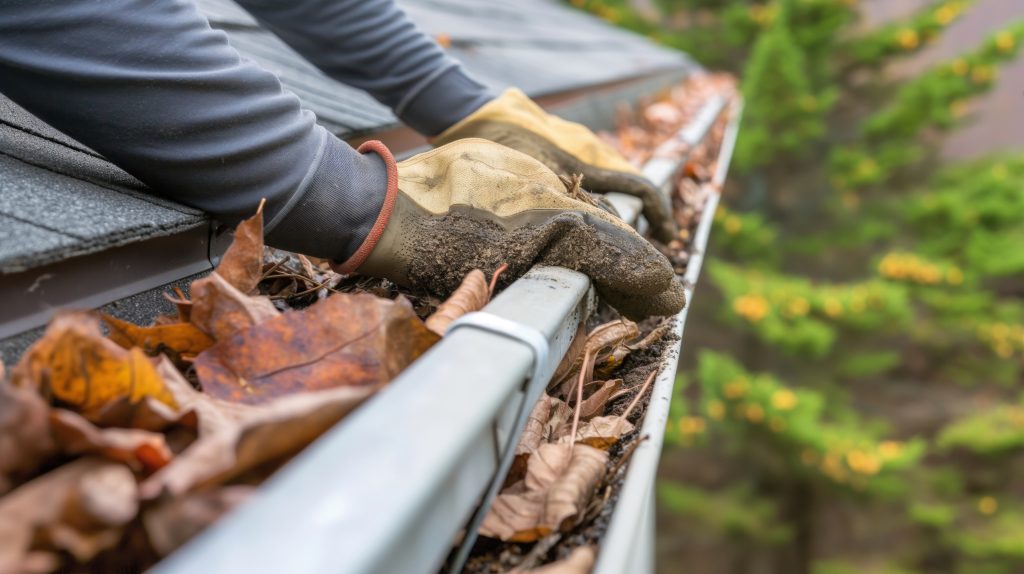
Grading around the house matters as well. If soil near the foundation slopes toward the home instead of away from it, water has nowhere to go but against the walls during heavy rain, which is common during Lakeland’s summer storm season.
Adjusting grading or adding a drainage solution in problem areas can prevent the kind of runoff that leads to water finding its way inside. When water does get in, one of the benefits of drying equipment brought in early is that flooring and drywall often dry in place rather than coming out.
Keep Rainwater Moving Away From the Foundation
Rain that collects against the house is easy to miss, since few people are outside watching the yard during a downpour. Slab foundations are common in Polk County, so water standing against an exterior wall does not have far to travel before it reaches baseboards and flooring.
Keep gutters clear, and give each downspout an extension or splash block that carries water several feet out from the wall. Grading deserves the same attention. Florida’s residential building code requires new lots to be graded so the ground drops at least 6 inches over the 10 feet closest to the foundation.
Years of settling, new mulch beds, or raised landscape borders can erase that slope. Where rain still ponds near the house the day after a storm, regrading that strip or adding a swale or yard drain gives the water somewhere else to go.
Appliance Hoses, Connections, and the AC Drain Line
Washing machines, dishwashers, and refrigerators with ice makers all rely on supply hoses that can wear out before the appliance does.
Several major washer manufacturers recommend replacing fill hoses every five years, and research from the Insurance Institute for Business & Home Safety found that hose failures become far more common after that point.
Braided stainless steel hoses resist bursting better than plain rubber, but they belong on the same replacement schedule. Once or twice a year, pull the washer and refrigerator out and check each connection and the floor beneath it.
A slow drip behind a dishwasher or refrigerator can swell cabinet bases and subfloor for months without ever reaching the visible floor. Writing the install date on each new hose makes the next replacement easy to track.
Florida homes have one more drain line to watch. The condensate line that drains water from the indoor air handler can clog with algae over a long cooling season. ENERGY STAR warns that a plugged drain can cause water damage inside the house.
Have the line cleared at every HVAC tune up, and ask the technician to confirm the overflow safety switch, if the system has one, shuts the unit down before the pan spills.
Early Warning Signs Inside the Home
Slow moisture problems usually give off clues before anything looks wet. Each of these signs deserves a closer look as soon as it appears:
- A musty smell that comes and goes. Odors that return on humid days often trace back to damp drywall, a wet cabinet floor, or the closet that houses the air handler.
- A stain that returns after cleaning. A mark that fades and reappears after rain, or paint bubbling near the base of a wall, usually means water is still reaching that material from behind.
- One room that feels damper than the rest. The EPA recommends keeping indoor humidity below 60 percent, ideally between 30 and 50 percent, and an inexpensive humidity meter shows whether a single room runs high.
- A water meter that moves when nothing is running. The EPA suggests reading the meter, using no water for two hours, and reading it again. Any change points to a likely leak somewhere in the system.