


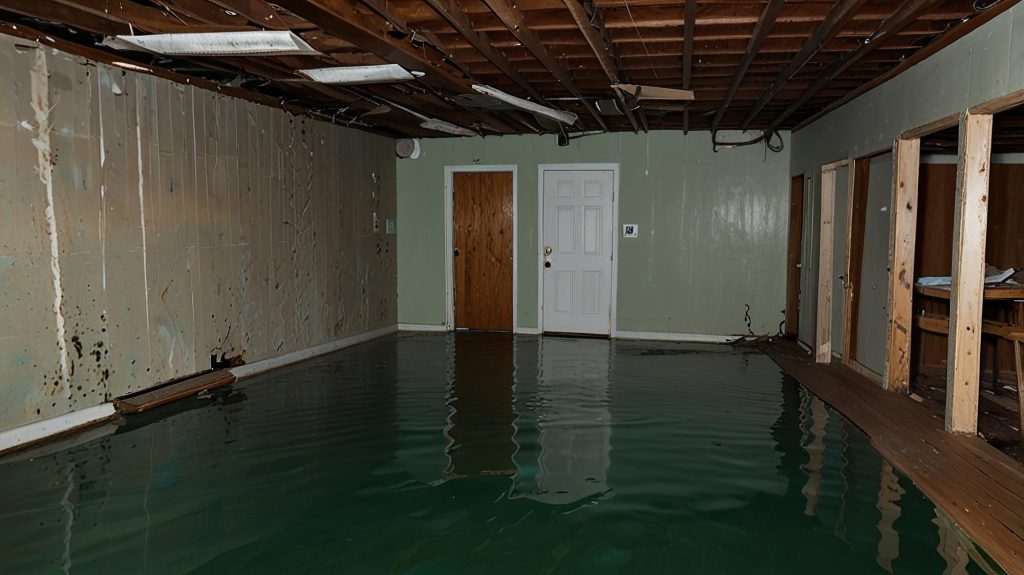
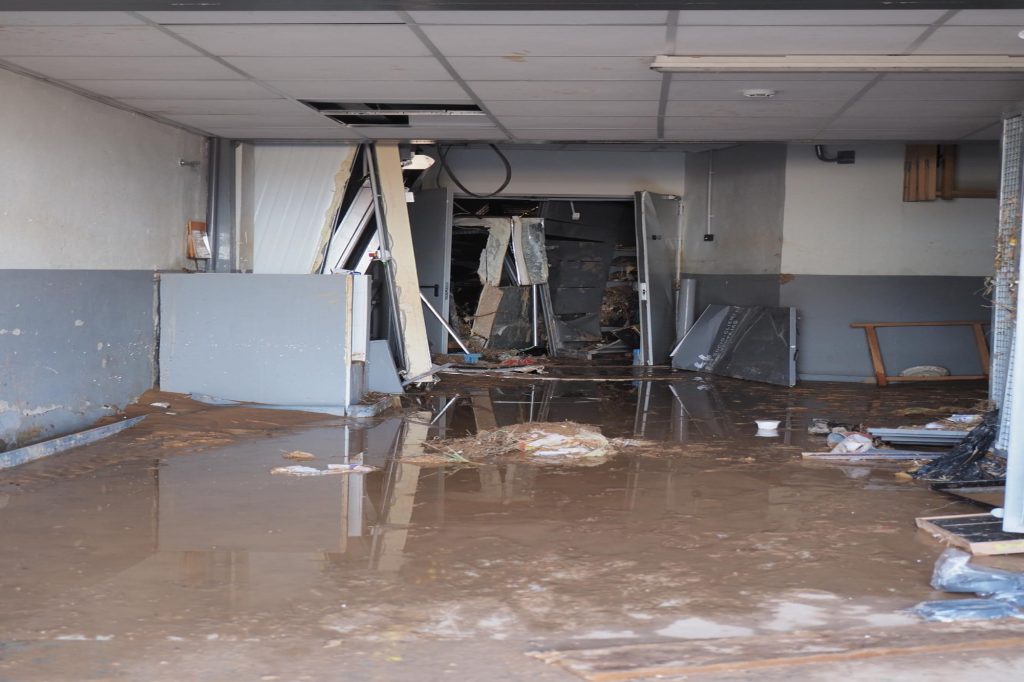
Storm water is contaminated from the moment it enters the building, so every hour it stays means more material that has to be thrown out rather than dried. Surge and flood water carry street runoff, sewage, and, you know, whatever else it crossed on the way in, which moves the job from a drying problem to a removal problem.
We handle emergency calls and dependable water damage repair in Tampa, FL with truck-mounted extraction and crews dispatched around the clock through hurricane season.
Our technicians document the category of water and the depth it reached before anything is cut, because carriers treat surge and supply-line losses as entirely different claims. Just photograph the waterline before you move a single piece of furniture, even if it feels a bit silly.
What Storm Water Does Inside a Property Within a Day
Water that enters at floor level does not pool politely in the middle of the room. It runs to the lowest point, wicks up the drywall from the bottom plate, and soaks into carpet pad, insulation, and subfloor within the hour.
In the block-on-slab construction common across Hillsborough County, it also travels sideways along the slab under the flooring, which is why rooms that stayed visibly dry still read wet three days later, and why commercial water damage drying in a big open shop can drag on a bit.
The contamination is the part people kind of underestimate. Clean water gives you options, because wet material that is otherwise sound can often be dried in place.
Storm water removes most of those options on contact, just like that. Porous material that absorbed it comes out regardless of how intact it looks, and the surfaces underneath get cleaned and treated before anything goes back.
Why Hurricane Water Is Not the Same as a Burst Pipe
Our storm damage restoration work classifies water by what is in it, and that classification drives the entire scope. A supply line failure in a laundry room and eight inches of surge in a living room produce similar-looking wet carpet and completely different jobs.
The categories also sit under different insurance policies, which is where a lot of Tampa homeowners, maybe you included, lose weeks.
| Water source | What it carries | What happens to porous material |
| Supply line or water heater | Clean water, no contaminants | Often dried in place, carpet may be saved |
| Appliance discharge, overflow | Some contamination | Pad removed, carpet assessed case by case |
| Storm surge, flood, sewage backup | Street runoff, sewage, debris | Removed and disposed of, surfaces treated |
Sudden accidental water from inside the home generally falls under a standard homeowners policy. Rising water and surge fall under a separate flood policy. Call your carrier early and just ask which one applies, because the documentation we produce needs to match the claim you are actually filing.
What Gets Lost When Extraction Waits
The cost of delay is measured in materials rather than hours. Carpet pad is usually gone within a few hours of contact with contaminated water.
Drywall wicks upward steadily, while ceiling water damage spreads downward from a leaking roof, so a flood cut that would have been taken at two feet on day one often has to be taken at four feet by day three. Insulation inside those cavities holds water far longer than the drywall facing it, and once it has been saturated by stormwater, it is a removal item rather than a drying item.
Then there is the growth clock, which is a bit sneaky. Mold can begin in damp conditions within roughly 24 to 48 hours, and Tampa Bay humidity keeps the surrounding air loaded with moisture the whole time. A property that sits wet through a long weekend because the owner was waiting for an adjuster to visit frequently turns a mitigation job into a mitigation job plus remediation.
Noticed standing water or a soft spot along your baseboard? Give us a call at (813) 738-6130, and we’ll get a crew on the way.
How We Work When the Whole Region Is Calling at Once
A hurricane does not produce one loss, it produces thousands at the same hour, and every restoration company in Tampa Bay is dispatching at once. We triage by severity and contamination rather than by call order, so an occupied home with sewage intrusion goes ahead of a garage with two inches of clean rainwater.
That is not a comfortable answer for everyone who calls, but it is how the worst outcomes get prevented. Occupied businesses run on the same priority scale, and a commercial building follows its own drying sequence once it is clear.
Distance shapes the schedule too. Our base sits on Waters Avenue, so Tampa itself, South Tampa, and Town ‘N’ Country are closest, while Bradenton and Palmetto run roughly forty-five minutes south.
We set arrival expectations honestly on the call rather than promising a window we know the roads will not allow. During a storm response, an accurate estimate is worth more than an optimistic one.
What to Do Before the Crew Reaches You
Safety comes before anything else, and that means staying out of standing water anywhere near outlets, panels, or submerged appliances. If the main breaker can be reached from a dry position, kill the power to the affected area. Do not re-enter a property with visible structural damage until someone has confirmed it is sound.
Once the property is safe to move through, documentation is the most useful thing you can do with the wait. Photograph the waterline on each wall before anything is moved, capture the rooms wide and then close, and note roughly when the water entered.
Move what is light and salvageable to a dry floor. Leave the heavy, soaked items where they are, because dragging a waterlogged sectional across dry rooms spreads contamination into areas that were fine.
Frequently Asked Questions
Removing bulk water helps a bit, provided the power situation is safe. What a pump cannot do is pull moisture out of the drywall, framing, and subfloor, which is where the lasting damage happens. Storm water also needs the affected material cleaned and treated rather than simply dried, so a self-pumped property still needs an assessment.
Residential drying generally runs three to five days once extraction is complete, and Tampa Bay humidity can add a day or two because dehumidifiers work harder here. Storm losses often run longer than that figure suggests, because more material has to come out before drying even begins.
Sandbags slow shallow water at a doorway and buy time, which has real value. They do not stop surge, and they do nothing about water entering through a compromised roof. Treat them as one layer rather than a plan, and keep your carrier’s claims number somewhere that does not depend on power.
Not necessarily. Losses after a storm are frequently mixed, with some water entering through a wind-damaged roof and some rising from outside. Those portions can fall under different policies, which is why we document the entry point and the waterline separately rather than describing the whole event as flooding. Roof intrusion is worth separating out on its own, because water coming from above travels downward through floors the surge never touched.
Have questions about the damage, or just want to talk through your options first? Contact us, and we’ll help you figure out the right next step. You can also call us at (813) 738-6130 or find us at 4897 West Waters Ave. Suite #D, Tampa, FL 33634, and we’re here around the clock.
Related Topics: