


When water gets into a Tampa home, the mess you can see is rarely the real problem. What matters is whether the drywall, subfloor, and framing underneath actually dry out, because materials that stay damp keep costing homeowners money long after the standing water is gone. You know, it's kind of the part most people don't think about until it's too late.
United Water Restoration Group of Tampa, a professional water damage restoration service provider, treats structural drying as the step that decides whether a water loss stays a one-time repair or turns into a mold job, a rot problem, or a second round of construction. Here is what that process actually involves and why cutting it short rarely pays off.
What Structural Drying Actually Means
Structural drying is the backbone of any effective water damage restoration project, meaning it pulls moisture out of the materials that make up the building itself, not just wipes up water sitting on a floor.
That includes drywall, subfloor, wall framing, insulation, and any other porous material that absorbed water during the loss. The goal is to bring those materials back to a normal moisture reading, not just make a room look dry on a walkthrough.
Tampa Bay humidity works against homeowners here. Materials that might release moisture in a day or two in a drier climate can hold water much longer once outdoor humidity stays high most of the year, which is why a generic drying timeline rarely fits a Florida home.
Why a Home Can Look Dry and Still Be Wet
A room can look and feel dry to the touch long before the drywall or subfloor underneath has actually released its moisture. Drywall, wood framing, and insulation all hold onto water differently, and some materials take considerably longer to dry than others, even with equipment already running.
Relying on how a space looks or feels is one of the most common reasons water damage repairs fail later, and it's also why insurance claims for leaky pipe damage often come down to documented moisture readings rather than a homeowner's assessment.
A homeowner, or even an inexperienced contractor, may consider a job finished based on a visual check alone. Our IICRC-certified technicians measure instead, comparing readings against a baseline for dry, unaffected materials in the same home before calling a space finished.
The Equipment and Measurements Behind the Process
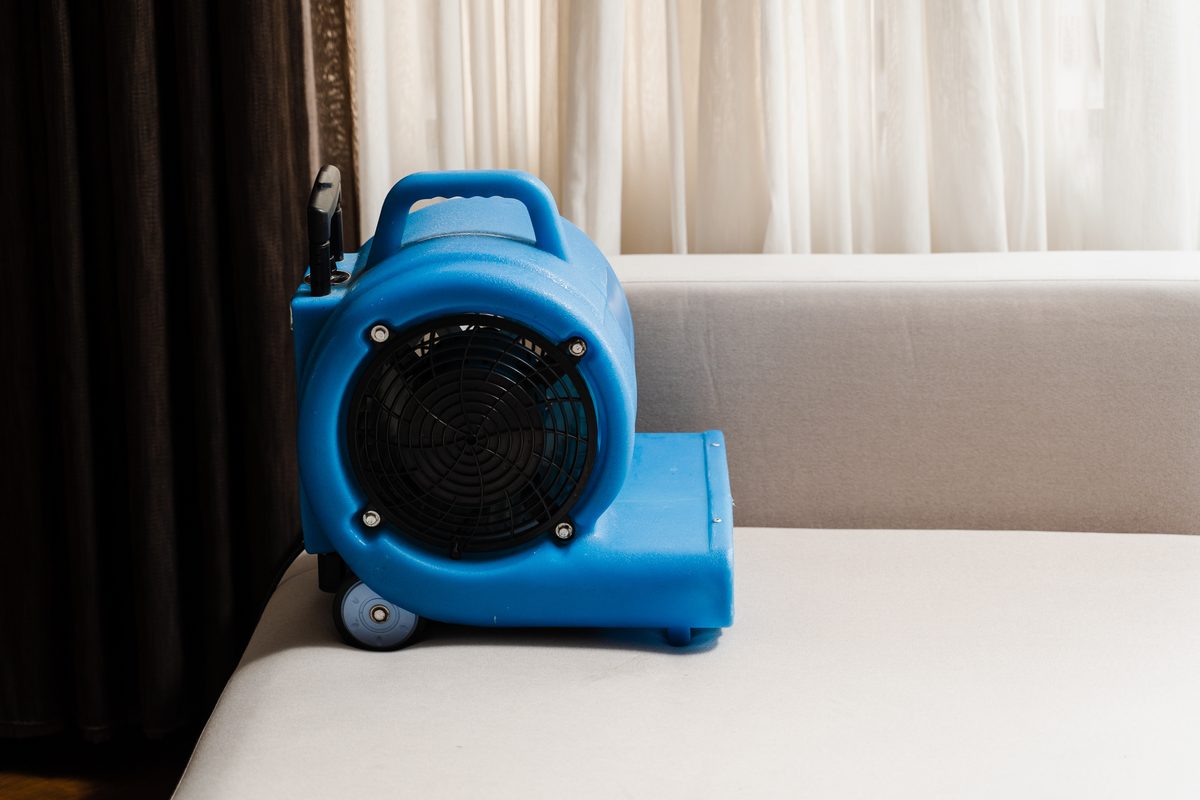
Structural drying relies on commercial dehumidifiers and specialized water damage equipment positioned for the specific layout of the affected space. Dehumidifiers pull moisture out of the air while air movers keep air circulating across wet surfaces to speed up evaporation, and placement is adjusted based on where the water traveled, not just where it was first discovered.
Many Tampa Bay homes are built with concrete block on a slab, which means water from a slab leak or an overflow tends to travel sideways along the slab and up into the wall base, rather than staying in one visible spot. That construction detail changes where equipment needs to go and how long a job takes.
In some cases, specialized equipment dries materials in place, such as directing air behind cabinetry or into wall cavities without removing the drywall entirely. This can preserve more of a home's original materials when the situation allows, reducing the amount of reconstruction needed once drying is complete.
Noticed a musty smell or a soft spot in the flooring after a recent leak? Call us at (813) 738-6130, and we will check what is happening underneath before it turns into a bigger repair.
How Moisture Readings Guide the Timeline
Rather than estimating when a space is dry, our technicians take moisture readings throughout the drying process using tools designed to measure water content inside building materials. These readings are logged daily and compared against a documented baseline, giving an accurate target instead of a guess based on feel.
Most residential drying runs three to five days once extraction is finished, though Tampa Bay humidity can add a day or two because dehumidifiers work harder here. A firm timeline is difficult to give until drying is already underway and readings can be tracked from day to day.
Protecting Framing, Subfloor, and Insulation
Wood framing and subfloor are structural components of a home, and prolonged moisture exposure can weaken them over time if drying is not thorough. Left wet too long, wood can warp, swell, or become more vulnerable to rot, which is a far more expensive problem than the original water event. The table below breaks down how each major material behaves.
| Material | Why It Holds Moisture | Risk If Left Wet |
|---|---|---|
| Drywall | Paper facing and gypsum core both absorb water and release it slowly. | Swelling, soft spots, and a base for mold growth behind paint. |
| Wood framing and subfloor | Dense wood takes longer to release moisture than it took to absorb it. | Warping, swelling, and increased vulnerability to rot over time. |
| Insulation | Some types trap water in a way that makes in-place drying impractical. | Reduced effectiveness and, in some cases, the need for replacement. |
Identifying early which materials can be dried in place and which need replacement protects the home's structural integrity and helps avoid a second round of repairs months later. Two homes with similar water damage can need very different plans depending on the age of the framing, the type of insulation, and how the original construction was built, which is why a walkthrough comes before any equipment is placed.
Signs a Space Isn't Actually Dry Yet
- A musty smell that lingers after the visible water is gone
- Baseboards still separating from the drywall above the floor
- Flooring that still feels soft, spongy, or cool to the touch
- New discoloration appearing on painted walls days after a leak
- Humidity readings in the space that don't drop overnight even with equipment running
What Happens When Drying Is Skipped or Rushed
Skipping structural drying, or stopping the process too early, tends to shift problems further into the future rather than solving them. Materials that still hold moisture create the exact conditions mold needs to grow, and trapped moisture behind walls or under flooring can keep causing damage long after the visible water is gone from the surface.
Homes that go through a rushed drying process often end up needing more extensive repairs months later, once hidden moisture has had time to cause additional damage. Taking the time to dry a structure completely, guided by actual measurements rather than a set schedule, is what protects a home from these delayed and more costly problems down the road.
United Water Restoration Group of Tampa holds Certified Building Contractor License CBC1261128, so if reconstruction is needed once drying wraps up, it runs under the same contract instead of being handed to a second company.
Frequently Asked Questions
How long does structural drying take in a Tampa home?
Most residential drying runs three to five days once water extraction is finished. Tampa Bay humidity can add a day or two on top of that, since dehumidifiers work harder in high ambient moisture. A multi-room loss or one found late takes longer, and reconstruction is a separate phase after drying is complete.
How do you know when a space is actually dry?
We take moisture readings with calibrated meters throughout the job and compare them against a documented baseline for dry, unaffected materials in the same home. That measurement, not a visual check, is what determines when equipment comes out and repairs can begin.
Does every wet material get dried in place?
Not always. Some insulation types hold water in a way that makes in-place drying impractical, and heavily saturated drywall or subfloor sometimes needs to be removed rather than dried. A walkthrough before equipment goes in helps determine which materials can be saved.
Does homeowners insurance cover structural drying?
Sudden, accidental water damage from an internal source such as a burst pipe is generally covered. Rising water and storm surge fall under a separate flood policy. We document either scenario with photographs and daily moisture logs, so your carrier has what it needs to settle the claim.
A wet structure in Tampa doesn't dry itself on a convenient schedule. If your home has standing water or a leak you're not sure about, call United Water Restoration Group of Tampa at (813) 738-6130. We answer 24/7, dispatch a certified crew the same day, and carry the job from extraction through structural drying to the rebuild under one contract.