



A wall can look fine on the outside while something serious happens underneath. In a humid place like Tampa, water can travel behind drywall for weeks before anyone notices. By the time it shows up, the damage is usually more extensive than expected. Way more, sometimes.
Our reliable water damage restoration service in Tampa, FL, handles these calls regularly, and honestly, the pattern is almost always the same. Homeowners spot something small, figure it can wait, and then a week later the problem is twice the size.
This section covers what our team sees most often on service calls across Tampa Bay, so you know what to look and listen for before a small leak turns into a much bigger repair.
Why Hidden Water Damage Is So Common in Tampa Homes
Tampa's climate plays a bigger role in hidden water damage than most homeowners realize. Between the humidity, seasonal storms, and the number of homes with plumbing running through interior walls, moisture can easily get trapped where it shouldn't be.
A slightly loose pipe fitting, a slow drip from a bathroom supply line, a rusted water heater tank in a utility closet, or water intrusion around a window during heavy rain can all sit inside a wall cavity without reaching the surface right away.
Housing across Hillsborough County often uses concrete block on slab, and that construction style changes how water moves once it gets in. Instead of soaking straight down, water travels sideways along the slab and works its way up into the wall base, which is part of why a leak can spread further than a homeowner expects before it ever shows on the surface.
Because drywall and insulation absorb moisture rather than showing it right away, a leak often has a head start before anyone notices. Catching the signs early and starting water damage restoration quickly is usually the difference between a contained repair and a much larger reconstruction project.
Common Sources and How They Show Up Behind a Wall
| Common Source | How It Shows Up Behind the Wall |
|---|---|
| AC condensate line clogs | Ceiling stain below the unit, musty smell near the air handler |
| Water heater tank rusts through | Damp baseboard or warped drywall near the utility closet |
| Slab leak | Warm or damp spot underfoot, flooring that lifts near an exterior wall |
| Supply line or fitting drip | Localized musty smell, soft drywall near a bathroom or kitchen wall |
The Musty Smell That Should Never Be Ignored
A musty or earthy smell is usually the first clue something is wrong, and it often shows up before any visible signs of damage appear. This smell comes from moisture sitting somewhere it cannot dry out properly, creating the right environment for mold and mildew to start growing inside wall cavities, behind baseboards, or under flooring.
Technicians often confirm what the nose already suspects with calibrated moisture detection tools that read moisture levels inside the cavity itself.
If this smell keeps returning in the same area of the house no matter how much you clean or air out the room, that strongly suggests the source is inside the wall rather than on a surface you can wipe down. A smell that fades and comes back, especially after rain or when running water is nearby, should be investigated rather than dismissed as normal.
Visual Clues on Walls, Ceilings, and Baseboards
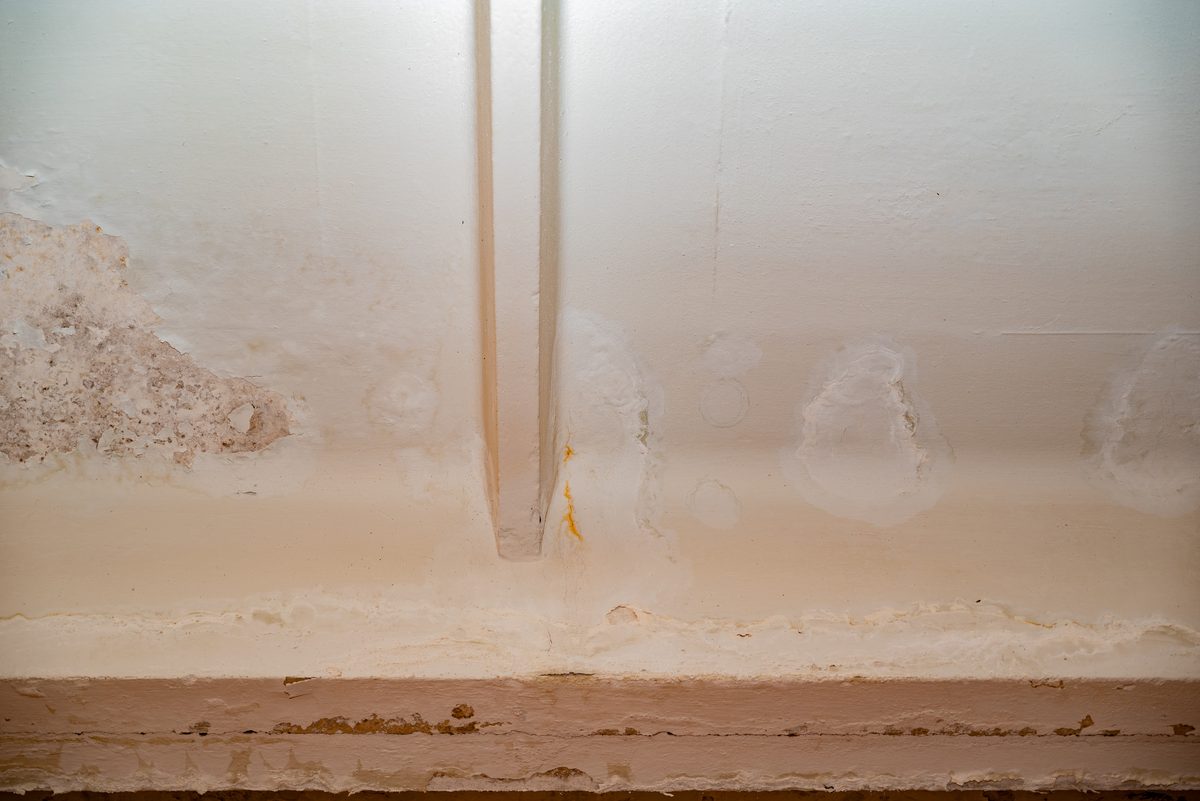
Once a leak has been active for a while, it usually starts to show up visually. Discoloration is one of the clearest signs, often appearing as a yellow, brown, or copper-colored stain that spreads outward the longer the leak continues. Paint that bubbles, peels, or forms small blisters is another sign that moisture is pushing against the surface from behind.
Warped or soft drywall, baseboards separating from the wall, or trim that looks slightly swollen can also point to water damage that has been building for some time. These changes happen gradually, which is why they can be easy to miss, and documenting them early can also make a difference later if you file an insurance claim for water damage. Checking corners, windows, and plumbing fixtures with a flashlight can help you catch these signs before they spread further.
Sounds and Sensations That Point to a Leak
Not every sign of water damage is something you can see right away. Sound can be just as useful, especially in a quiet house. A dripping noise coming from inside a wall, even a faint one, is worth investigating rather than ignoring, since it usually means water is actively moving somewhere it should not be.
Touch matters too. A wall that feels unusually cool, damp, or soft compared to the surrounding area can point to moisture sitting close to the surface. If you press gently on drywall near a suspected leak and it gives more than it should, that is a physical clue that something is wrong underneath and worth having checked.
Noticed a musty smell that will not air out, or a soft spot on a wall in your Tampa Bay home this season? Give us a call at (813) 738-6130, and we will take a look before it turns into a bigger repair.
What Happens If the Warning Signs Are Ignored
Water that sits inside a wall for an extended period does more than stain drywall. It can weaken wood framing, corrode metal fasteners, and create the damp, dark conditions mold needs to establish itself.
In Tampa Bay humidity, mold growth can begin within 24 to 48 hours once a surface stays wet, and mold inside a wall cavity is often harder to address than surface-level mold, since it can spread further before anyone notices.
What starts as a repair limited to one section of drywall can turn into a project involving framing repair, insulation replacement, and mold remediation if the source goes unaddressed. In most cases we see, the homes with the most extensive damage are the ones where the early signs were noticed but not acted on.
What To Do the Moment You Notice These Signs
If you notice a musty smell, visible staining, warped drywall, or any of the other signs described above, the first step is figuring out whether the source is still active. If you can safely access the area, check for a nearby plumbing fixture, exterior wall, or window that could be the origin point. If water is actively dripping or pooling, shutting off the nearest water source can help limit further damage while you arrange for an assessment.
From there, having a trained technician assess the wall is the safest way to confirm what is happening and how far it has spread. Our IICRC-certified technicians use calibrated moisture meters to map how far water has traveled behind the surface, then outline what needs to happen to dry the area and prevent mold from taking hold.
Frequently Asked Questions
Can water damage behind a wall dry out on its own?
Usually not evenly. A wall cavity tends to hold onto moisture longer than the surrounding air can pull it out, which is why the smell and staining tend to linger instead of resolving on their own.
Is it normal for the smell to come and go?
Yes, this is common with an active but intermittent leak. It often gets stronger after rain or after a nearby fixture is used, then fades until moisture is introduced again.
Does every stain on a wall mean there is water damage?
Not necessarily, but any stain that grows over time, feels damp, or comes with a musty smell is worth checking rather than assuming it is harmless.
Should I try to open the wall myself to check?
We recommend having a technician assess it first. Opening drywall without knowing the source can sometimes make the eventual repair more complicated than it needs to be.
Ready for a Wall Assessment in Tampa Bay?
If any of these signs show up in your Tampa, South Tampa, or Town 'N' Country home, do not wait for the wall to tell you more. United Water Restoration Group of Tampa is available 24 hours a day, 7 days a week, to assess the situation and explain exactly what we find. We coordinate directly with insurance carriers so you are not left managing the claims process alone.
Phone: (813) 738-6130Address: 4897 West Waters Ave, Suite #D, Tampa, FL 33634