


Water trapped inside a wall changes the air in the room within a couple of days, long before anything visible appears on the paint. Damp insulation, wet drywall paper, and soaked subfloor all feed microbial growth, and the air carries what grows there through the return vents into the rest of the house.
Our crews at United Water Restoration Group of Tampa provide expert water damage repair in Tampa, FL, with calibrated moisture meters and HEPA filtration running on site, because drying the structure and cleaning the air are really the same job.
We log readings daily until the materials test dry against a documented standard. If a room smells a bit different after a leak, just trust the smell over the wall.
What Happens to the Air Once Water Sits Inside a Wall
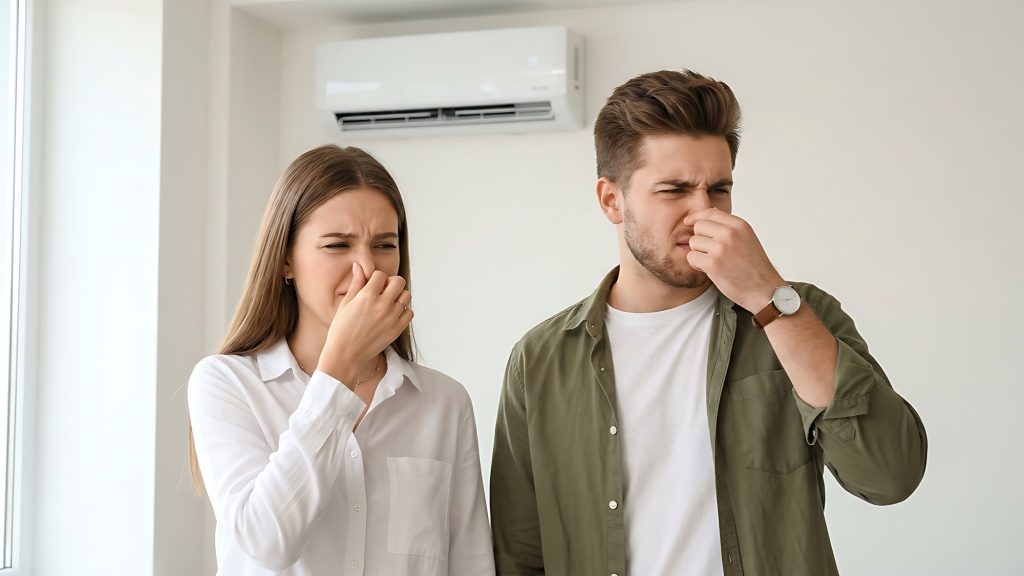
Drywall paper, insulation batts, and the wood behind them are organic material, and once they hold moisture, they become a growth surface. Microbial activity starts producing gases as it feeds, which is the musty odor people describe. That smell is the earliest measurable change to the air, and it usually shows up before any staining comes through the paint.
What makes it a whole-house issue rather than a one-room issue is the air handler. A return vent in or near the affected room pulls that air in and sends it through every duct in the property.
That is also how ceiling water damage spreads well past the room it started in. A bedroom leak on one side of the house ends up affecting the nursery on the other side, which is kind of why people notice symptoms in rooms where nothing ever got wet.
The Warning Signs Tampa Homeowners Usually Notice
Air quality problems announce themselves through the nose and the body long before the eyes get a say. The complaints we hear most often are a smell that returns every time the air conditioning cycles on, and a household that feels worse indoors than out.
Neither one proves there is mold, and even HEPA air filtration only treats air that is already affected, so both are worth a moisture reading rather than an air freshener.
Signs worth acting on after any water event:
- A musty or earthy smell that strengthens when the air conditioning runs
- Condensation on windows or vents that did not collect moisture before
- Symptoms that improve when people leave the house and return when they come back
- A room that feels clammy even with the thermostat set the same as the rest of the home
- Dust that settles faster or looks different in the affected area
Why Tampa Humidity Makes the Problem Worse
A home in Tampa Bay dries differently from a house further inland. Outdoor humidity stays high through most of the year, so the air your system is already working against carries a heavy moisture load before the leak is even factored in.
Materials here hold water in the drywall and framing for days after the surface feels dry to the hand, which is why businesses respond quickly to water damage in this climate.
Construction adds to it. Concrete block on slab is common across Hillsborough County, and water that reaches the slab travels sideways along it rather than draining away.

It then climbs into the base of the wall, where the sill plate and the lower drywall stay damp inside a cavity with almost no airflow. That cavity is a sealed, warm, wet space, which is close to ideal growing conditions and almost impossible to dry by just opening a window.
How Drying and Filtration Change the Air Back
Proper drying removes the fuel rather than masking the symptom. Air movers push air across wet surfaces to speed evaporation, and commercial dehumidifiers pull that evaporated moisture out of the room and drain it away.
Household fans only do the first half, you know, which is why a leak dried with a box fan often smells worse a week later. The water went into the air and condensed somewhere else in the house.
Filtration runs alongside the drying, and HEPA filtration captures the particulate that gets stirred up once material is cut and handled, so demolition does not push spores into the rest of the property. Where colonized material is found, the area gets sealed off under containment before anything is removed, because the order matters more than the equipment list.
Smelling something off after a leak and not sure where it’s coming from? Give us a call at (813) 738-6130, and we’ll come take a look at your Tampa home before it turns into a bigger problem.
When Air Quality Means Calling Someone Rather Than Airing the House Out
Opening windows in Tampa usually brings in humidity rather than pushing it out, so the instinct to air out a damp room kind of works against you most of the year. If the smell clears while the air conditioning runs and returns the moment it stops, that points to a moisture source still sitting somewhere in the structure.
The same calculus applies to shops and offices, where stale air costs customers and structure alike. The threshold for a professional assessment is pretty straightforward.
A smell that persists more than a few days after the surface looks dry, visible growth of any size, or anyone in the household with ongoing respiratory symptoms all warrant a moisture inspection rather than another round of cleaning. Our technicians read the structure itself with meters, so the answer comes from the wall cavity rather than from how the room smells on the day we visit.
Frequently Asked Questions
Not always. Stagnant water in a drain trap, a dirty condensate pan, or a damp crawl space can produce a similar odor without any growth in the walls. What the smell reliably tells you is that there’s moisture somewhere it should not be, and that is worth locating either way before it becomes a growth problem.
A better filter and a purifier will reduce what is circulating, which helps people feel better in the short term. Neither one removes the water feeding the problem, so the odor returns as soon as the unit is off. Treat them as comfort measures while the actual drying gets sorted out.
Once the structure reads dry and any affected material has been removed, the odor usually clears within a few days. A smell that is still there a week after the equipment came out generally means moisture remains somewhere the drying plan missed, and the property should be re-read rather than re-cleaned.
It can. The return vents pull air from affected rooms and distribute it through the whole duct system, so running the system continuously during an untreated water event moves the problem around the house. Once containment and filtration are set up properly, normal operation is just fine.
Have a smell you can’t place or a leak that’s still drying? Contact us, call (813) 738-6130, or stop by 4897 West Waters Ave. Suite #D, Tampa, FL 33634, and we’ll help you figure out the right next step.
Related Topics: