



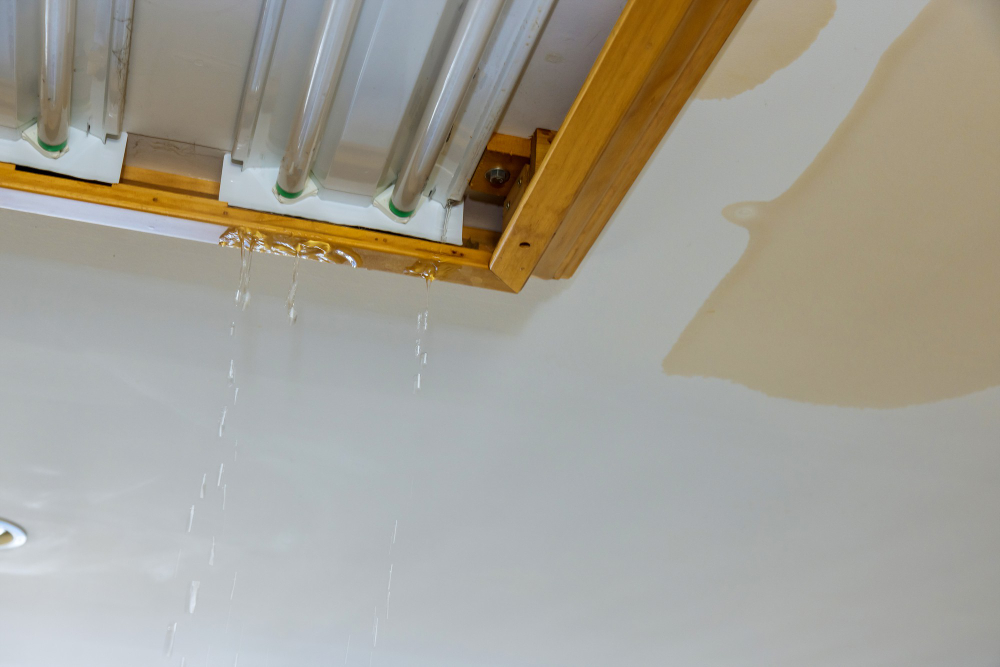
Water from a roof leak rarely stays where it came in. It soaks attic insulation, runs along rafters and top plates, and settles into ceiling drywall and wall cavities, often far from the spot where the roof failed. Fixing the roof stops new water from entering, but it does nothing about the moisture already inside the building.
Roof leaks during storms are one of the most common causes of water damage around Tampa Bay. At United Water Restoration Group of Tampa, the trusted water damage restoration service handles what happens below the roofline: finding the water that got in, drying it out and repairing what it ruined. Calling us early keeps a ceiling stain from turning into a mold problem.
Where Does Roof Leak Water Go Once It Is Inside?
Gravity and building materials decide the path. Water that gets past the roof deck lands on insulation, which absorbs a surprising amount before anything drips, then follows framing members downhill until it finds a seam, a light fixture or a ceiling penetration.
That is why the stain on the ceiling is often several feet from the leak itself. Water can also run down the inside of exterior walls, wetting insulation and the back of drywall where no one can see it, and ductwork and recessed lights give it more paths to follow. A small leak that drips through several storms can wet more area than one heavy downpour.
Ceilings are where most owners notice the problem first. The article explaining how ceiling water damage spreads covers what happens once drywall starts holding water.
Signs to Check for in the Days After a Leak
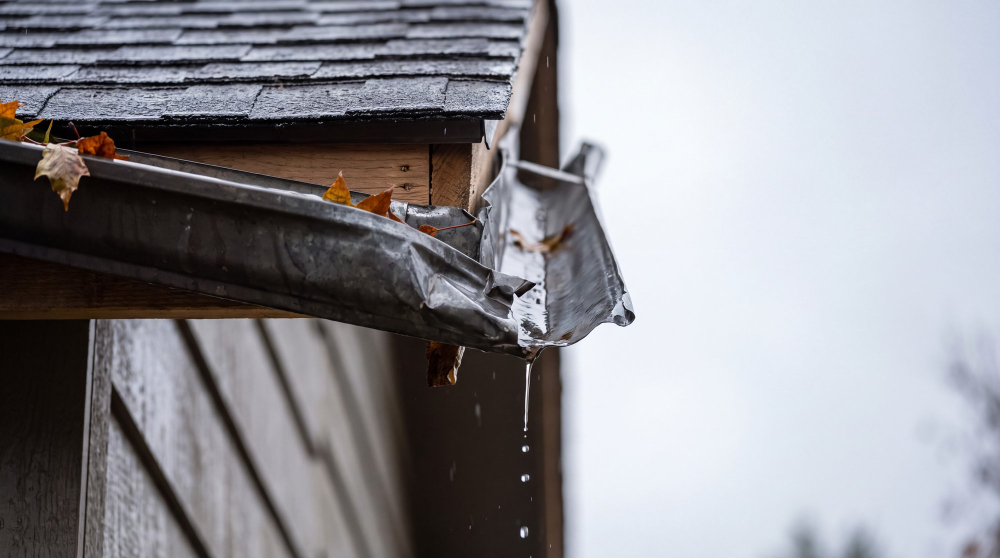
Some damage shows within hours and some takes longer to surface. Check the rooms below the leak and the rooms beside it, then look again after the next rain, because a repaired roof can still release water that was trapped in insulation.
Look in the attic too, if you can reach it safely. Wet or compressed insulation, dark streaks on the roof deck and rusted nail tips all point to moisture that has been there a while. Inside the living space, these signs usually mean water traveled further than it looked:
- A ceiling stain that keeps spreading or changes shape after rain
- Sagging or soft drywall around light fixtures and vents
- Paint that bubbles or peels on upper walls
- Baseboards pulling away from the wall along exterior walls
- A musty smell with no visible source
Finding more than one of these usually means the water moved well beyond the spot where it first appeared.
Any stain that appeared after the last storm is worth measuring. Give us a call at (813) 738-6130, and we will dispatch a certified crew the same day to find out how far the water went.
Why a Dry Looking Ceiling Can Still Be Wet
Surfaces dry long before the materials behind them. Paint can feel dry to the touch while the drywall core, the insulation above it and the framing around it still hold moisture, and those hidden layers are where the damage continues.
We find that moisture through moisture mapping, which means using calibrated moisture meters to take readings across ceilings, walls and floors and mark where the water has spread. The map shows which areas need drying and which are already dry, so nothing gets opened without a reason and nothing wet gets left behind.
Timing matters more here than in drier climates. Wet materials in a humid region like ours can start growing mold in as little as 24 to 48 hours, and a closed attic in summer heat dries slowly on its own. That window is the strongest reason to check after any roof leak, even one that seemed minor.
What Our Crew Does After a Roof Leak
The four steps of our water damage process cover what a roof leak leaves behind. If the roof is still open, emergency roof tarping covers the opening so the next storm does not undo the drying.
From there we map the moisture, clean up damaged material and set air movers and dehumidifiers for structural drying. Readings are taken daily, and the equipment stays until the materials meet a documented dry standard. Repairs and reconstruction follow, including drywall replacement.
Drying and rebuilding run under one contract, so you do not need another contractor once drying ends. Every job ends with a walk through so you can see the finished ceiling and ask questions. Cathleen Pacheco wrote on Google: “Kane & Elijah did a great job and explained everything they were doing thoroughly.”
How to Document a Roof Leak for Your Insurer
Photograph the ceiling, the attic and any wet belongings before anything is moved, and note the date of the storm or the day you first saw the leak. A record made before cleanup shows the damage as you found it. Save receipts for anything you paid for at the moment, such as tarps or buckets.
Your insurer decides coverage, and roof claims depend on the policy and the cause of the leak. We document the loss with photos, daily moisture readings and a written scope issued before work begins, and we bill insurance directly. We work with all insurance providers, including State Farm, Allstate, USAA and Travelers.
Any roof leak deserves a moisture check, even a small one. Call (813) 738-6130 for 24/7 service, and our certified crew will measure what the leak left behind.
Related Topics: